

It's a frustrating moment: you're ready to go, but your car door lock is frozen solid. The key won't turn, or maybe it won't even go in. While this is rare on the Treasure Coast, a sudden cold snap can catch anyone off guard. The good news is you can usually solve this without damaging your vehicle.
The safest ways to thaw a frozen lock involve using a commercial de-icer spray, a little bit of alcohol-based hand sanitizer on the key, or gently warming the metal key blade with your hands.
What you must never do is use brute force or pour hot water on the lock. Both can cause serious, expensive damage. When you're stuck in Port St. Lucie, Fort Pierce, or anywhere nearby and need a fast, guaranteed-safe solution, calling a professional locksmith is always the smartest move. If you're dealing with a car lockout due to ice, Call (772) 710-8169 for immediate help.
Surviving a Surprise Florida Freeze on the Treasure Coast
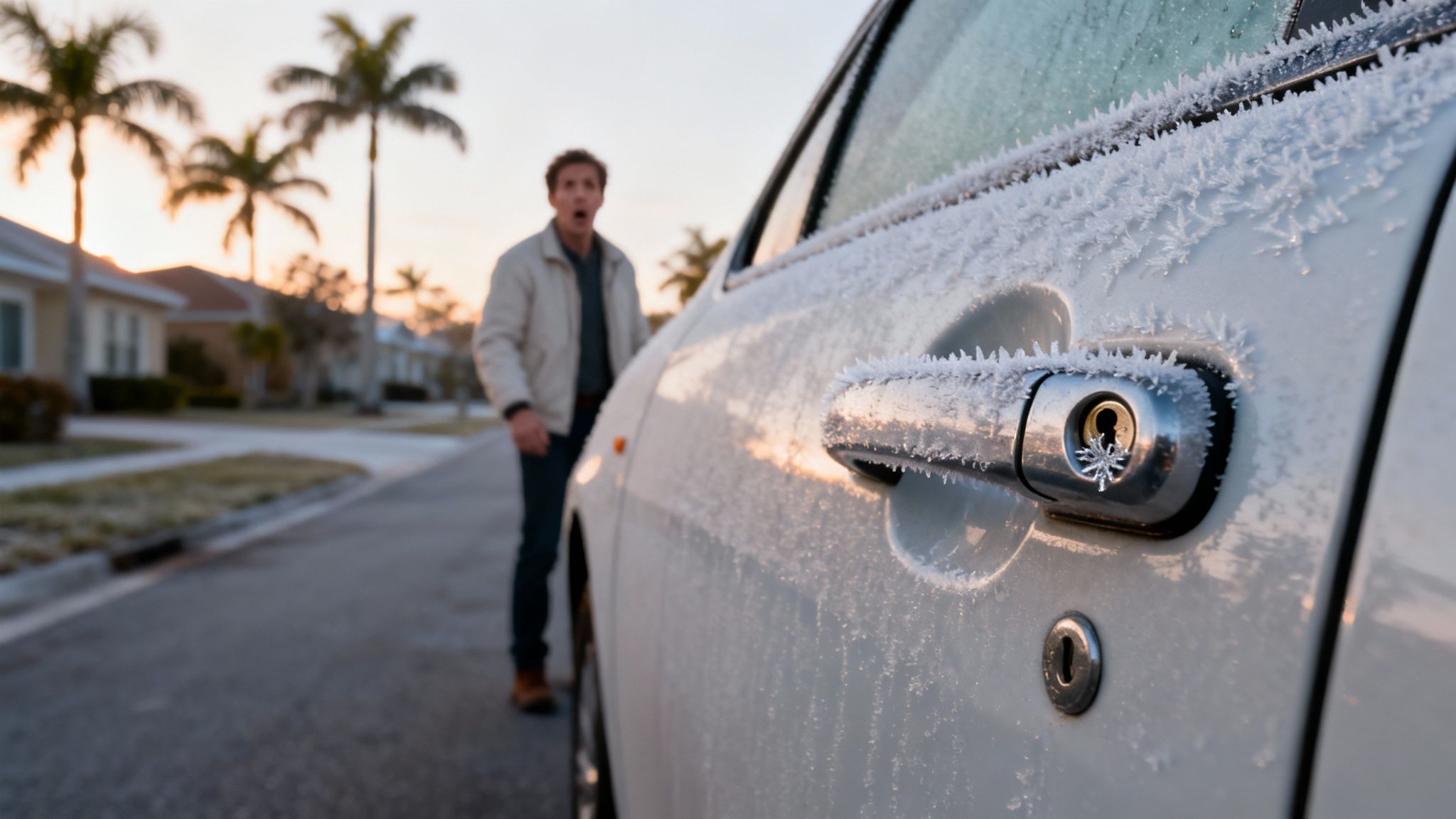
It’s not something we expect around here, but when a cold snap hits the Treasure Coast, drivers from Port St. Lucie to Fort Pierce are often caught completely unprepared. You head out for your morning commute in Stuart, coffee in hand, only to find your car door lock is completely seized by a thin, stubborn layer of ice.
This isn’t just a rare annoyance; it's a surprisingly common problem during those brief cold spells. We've seen that an estimated 20-25% of all winter-related vehicle lockouts stem from frozen mechanisms. Trying to force the issue with the wrong approach often leads to an average of $150 in damages—a costly mistake for a simple problem. Learn more about the factors affecting modern car doors.
Why Do Car Locks Freeze in Florida?
Even a mild Florida freeze can cause havoc, thanks to our high humidity. All that moisture in the air—from recent rain, a car wash, or even heavy morning dew—finds its way into the tiny, intricate parts of your car's lock.
Once the temperature dips below 32°F overnight, that trapped moisture expands as it turns to ice. This effectively jams the delicate tumblers and pins, making it impossible for your key to turn. A simple car lockout can escalate fast.
For example, a client in Vero Beach recently tried to force their key into a frozen lock on their SUV. The key snapped off, turning a simple fix into a much more complex extraction and potential ignition repair. Trying to force the key can easily lead to:
- A key snapping off inside the lock—a much bigger headache.
- Permanent damage to the internal lock mechanism.
- A bent or broken key that could damage your ignition.
Key Takeaway: The best approach is to be gentle. If the lock doesn't yield with a careful attempt, stop right there. Forcing it is a gamble that rarely pays off. For a guaranteed safe solution in Jensen Beach or Stuart, calling a pro ensures you get back in your car without risking an expensive repair bill.
Quick Guide: Safe vs. Unsafe Frozen Lock Methods
It's easy to panic and try the first thing that comes to mind, but some common "hacks" can do more harm than good. Here’s a quick, practical breakdown of what to do and what to avoid.
| Safe Method | Why It Works | Unsafe Method | Risk of Damage |
|---|---|---|---|
| Lock De-Icer Spray | An alcohol-based formula melts ice quickly without harming components. | Pouring Hot Water | Can cause thermal shock, cracking paint, and refreeze, making it worse. |
| Hand Sanitizer | The alcohol content works like a de-icer, breaking down the ice. | Forcing the Key | High risk of snapping the key, bending it, or breaking the lock's internal pins. |
| Gently Warming the Key | A warm metal key transfers just enough heat to thaw the tumblers. | Using a Screwdriver | Almost guaranteed to scratch the paint and damage the delicate lock mechanism. |
When in doubt, stick to the methods on the left. They are designed to solve the problem without creating a new, more expensive one, like needing a full lock change.
When you need immediate, damage-free help for a frozen locks car door, call the team at Pro-B Locksmith. You can reach us at (772) 710-8169. We’re the trusted local experts for any automotive lockout in the Port St. Lucie area and beyond.
Safe DIY Methods to Unfreeze Your Car Lock
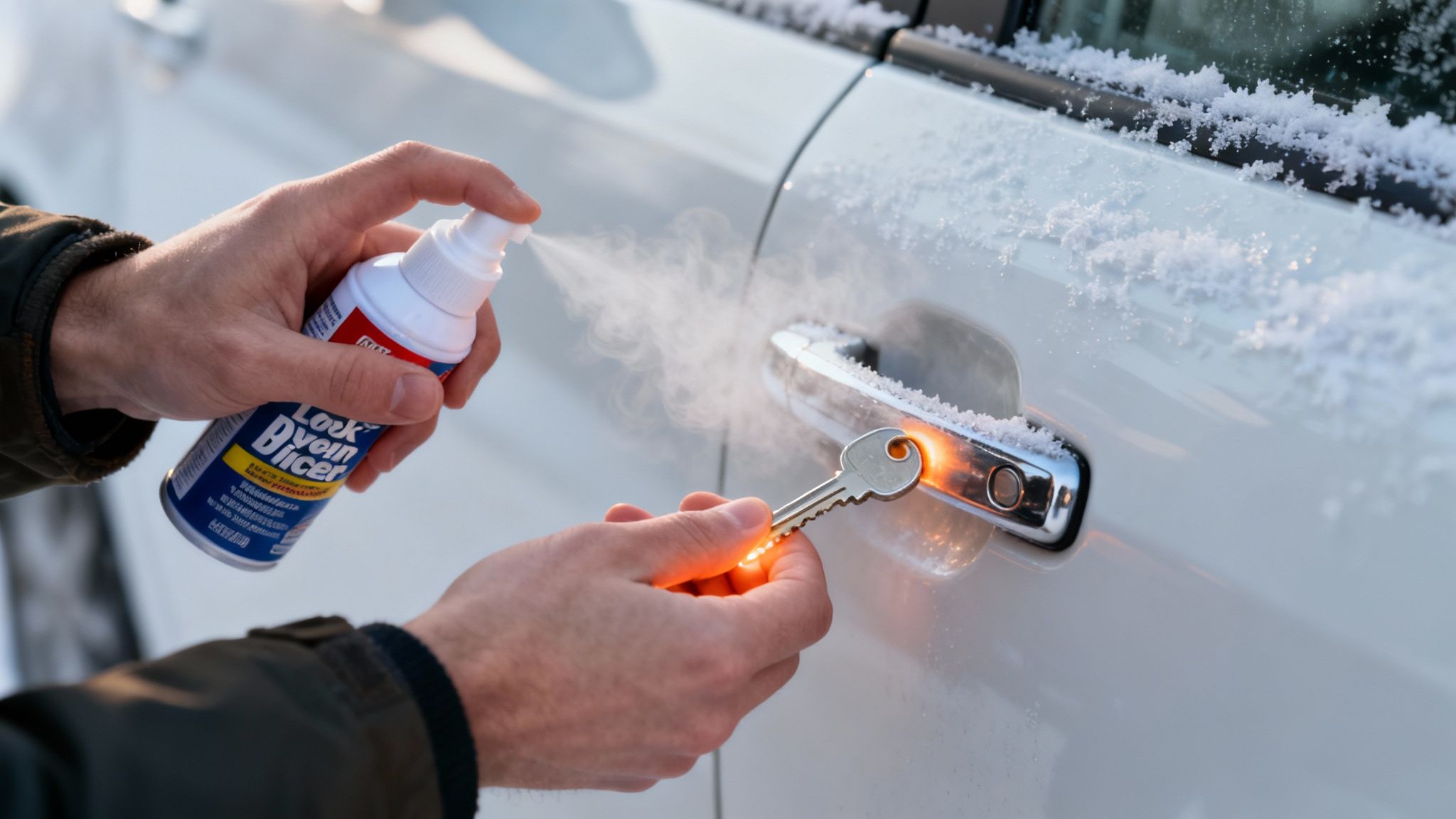
Finding yourself locked out of your car in Jensen Beach or Stuart because of a frozen lock is incredibly frustrating. The first impulse is often to just jam the key in and force it. But as local locksmiths, we can tell you that's a quick way to snap a key or wreck the lock mechanism.
Before you get aggressive with it, take a breath. Here are a few practical, step-by-step ways to thaw that lock using things you probably have right now, without risking damage to your car's paint or internal parts.
The absolute best tool for the job is a commercial lock de-icer. It's made specifically for this situation, containing alcohol to melt ice fast while also lubricating the lock's tiny moving parts. A quick spray directly into the keyhole is all it takes. Give it about 30 seconds to work its magic before gently trying your key again.
Using Household Items for a Quick Thaw
No de-icer spray in your glove box? No problem. A few common household items can get you out of a jam.
- Alcohol-Based Hand Sanitizer: That little bottle of sanitizer you carry around is a perfect substitute. Its high alcohol content works just like a de-icer. Just squeeze a small amount onto your key, slide it into the lock, and give it a gentle wiggle to help the alcohol break down the ice.
- Warm Your Key: Sometimes, a little body heat is all you need. Tightly cup the metal blade of your key in your palm for a minute or two. This simple trick can transfer just enough warmth to the lock's tumblers to free them up. You might need to do it a couple of times. Avoid using a lighter, as you can melt the plastic housing and damage the transponder chip inside.
Pro Tip: One thing you should never, ever use is salt or saltwater. Yes, it melts ice, but salt is incredibly corrosive. It will eat away at the metal components inside your lock, causing them to rust and seize up for good. You’ll be trading a temporary problem for a much more expensive one.
Applying Gentle External Heat
If you have access to a power source, a hairdryer can be your best friend. The trick is to apply gentle, indirect heat to avoid damaging your car’s finish.
Put the hairdryer on its lowest heat setting and keep it about six to eight inches away from the door. Don't just blast one spot; keep the warm air moving across the lock and handle area. This slow-and-steady approach prevents the kind of sudden temperature change that can crack paint or warp plastic trim. After a minute or two, the ice should be gone.
If you’ve tried these DIY tricks a couple of times and the lock still won't budge, it's a sign the ice is packed in there pretty deep. At this point, forcing the issue will likely end with a broken key or a busted lock. If you're in Vero Beach or nearby and need a fast, guaranteed solution, it's time to call in the pros.
For immediate help with any car lockout, Call (772) 710-8169 and a professional from Pro-B Locksmith will get you back on the road safely.
The Dangers of Forcing a Frozen Lock
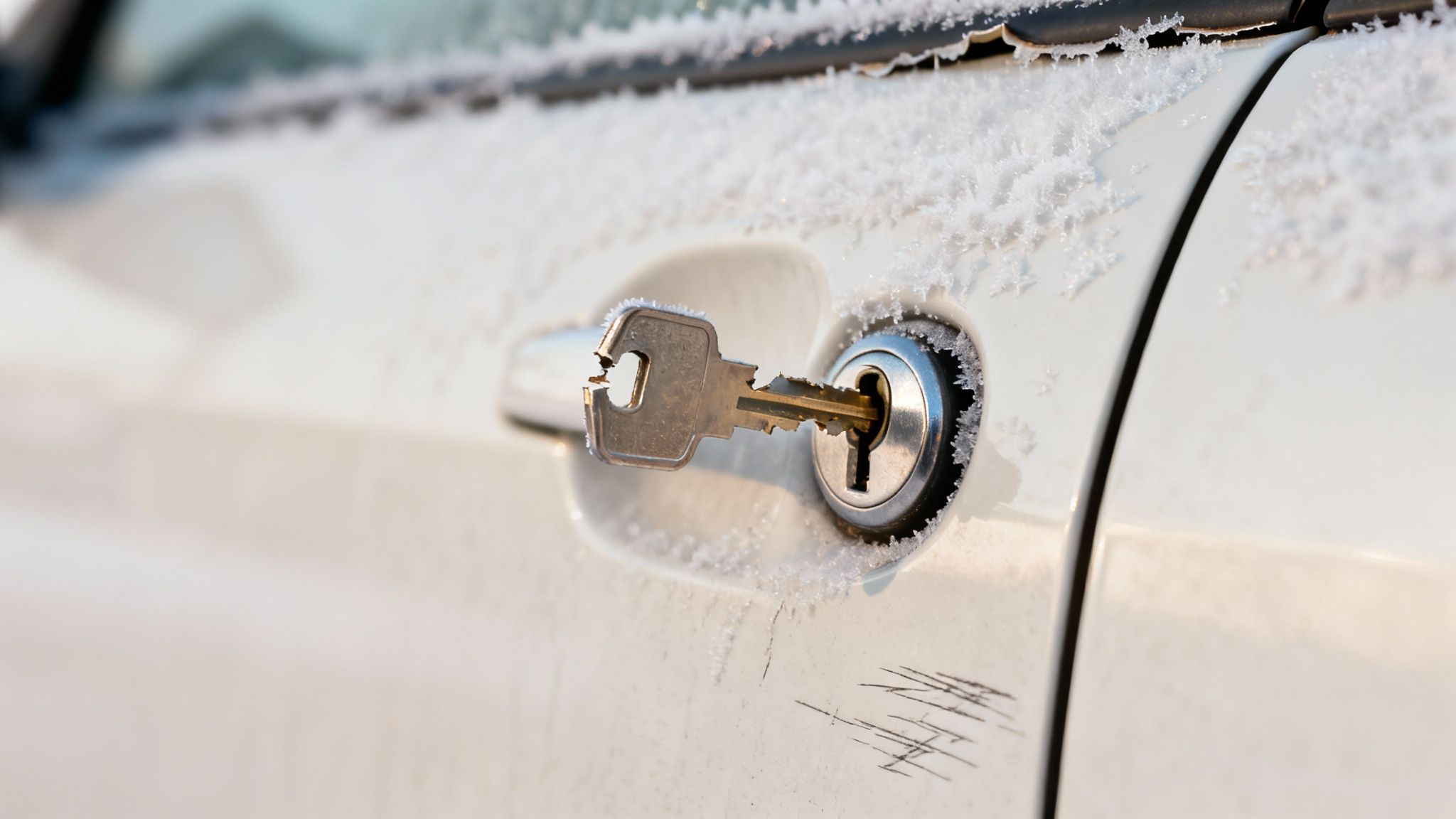
When you're standing in the cold with a frozen car door lock in Vero Beach, your first instinct is probably to just jam the key in and turn harder. It seems like the obvious solution, but this is a decision that almost always backfires and leads to a much bigger headache.
Forcing that key can easily snap the blade right off, leaving a broken piece stuck deep inside the lock mechanism. Just like that, you’ve gone from a simple frozen lock to a complex extraction job that could even require a full lock replacement. The internal pins and tumblers are delicate—they simply can’t handle the pressure of being forced against solid ice. You risk bending those components, which means the lock might never work properly again, even after it thaws.
Common Mistakes That Cause Costly Damage
It's not just brute force that gets people into trouble. Some of the most common "quick fixes" you might find online can be just as destructive.
- Pouring Hot Water: This is a classic bad idea. The sudden temperature shock from hot water hitting a freezing cold car can crack your paint or even shatter your window. Worse, that water is just going to refreeze, often making the problem even more severe by creating a thicker layer of ice inside the lock.
- Using Metal Tools: Prying at the lock or door with a screwdriver or knife is a surefire way to scratch your paint and gouge the door frame. You could also destroy the weather stripping, which will lead to frustrating leaks and drafts down the road.
DIY attempts on frozen locks go wrong more often than they go right. In fact, data shows that these attempts damage the latch in about one out of every five cases, leading to average repair bills of $200-$300. The risk is even higher for older vehicles, which are 15-20% more likely to have worn-out seals that let moisture in. You can discover more insights about automotive door module market trends if you're interested in the data behind it.
If you’ve tried gently warming the key or using a proper de-icer and it’s still not budging, stop. Any more force is likely to turn a minor inconvenience into an expensive ignition repair or lock change.
If you’re stuck in Fort Pierce or Stuart, don’t take the chance. For fast, damage-free help with a frozen locks car door, just give us a call. Call (772) 710-8169 for immediate help.
When It's Time to Call in a Pro: Your Mobile Locksmith Solution
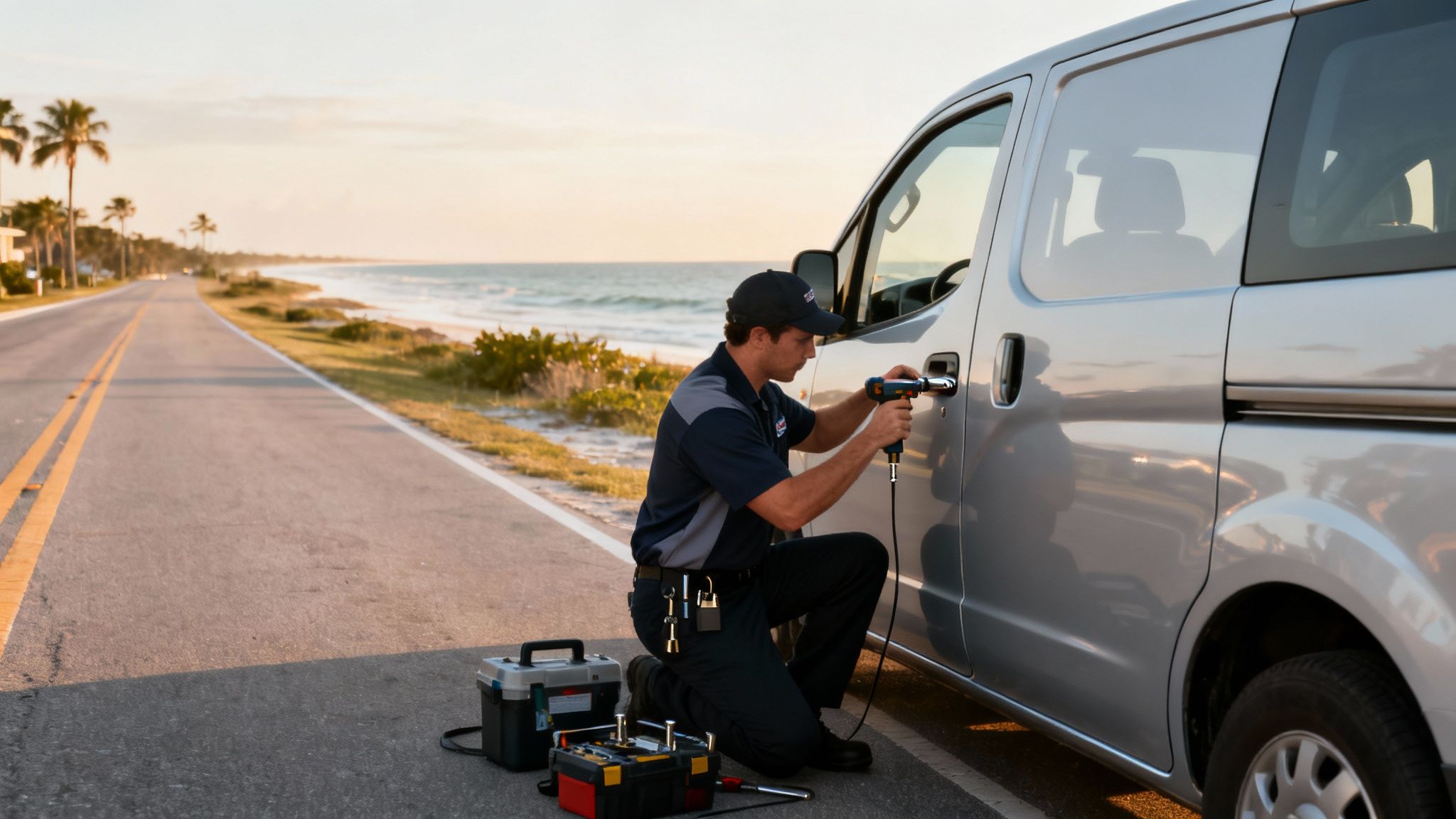
Let’s be honest. When you’re stuck outside in the cold and your DIY attempts have failed, the last thing you want is a long wait or a surprise bill. A local mobile locksmith is almost always the faster, safer, and more affordable choice for a frozen locks car door.
At Pro-B Locksmith, we're not just a dispatcher sending someone out. We're your neighbors, right here on the Treasure Coast.
Our vans are basically workshops on wheels. We roll up with everything needed to solve the problem right there, including professional-grade de-icing agents that work instantly without damaging your car's paint or sensitive lock parts. We'll get you back in your car on the spot, whether you're in Port St. Lucie, Fort Pierce, or Stuart. This is far more efficient than waiting for a tow truck for a simple car lockout.
Our Promise: We're on the scene in an average of just 15-20 minutes across the Treasure Coast. No sitting around for hours, no hidden fees—just fast, honest service from a certified technician who actually knows the area.
More Than Just a Frozen Lock
Sometimes, a frozen lock isn't the real problem. The intense cold can zap a key fob battery, making it seem like the lock is stuck when it's actually an electronic issue. This is where our experience really shines. Dispatched from St. Lucie County, we bring advanced diagnostic tools that can pinpoint and fix key fob problems, even for push-to-start remotes.
Think about this: industry data shows that around 25% of frozen door incidents are complicated by a key fob malfunction. Taking that to a dealership can easily cost over $300 and might even require a tow. We can handle key fob replacement right where you are for a fraction of that cost. The technology in locks is always evolving, as you can see from trends in the automotive door latch market, and we stay ahead of it.
From simple lockouts to complex electronic keys and even a house lockout, our expertise means you only need to make one call. We are the go-to solution for locals who need fast, reliable help.
When you're locked out and need an expert you can trust, call (772) 710-8169 for immediate help. You can also learn more about our emergency lockout services and how we can assist.
How to Prevent Frozen Car Locks
An ounce of prevention is worth a pound of cure, and that’s especially true when you’re trying to avoid getting locked out in the cold. Instead of wrestling with a frozen locks car door on a chilly Port St. Lucie morning, you can take a few simple steps to keep them working perfectly. Just five minutes of prep work before a cold snap hits can save you a world of frustration.
The whole game is about keeping moisture out of the lock mechanism. Moisture is the real enemy here, especially with our humid Treasure Coast air. When that moisture gets inside and freezes, it expands and jams up all the tiny, delicate parts of your lock.
Your Proactive Prevention Checklist
Here is a practical, step-by-step checklist to stop ice from forming by getting rid of moisture and sealing off entry points.
- Step 1: Lubricate Your Locks: Before the temperature really starts to drop, grab some silicone-based or graphite lubricant and give a quick spray directly into the keyhole. This creates a water-repellent coating that stops ice from ever getting a grip on the lock's internal parts.
- Step 2: Dry the Weather Stripping: After a car wash or on a damp, rainy day, take a quick minute to wipe down the rubber seals around your car door with a dry cloth. This simple step can keep the entire door from freezing shut against the frame.
- Step 3: Cover Your Car: Honestly, a good car cover is one of the best defenses you have. It acts as a physical shield, protecting your locks and doors from overnight dew, frost, and freezing rain.
Expert Insight: Lubricating your locks isn't just about preventing freezes. It also keeps all those internal pins and tumblers moving smoothly, which helps extend the life of the lock and reduces normal wear and tear over time.
These straightforward strategies are your best first line of defense. For more ideas on getting ready for colder weather, these general winter protection tips offer some great advice that goes beyond just your car. And if you ever run into a more complicated lock problem, you can learn all about our automotive locksmith services and see how we help drivers all over the region.
Answering Your Questions About Frozen Car Locks
Even with a solid plan, you might run into tricky situations with frozen locks. We get calls about these "what if" scenarios all the time from drivers across the Treasure Coast. Here are some quick, no-nonsense answers to the most common questions we hear.
Can I Use WD-40 on a Frozen Car Lock?
This is a big one. While it seems like a good idea, and WD-40 is great at displacing water, it's not the best choice for your locks in the long run. Over time, it actually attracts dust and grit, which can gum up the delicate pins inside the lock mechanism and cause even bigger headaches down the road.
Think of it as a last-resort, get-you-in-the-car-once fix. A dedicated graphite-based lock lubricant or a commercial de-icer is always the better, safer bet. If you do use WD-40 in a pinch, make it a point to clean and properly lubricate the lock later.
My Key Fob Stopped Working—Is the Lock Frozen?
It's easy to get these two mixed up. The culprit could be your lock, but it could just as easily be your key fob. Cold weather absolutely drains key fob batteries, drastically weakening their signal.
Here’s a step-by-step check:
- Step 1: Try your manual key.
- Step 2: If the key won't turn, your lock is almost certainly frozen solid.
- Step 3: If the manual key works perfectly but the fob does nothing, you're looking at an electronic issue.
Pro-B Locksmith can figure this out for you right on the spot in Port St. Lucie. We handle key fob replacement and battery changes for a lot less than the dealership will charge you. Just give us a call at (772) 710-8169 for a quick diagnosis.
Real-World Scenario: We got a call from a client in Stuart who was convinced their lock was frozen solid. When our tech arrived, the manual key turned without a problem. It turned out to be a dead fob battery—a five-minute fix that saved them a ton of money and a frustrating trip to the dealer.
The Lock Is Unfrozen, but the Door Is Still Stuck Shut. What Now?
Ah, the classic frozen-door-seal problem. This happens when moisture gets between the rubber weather stripping and the car's metal frame, basically gluing the door shut in freezing temperatures.
Whatever you do, don't just yank on the handle! You can easily tear the weather stripping, which leads to annoying wind noise and water leaks. Instead, try giving the door a firm push from the outside, right around the edges. That pressure is often enough to break the ice seal. If that fails, you can carefully trace the outline of the door with a plastic scraper, but never use metal. If it's still stuck, it's time to call a professional to avoid a costly repair.
How Much Does It Cost to Unfreeze a Car Lock?
Calling a professional locksmith in the Fort Pierce area is almost always cheaper than paying for repairs after trying to force a frozen lock. At Pro-B Locksmith, we're all about upfront, honest pricing for our car lockout services.
The final cost will depend on where you are and the complexity of the situation, but we promise you'll never see a hidden fee. Give us a ring for a fast, no-obligation quote.
When a frozen lock or any other car key emergency has you stuck, don't risk damaging your vehicle. For fast, reliable, and professional help anywhere on the Treasure Coast, you can count on Pro-B Locksmith. Visit us at https://problocksmith.com to see how we can get you back on the road.

