

That little blinking car icon on your dash can be a real headache, often meaning your anti-theft system has locked you out. The good news is that a simple reset is usually all it takes to fix the problem. Sometimes, just cycling the key in the ignition for about 10-15 minutes or even using the physical key in the driver’s door lock can clear the glitch and get you moving again.
Why Your Car's Anti Theft System Is Preventing It from Starting
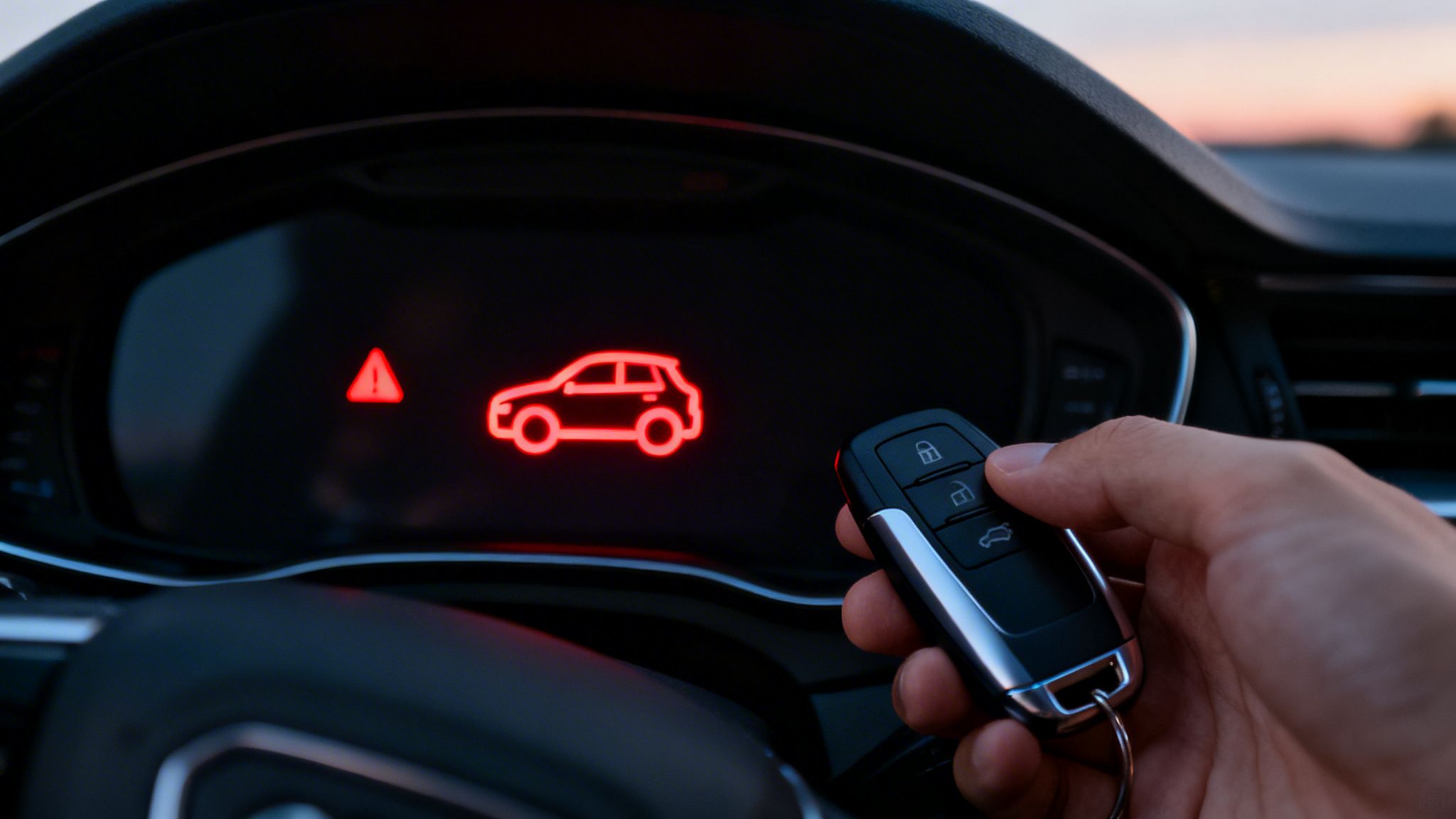
When your car refuses to start and you see that pesky security light flashing, don't jump to conclusions about engine trouble. This is actually your vehicle’s immobilizer doing its job. This built-in security feature is designed to stop theft by cutting power to the engine, but every once in a while, it gets a little overzealous and locks out the actual owner.
Here on the Treasure Coast, from Fort Pierce to Jensen Beach, this is an issue we see all the time. Your car's security system relies on a tiny transponder chip inside your key that "talks" to the vehicle's computer. If that signal gets scrambled or isn't detected, the system flags it as a potential theft and shuts everything down.
Common Triggers for an Immobilizer Lockout
So, what kicks off this frustrating chain of events? Most of the time, it's something surprisingly minor. We've noticed that searches for how to "reset anti theft" systems always spike after a few common triggers. For example, a dead battery in the key fob is the culprit in about 40% of cases, and a weak car battery accounts for another 30%. Even the intense summer heat here in Port St. Lucie can occasionally throw a wrench in the electronics.
While these systems are incredibly effective at stopping theft, they aren't perfect. You can actually learn more about the growth of vehicle anti-theft technology to see how far they've come.
Based on our experience serving drivers across the Treasure Coast, here are the most common reasons you might be locked out:
- Dead Key Fob Battery: This is the big one. The transponder chip in your key needs power to communicate. If the battery is weak or dead, your car simply won't recognize the key.
- Weak Car Battery: A low-voltage car battery can cause all sorts of electrical gremlins, including confusing the security module and triggering a lockout.
- Damaged Key or Transponder Chip: We’ve all dropped our keys. Unfortunately, a hard fall on the pavement can damage the delicate transponder chip inside, rendering it useless.
- Signal Interference: It's less common, but powerful radio frequencies from cell towers or other sources can sometimes disrupt the signal between your key and the car.
If you’re stranded in Stuart or Vero Beach and suspect a failing ignition or need a new key, don't wait. Call (772) 710-8169 for immediate help. Our mobile locksmiths can diagnose the issue on the spot.
Practical DIY Methods to Reset Your Car's Security System
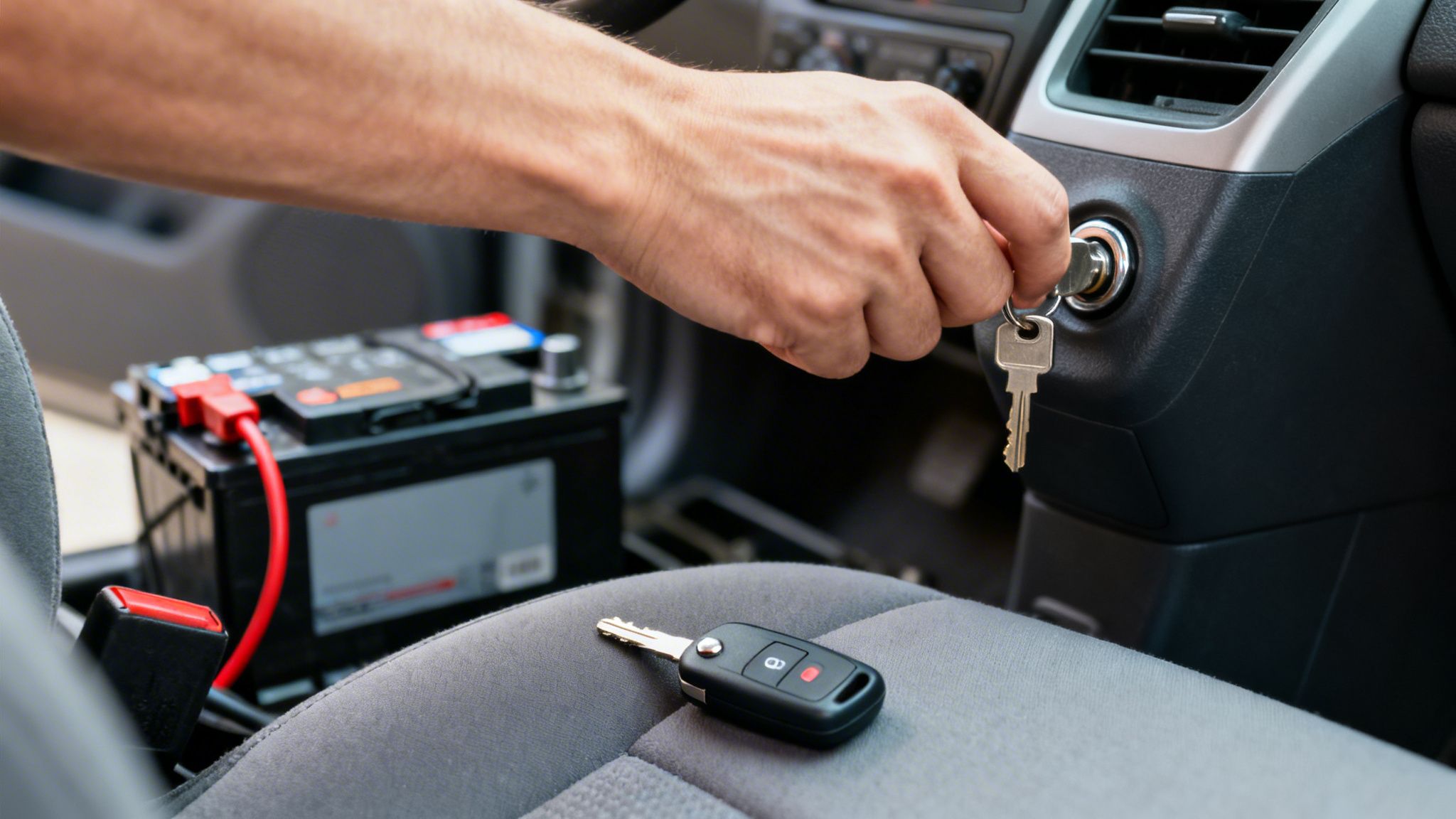
Before you resign yourself to an expensive tow or a dealership visit, take a moment. There are a few tried-and-true methods to reset anti theft systems that we've seen work on countless vehicles, from the everyday sedans in Fort Pierce to the luxury cars cruising through Jensen Beach. More often than not, a simple electronic handshake is all that's needed to fix the problem.
The whole point of these procedures is to get your key and the car's security module talking again. Sometimes, all it takes is a specific sequence to remind the system that you're the rightful owner and not a would-be thief.
The 10-Minute Ignition Cycle
This is the first thing we recommend to clients over the phone. It’s surprisingly effective and requires nothing more than patience. Here’s the step-by-step process:
- Insert your key into the ignition.
- Turn it to the "On" position—that’s the spot right before you'd crank the engine, where all the dashboard lights flick on.
- Leave the key in the "On" position for 10 to 15 minutes. You’ll likely see the security light on your dash blinking or staying solid. That's a good sign; it means the car's computer is recalibrating.
- Once the time is up, turn the key completely off.
- Wait a few seconds, and then try starting the engine.
Using the Driver's Door Lock
Here’s another old-school trick that works wonders, especially on slightly older models. Using the physical key in the door lock can manually signal to the car’s computer that everything is okay, snapping the immobilizer out of its confused state.
- Exit the vehicle and make sure all the doors are shut.
- Insert your key into the driver's side door lock and turn it to lock the car. Don't use the fob button.
- Wait about a minute, then use the physical key again to unlock the door.
This manual lock/unlock cycle can be just enough to disarm a stubborn system and let you start the car. But if you’ve tried these and you're still stuck—maybe the key feels stiff or won't turn properly—you might be looking at an ignition repair. Before you try anything more drastic, call (772) 710-8169 for immediate help to avoid making things worse.
Pro Tip: Don't be discouraged if a reset doesn't work on the first try. I've seen the ignition cycle method fail once, only to work perfectly on the second attempt. Some electronic glitches just need a little more convincing.
The Battery Disconnect Reset
If the system is being particularly stubborn, you can force a hard reset by disconnecting the battery. Think of it as a reboot for your car. Safety is key here, so put on some safety glasses first. Locate your car battery and disconnect the negative (black) terminal.
Leave it disconnected for at least 15 minutes. This gives the capacitors in the car's computer enough time to fully drain, clearing any corrupted temporary memory that might be causing the issue. Reconnect the terminal, ensuring it's on tight, and try starting the car. Keep in mind this will likely reset your radio stations and clock, but it’s a small price to pay to get back on the road.
To help you decide which approach to try first, here’s a quick breakdown of these common DIY methods.
DIY Anti Theft Reset Methods at a Glance
| Method | What It Does | Best For | Time Required |
|---|---|---|---|
| Ignition Cycle | Re-syncs the key's transponder with the car's immobilizer. | The most common electronic glitches where the security light is on/flashing. | 10-15 minutes |
| Door Lock Trick | Manually signals to the Body Control Module that an authorized key is present. | Systems that have been accidentally triggered by a dead fob battery or RF interference. | 2-3 minutes |
| Battery Disconnect | Forces a "hard reboot" of the car's entire electronic system. | Persistent electronic faults when other methods have failed. | 20-30 minutes |
Ultimately, these techniques are excellent first steps. They cost nothing but a little bit of your time and can often solve the problem right in your driveway. If you're still stuck after trying them, it’s a clear sign of a deeper issue that requires professional diagnostic tools.
What to Do When DIY Resets Don't Work
So, you’ve tried all the tricks. You’ve cycled the key, you’ve done the door lock method, and you even pulled the battery cable for a hard reset. But that little anti-theft light is still blinking away, mocking you from the dashboard.
When you’ve hit this point, it’s a strong sign that the problem runs deeper than a simple glitch. Continuing to poke around can unfortunately make things worse. This is usually where the DIY road ends and professional help becomes necessary.
The issue could be anything from a damaged transponder chip in your key fob to a worn-out ignition cylinder or even a fried security module in the car itself. These are the brains of the operation, and when one of them goes down, the whole system locks up. For anyone around Vero Beach or Stuart dealing with this, trying to bypass a modern immobilizer without the right diagnostic gear is a recipe for a massive headache.
When to Suspect a Deeper Problem
Not sure if you've reached that "call a pro" moment? Here are a few dead giveaways that you’re dealing with more than just a confused computer:
- Your Key Looks Battered: Is your key fob cracked? Has it taken a hard fall or a swim? That tiny transponder chip inside is surprisingly fragile, and any damage can render it useless.
- The Ignition Feels "Off": If turning the key feels loose, sloppy, or unusually stiff, the ignition cylinder itself might be failing. It can't make proper contact to read the key, which is a classic symptom needing ignition repair.
- Both Keys Fail to Work: Tried your spare key and got the same result? That pretty much confirms the problem isn't the key—it's the car.
A stubborn anti-theft light that refuses to clear after a few reset attempts is your car's way of screaming for a specialist. Trying to force it or keep messing with it can risk corrupting the vehicle's main computer, turning a manageable problem into a very expensive one.
When the usual anti-theft reset tricks fail, your best bet is to find a trustworthy mechanic or a skilled locksmith who knows these complex systems inside and out. A pro can diagnose the root cause quickly, without the guesswork.
If you're stranded and think it’s a key or ignition issue, give us a call at (772) 710-8169 for immediate help. Our mobile units come right to you, whether you need a quick key fob replacement or are dealing with a full-blown car lockout.
Why a Mobile Locksmith Is Your Smartest Call
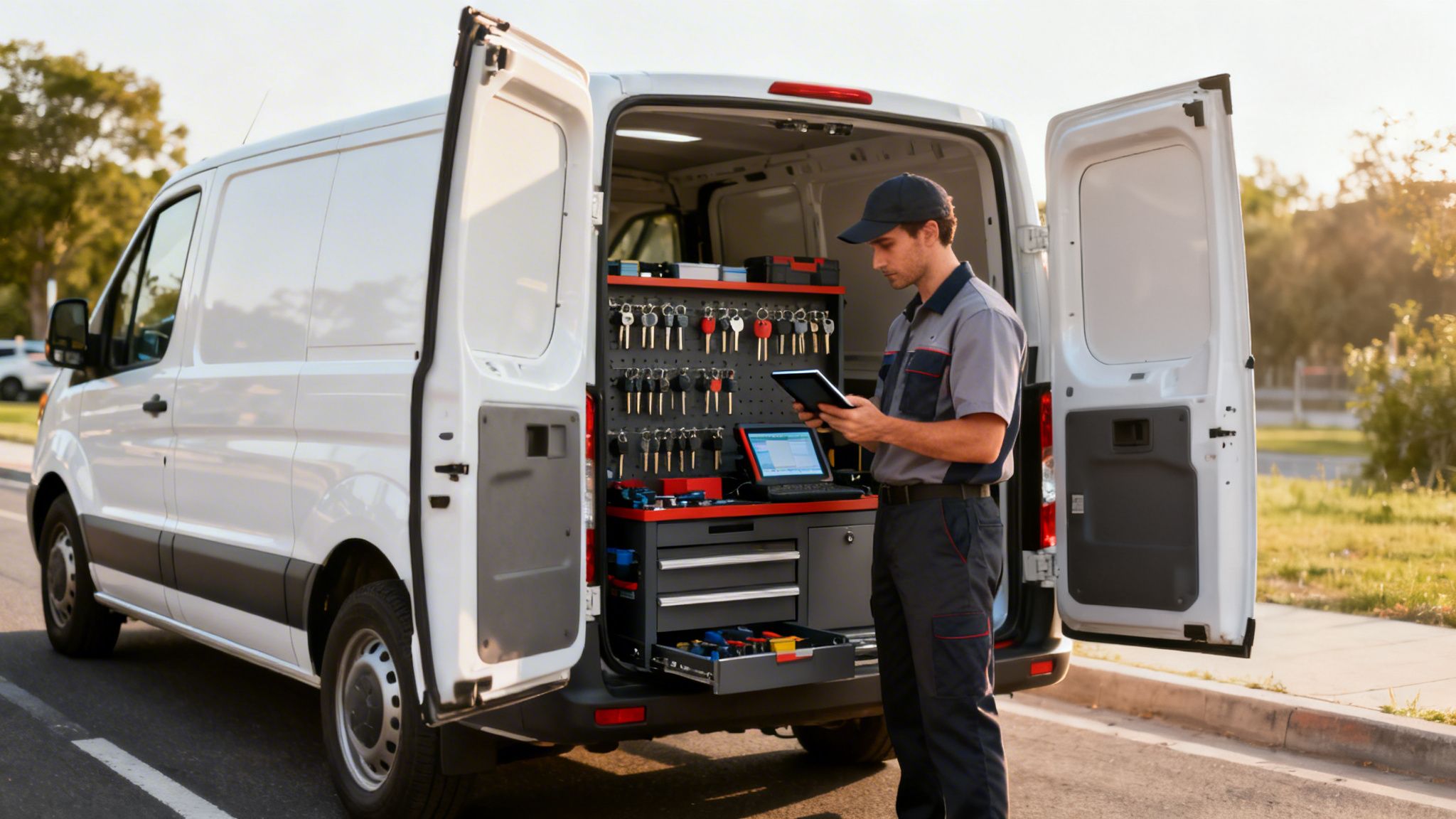
When your car's anti-theft system leaves you stranded, your first thought might be to call the dealership. But let's be honest, that usually means calling a tow truck, waiting for an appointment, and bracing for a hefty bill. There's a much better, more practical solution for drivers in our local communities.
A professional mobile locksmith brings the solution directly to you, whether you're stuck in your driveway in Port St. Lucie or in a shopping center parking lot in Stuart. This on-the-spot service saves you from the towing fees and the long, frustrating wait at the dealer's service center.
A Complete Workshop on Wheels
Our service vans are essentially rolling workshops. We've equipped them with the same sophisticated diagnostic scanners, key programming tools, and laser key cutters that dealerships use. This means we can handle just about any automotive lock and key problem right there on the curb.
Here’s a quick look at what we can do for you on-site:
- Ignition Repair: If your ignition cylinder won't recognize the key, we can diagnose and fix it.
- Key Fob Replacement: Lost your keys? We can cut and program new transponder keys and smart fobs on the spot.
- Car Lockout Service: We’ll get you back into your vehicle quickly and without a single scratch.
- Anti-Theft System Diagnostics: We use advanced tools to find the precise electronic glitch that's locking you out.
- House Lockout and Lock Change: Our expertise isn't limited to vehicles; we can secure your home too.
The global market for anti-theft systems is projected to reach an incredible $28.34 billion by 2034. As these systems get more complex to stop theft, they also become more prone to electronic glitches—creating a huge need for technicians who can perform resets on-site. You can read more about this growing market on Precedence Research.
This is our specialty. Dealing with complex vehicle security systems is what we do day in and day out. We provide clear, upfront pricing, so you won't get hit with unexpected charges. Because we're local, we can typically get to you in Fort Pierce or Jensen Beach in under 30 minutes.
Instead of losing your whole day to a tow and a dealer visit, one phone call gets the job done. When you need a fast reset anti theft service or any other automotive locksmith assistance, call (772) 710-8169 for immediate help.
Proactive Tips to Prevent Future Security Lockouts
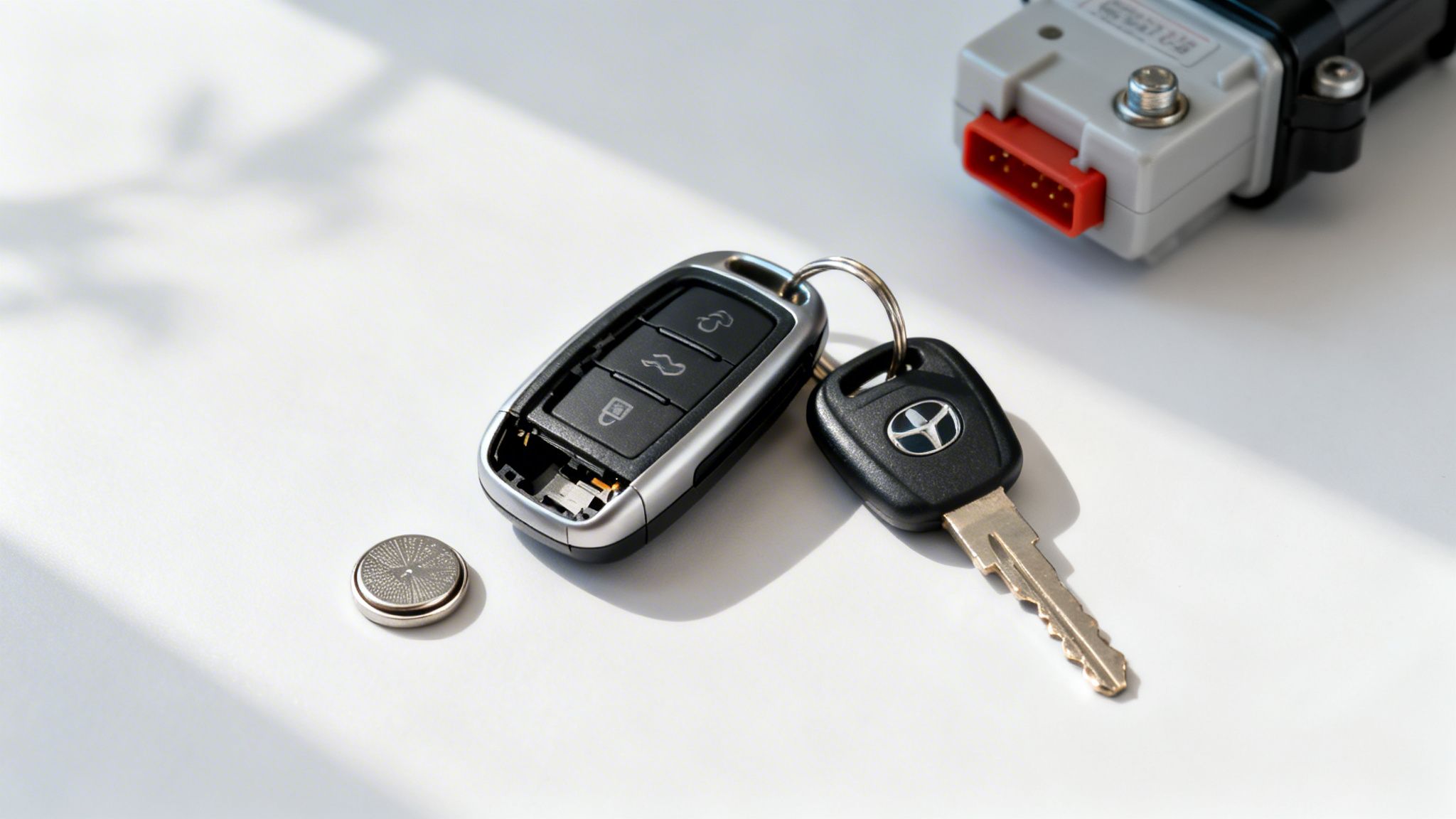
Getting back on the road after your car's anti-theft system locks you out is a great feeling. But honestly, the best fix is avoiding the problem in the first place. A few simple habits can keep your security system from turning against you, saving you the headache of having to reset anti theft systems down the line.
Most of the security lockouts we handle here in Port St. Lucie could have been prevented. The single most important thing you can do is replace your key fob battery annually. It’s a tiny, cheap part, but a weak battery is the number one reason immobilizers act up. Swapping it out is far cheaper than an emergency call.
Smart Habits for a Secure Vehicle
Think of your spare key as your best insurance policy. Having a fully functional, professionally programmed spare isn't a luxury—it’s an essential backup that can save you a ton of grief. If you've lost your spare or only ever had one, getting a key fob replacement now is a smart move. Just call (772) 710-8169, and we can cut and program a new one for you on the spot.
Pay attention to the early warning signs. If you find yourself mashing the unlock button a few times to get a response, or the car seems to hesitate before recognizing your key, that’s a classic signal the battery is dying.
Another culprit is your main car battery. When its voltage drops, it can cause all sorts of electronic chaos, often confusing the security module and triggering the immobilizer by mistake. Make sure your battery terminals are clean and tight, and get the battery tested, especially before the brutal summer heat hits here in Fort Pierce.
This idea of prevention isn't just for cars. Taking proactive security measures for preventing burglary is just as critical for your home. A little foresight goes a long way, whether that means getting a lock change for your front door or a new key for your vehicle.
Your Top Questions About Anti-Theft Systems Answered
When your car refuses to start, the questions start flying. Here on the Treasure Coast, we field a lot of calls from frustrated drivers trying to make sense of their car's security system. Let's get straight to the most common ones we hear every day.
Can I Just Disable My Car's Anti-Theft System for Good?
We get this one a lot, and the short answer is no—it's a really bad idea. While it might be technically possible on some very old vehicles, you absolutely shouldn't do it.
Think of it like this: disabling the immobilizer is the same as leaving your front door unlocked after a house lockout. It practically invites thieves to take your car. Beyond that, trying to bypass the system often creates a hornet's nest of new problems. It can clash with your car’s main computer (the ECU), triggering a cascade of electrical gremlins that are far more expensive to fix than the original issue.
How Do I Know if It's a Problem with My Key or the Car?
This is the first thing you should try to figure out. The easiest diagnostic trick in the book is to grab your spare key.
If the spare key works perfectly, you've found your culprit: the problem is with your primary key. It's usually something simple, like a dead battery or a damaged transponder chip inside. But if neither key works, the fault lies within the car's security system itself. This could be anything from the antenna ring around the ignition to the immobilizer module.
Pro Tip: Always try your spare key before you do anything else. This one simple step can save you a ton of time and frustration, telling you immediately if you need a quick battery change or professional help.
If you’re in Port St. Lucie or Vero Beach and discover a bad key is the issue, getting a professional key fob replacement is the right move. We've got more answers just like this one, too; you can read our full FAQ page for additional info.
Will Disconnecting the Battery Erase My Key's Programming?
Thankfully, no. Disconnecting the car battery won't wipe your key's programming. This crucial data is stored in what's called non-volatile memory, which means it doesn't need power to remember the code.
All a battery disconnect does is reset the system’s temporary memory. Often, that's enough to clear the minor glitch that caused the lockout in the first place. If your key does need to be reprogrammed, that's a job for a pro. Call (772) 710-8169 for immediate help—we can reprogram it for you right where you are.
When you need fast, reliable answers and on-the-spot solutions for your car's security system, trust the local experts at Pro-B Locksmith. We're here to help you get back on the road quickly and safely. Learn more about our full range of automotive and residential services at https://problocksmith.com.

