You turn the key in a parking lot in Stuart. The dash lights up. The radio works. The battery seems fine. But the engine does nothing, or it cranks and immediately refuses to run.
That moment confuses a lot of drivers on the Treasure Coast because the key still looks normal. It still fits. It still turns. So it feels like the key should work.
Modern car keys do more than move metal parts inside the ignition. Many of them carry a tiny electronic chip with a digital identity. If the vehicle does not recognize that identity, the car stays immobilized. That is why a key can turn normally and still fail to start the engine.
If you have been asking how does a transponder key work, the short answer is this. The key and the car perform a fast electronic check before the vehicle allows fuel and ignition functions to operate. If the code matches, the car starts. If it does not, the system blocks it.
That sounds technical, but the practical takeaway is simple. A transponder key is part key, part security device.
Drivers in Port St. Lucie, Fort Pierce, Vero Beach, Stuart, and Jensen Beach run into this every week after losing a key, buying a used car with only one key, or dealing with a key that suddenly stops working after rain or coastal humidity. If this sounds familiar, don't worry, help is just a phone call away. Call (772) 710-8169 for immediate help.
Your Car Key Is Smarter Than You Think
Drivers all over the Treasure Coast run into the same problem. The key slides in, turns cleanly, and still the car will not start.
That happens because the working part of a modern key is not just the metal blade. The cut metal still handles the physical job of turning the lock or ignition cylinder, but approval often happens inside the plastic head or fob. A small transponder chip has to be recognized by the vehicle before the engine is allowed to run.
Why the key turns but the car stays locked down
This catches people off guard because the key does not look broken.
Common signs include:
- Dash lights come on: the vehicle has electrical power.
- Key turns normally: the mechanical cut matches the ignition.
- Engine will not start or starts and dies: the immobilizer did not approve the key.
- Security light flashes or stays on: the anti-theft system is not reading the chip correctly.
In real service calls around Port St. Lucie, Fort Pierce, and Stuart, that warning light saves a lot of guesswork. It points away from the usual suspects and toward a key, chip, antenna, or programming issue.
Treasure Coast conditions do not help. Humidity, salt air, wet pockets, and worn-out key shells can all contribute to transponder trouble over time, especially on older keys that have been dropped, cracked, or taped back together.
Why this became standard
Automakers adopted transponder systems because they made stolen-car starts much harder with copied metal keys alone. That changed what a spare key really is. On many vehicles, a cheap duplicate from a kiosk or hardware store may unlock the door and still leave you stranded in the parking lot.
A proper replacement usually needs two jobs done correctly. The blade has to be cut to fit the locks, and the chip has to be matched to the vehicle.
Practical takeaway: If your vehicle is old enough to use a traditional-looking key but new enough to have factory anti-theft, a plain metal copy often will not start it.
What frustrated drivers usually need
Most calls I see in this situation fall into three buckets:
- A new key cut and programmed to the car
- Diagnosis when the car stops recognizing a key that used to work
- Deleting lost or stolen keys from the vehicle’s memory
That third job matters more than many drivers expect. If a key went missing at the beach, in a gym bag, or during a move, replacing it is only part of the fix. Removing the missing key from the system closes the security gap.
This is also where a mobile locksmith often saves time and money compared with a dealership visit. On-site service in Port St. Lucie means the car does not need to be towed just to confirm whether the problem is the key, the programming, or the vehicle’s anti-theft system.
The Secret Handshake Between Your Key and Car
You turn the key, the dash lights up, and the engine still will not stay running. Around Port St. Lucie, that usually feels like the car picked the worst possible time to get picky. In many cases, the issue is not the metal key blade at all. It is the car failing to verify the chip inside the key.
What the chip does
Inside the key head is a small transponder chip. It is passive, so it does not need its own battery to handle the anti-theft part of the job.
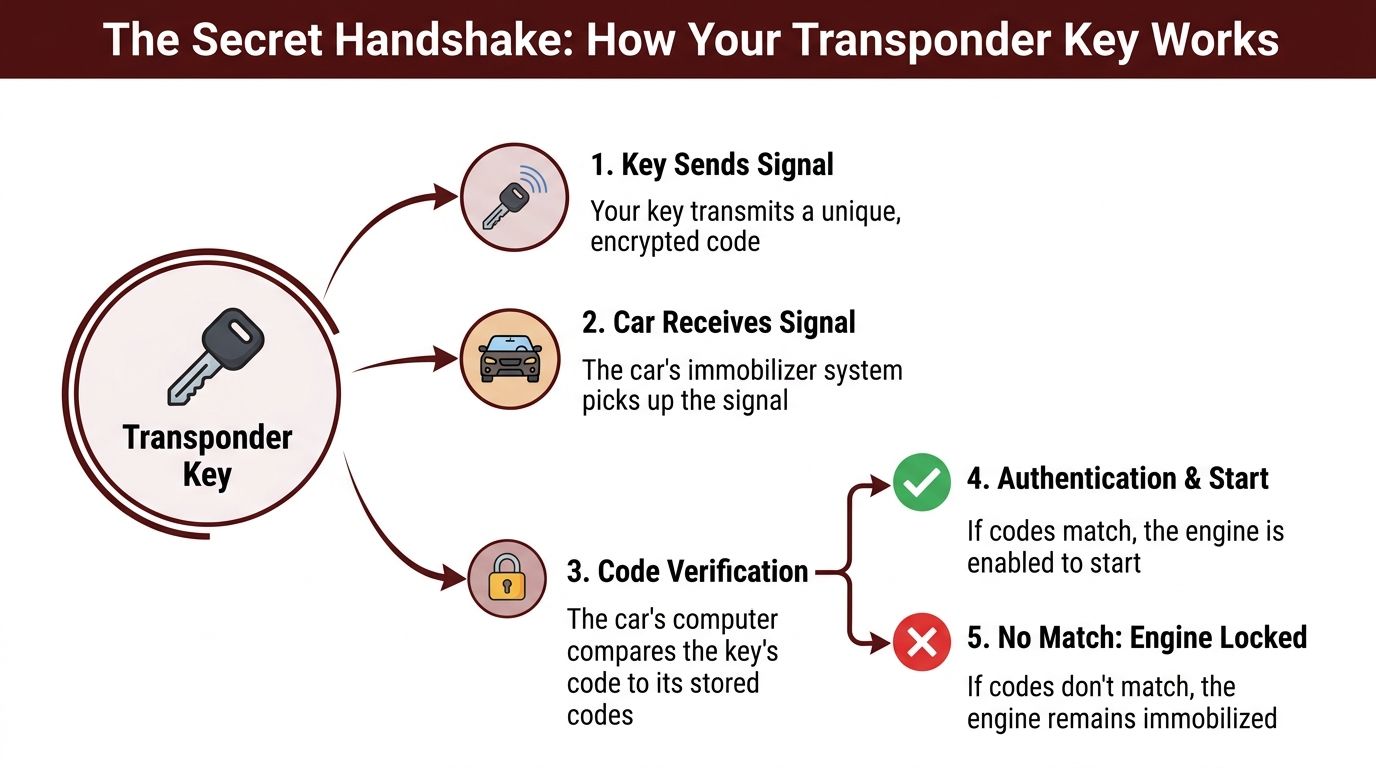
When you put the key in the ignition and turn it, the antenna around the ignition sends out a signal. That signal energizes the chip. The chip responds with its coded ID, and the immobilizer checks whether that ID belongs to the vehicle. If the code matches, the car allows the engine systems to operate. If it does not, the system blocks it.
That exchange happens fast enough that drivers never notice it when everything is working.
What happens during the verification process
The sequence is simple from the driver’s side, but each part has to work.
You insert and turn the key
The ignition antenna creates the field that wakes up the chip.The chip responds
The transponder sends its coded signal back to the vehicle.The immobilizer checks the code
The car compares that response to the approved keys stored in memory.The vehicle allows or blocks the start
A recognized key gets permission to run the engine. An unrecognized key does not.
That is why a key can fit perfectly in the ignition and still fail to start the car.
Why a plain copy often fails
A hardware-store duplicate may copy the cuts on the blade and still leave you stranded outside a grocery store or beach access lot. The lock only cares about the shape. The immobilizer cares about the chip and whether that chip belongs to the car.
Drivers run into this a lot after buying a cheap spare online. The key looks right. It may even unlock the door. But without the correct transponder and matching programming, the vehicle rejects it.
That is also why two keys that look identical can behave very differently in real use.
Why proximity matters
The chip is designed to communicate only at very short range near the ignition area. That is a security feature. The vehicle is looking for a valid key in the exact place it expects one, not a signal from farther away.
On older vehicles with traditional transponder keys, a weak read can come from more than one source. A damaged key shell can let the chip shift out of position. Corrosion inside the ignition area can interfere with reading. On the Treasure Coast, salt air and humidity do real damage over time, especially on vehicles that spend years parked outside.
What this means when your car will not recognize the key
If the key turns and the car still will not start, the vehicle is usually rejecting the transponder signal or failing to read it correctly. Common causes include a cracked chip, a poorly made duplicate, water intrusion, ignition antenna problems, or an immobilizer fault.
That is why a proper diagnosis matters before paying for a replacement key you may not need. A mobile automotive locksmith in Port St. Lucie can usually test whether the problem is the key, the programming, or the vehicle side of the system right where the car is parked. In practice, that often saves a tow, a long wait at the dealership, and a bill for the wrong fix.
Pairing a New Key to Your Vehicle
Cutting a key and programming a key are two different jobs.
Cutting shapes the blade so it fits your locks and ignition. Programming introduces the chip to the car’s immobilizer so the vehicle will accept it. A key needs both if you want full function.
What a locksmith does on-site
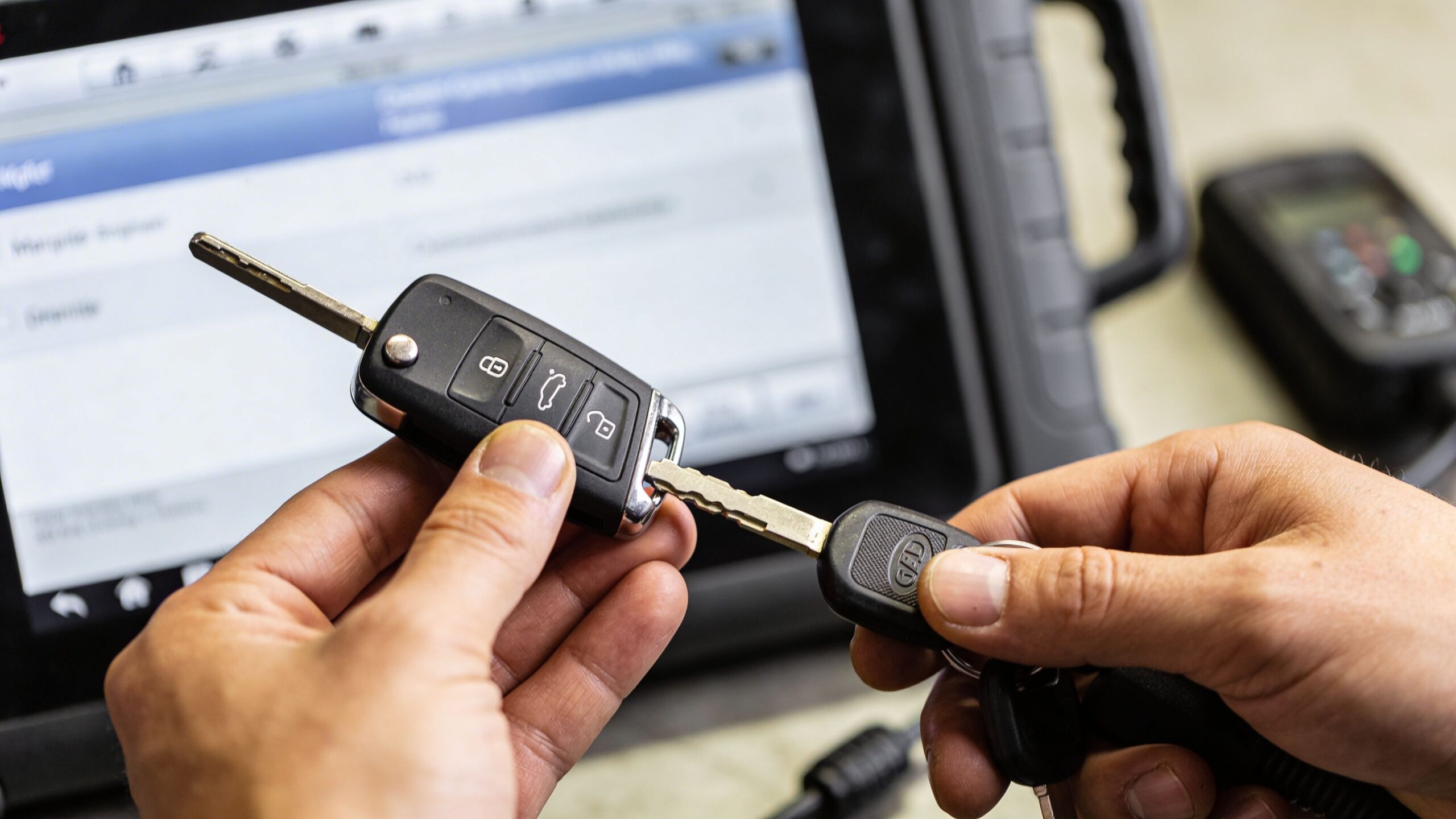
A proper key programming visit is not guesswork. It uses vehicle-specific tools and a process that follows the immobilizer’s rules.
Most mobile automotive locksmiths use:
- A diagnostic programmer: This communicates with the immobilizer or ECU.
- An OBD-II connection: The programmer plugs into the car’s onboard diagnostic port.
- A laser cutter or key machine: This cuts the blade accurately.
- Chip-compatible keys or fobs: The replacement must match the vehicle’s system.
If you need local automotive help, this is the type of service described on this automotive locksmith page.
The programming sequence
The exact steps vary by make and model, but the workflow usually looks like this:
Read the vehicle information
The technician verifies the year, make, model, and key type first. That sounds basic, but it avoids one of the most common mistakes in key replacement, using the wrong chip type or wrong fob platform.
Cut the mechanical key
If the vehicle uses a blade, the key is cut to match the lock and ignition. On some vehicles, that means decoding the lock. On others, it means cutting by code.
Connect the programmer
The programmer plugs into the OBD-II port and communicates with the immobilizer system. Here, the electronic work starts.
Put the vehicle in programming mode
Some vehicles require a security access routine before accepting new keys. The system has to allow enrollment. Without that step, the car will reject the new key even if the hardware is right.
Add the new key
The new transponder or fob is introduced to the vehicle’s memory. The car records it as an authorized key.
Remove old keys when needed
If a key was lost or stolen, the technician can often erase missing keys from memory. That way, only the keys currently in your possession stay authorized.
Security tip: If you bought a used vehicle in Fort Pierce or Vero Beach with only one key, ask for all missing keys to be removed from the system. A replacement alone does not solve the security problem.
Why this is different from buying a blank online
Online blanks can work in some cases, but they also create a lot of avoidable failures.
Common problems include:
- Wrong chip family
- Locked or previously programmed keys
- Incompatible aftermarket board
- Poor shell fit
- A cut key that works in the door but not in the ignition
- Paying for programming on hardware that was never compatible
For some older vehicles, onboard programming is possible if you already have working keys. But on many models, especially later ones, you need professional diagnostic access and the right tools.
That is why so many people end up calling after buying a cheap key online that cannot be enrolled, cannot be cut correctly, or cannot pass the immobilizer check.
Common Transponder Key Problems on the Treasure Coast
You leave work in Port St. Lucie, turn the key, and the car suddenly acts like it has never seen that key before. A few hours later it starts. The next morning, same problem again. That pattern is common on the Treasure Coast, and it throws people off because the failure is inconsistent.
Humidity and salt air cause more trouble than drivers expect
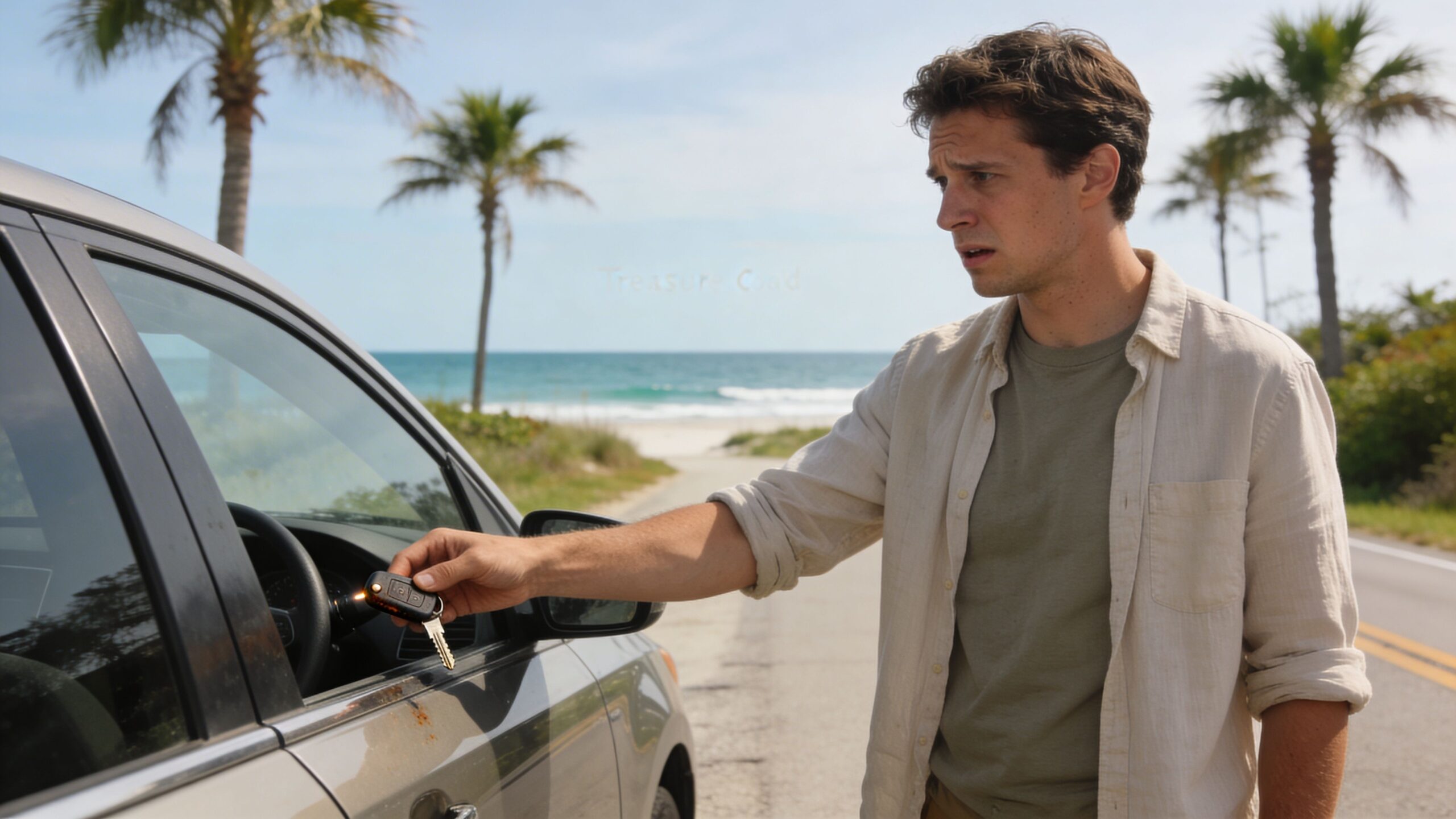
Our coastal climate is hard on keys, ignitions, and electronic contacts. Moisture gets trapped in pockets, cupholders, beach bags, and center consoles. Salt in the air speeds up corrosion, especially when a key already has a cracked shell or a weak seal.
In our experience, a large share of the "worked yesterday, dead today" calls involve moisture, corrosion, or repeated exposure to damp conditions. Drivers often notice it after a storm, a beach day, or a week of heavy humidity. The key may still unlock the door and even turn the ignition, but the chip signal is no longer being read reliably.
That is why these problems can feel random. They usually are not.
The problems seen most often
Some failures start inside the key. Others come from the vehicle reading system.
Dropped key damage
A transponder chip is small and protected by a plastic shell, but a hard drop onto concrete can crack the chip or loosen internal connections. The outside can look fine while the car refuses to recognize it.
Worn or split key shells
A loose shell lets moisture in and allows the chip to shift out of place. On some keys, that tiny change in position is enough to create an intermittent no-start problem.
Water exposure
Wet clothes, rain, spilled drinks, and beach gear cause more trouble than people expect. We see this often in Jensen Beach and Hutchinson Island, where keys end up in damp pockets or sitting in a humid vehicle overnight.
Ignition antenna ring problems
Sometimes the key is not the problem at all. The antenna ring around the ignition has to read the transponder correctly. If that reader is weak or failing, the immobilizer may reject a good key.
What your dashboard may be telling you
Pay attention to the security light.
A flashing key icon, padlock symbol, or security light that stays on during a start attempt usually points to a transponder or immobilizer problem. It does not automatically mean you need a new starter, battery, or a tow to the dealership. In Port St. Lucie, that distinction matters because a mobile locksmith can often test the key and vehicle on site for far less hassle than towing the car across town.
What you can check before calling
Do not pry the key open or force it into the ignition. That usually turns a simple key problem into a broken shell or damaged ignition.
Check a few basics first:
- Try the spare key: If the spare works, the original key is the likely problem.
- Inspect the shell: Cracks, separation, or signs of moisture matter.
- Watch the security light: If it flashes during start attempts, the immobilizer is likely involved.
- Notice the pattern: Trouble after rain, beach trips, or humid days is useful diagnostic information.
- Test the remote separately: On many vehicles, the remote battery and the transponder chip are separate functions.
A dead remote battery does not always mean the transponder chip failed. The opposite is also true. We see plenty of keys that still lock and unlock the car but will not start it.
When it is not really a key problem
Drivers often buy a new key too quickly. Sometimes the issue is ignition wear, a weak reader coil, a poor aftermarket shell, or old used-car repairs that left the vehicle with mismatched key parts.
Remote-start systems and aftermarket alarms can also interfere with normal immobilizer operation. That is one reason dealership quotes are not always the fastest or most cost-effective answer for Treasure Coast drivers. A mobile locksmith can usually diagnose the fault where the car sits, whether it is in Stuart, Fort Pierce, Vero Beach, or Port St. Lucie. If you want to confirm local coverage before booking, check our Treasure Coast mobile locksmith service areas.
DIY Solutions vs Professional Key Replacement
A lot of Treasure Coast drivers start in the same place. The car will not start, the security system seems involved, and an online key looks a lot cheaper than a service call.
Sometimes that bargain works out. A lot of times, it turns into a second purchase, a programming fee for the wrong part, or a tow to the dealer after all.
What DIY can and cannot do
DIY makes the most sense on older vehicles with documented onboard programming steps and at least one working key in hand. In that narrow situation, an owner may be able to add a spare and save some money.
Modern transponder systems leave less room for trial and error. The key has to match the vehicle in several ways, not just the blade shape. The chip type, frequency, and programming method all have to line up. A key that turns the ignition is not automatically a key that the car will accept.
We see the same mistakes over and over on the Treasure Coast, especially after drivers order parts online in a hurry:
- Wrong transponder chip for the vehicle
- Used or previously programmed keys that cannot be added
- Cheap aftermarket shells that do not hold up well in heat and humidity
- A blade cut correctly, but electronics that the immobilizer rejects
- Paying for programming on hardware that was never compatible
Humidity adds another wrinkle here. Keys and remotes that have been fine in a dry climate can start acting up after months of beach air, rain, and being left in a hot console. That does not mean every failed start needs a brand-new key, but it does mean bargain parts are more likely to become repeat problems.
Dealer vs mobile locksmith vs DIY
The best choice depends on what failed, how quickly you need the car back, and whether the vehicle can move.
DIY has the lowest upfront cost, but the highest chance of buying the wrong part. That is usually where frustration starts.
A dealership is sometimes the right call for unusual security systems, warranty situations, or vehicles that require brand-specific access. The downside is practical. If the car will not start in Port St. Lucie, Fort Pierce, Stuart, or Vero Beach, getting it to the dealer may cost almost as much as the key work.
A mobile locksmith fits the middle ground for many drivers. The car stays where it is. The key can be cut and programmed on site in many cases. If the issue turns out to be something else, you usually find that out before paying dealer-level prices for a tow and an appointment slot.
Car Key Replacement Options Compared
| Method | Typical Cost | Time Required | Risk Level | Best For |
|---|---|---|---|---|
| DIY | Varies | Unpredictable | High | Older vehicles with confirmed onboard programming procedures |
| Mobile locksmith | Often lower than dealer pricing | Usually same visit at your location | Moderate to low when properly diagnosed | Lost keys, lockouts, on-site key fob replacement, programming, ignition-related diagnosis |
| Dealership | Usually highest | Often slower because of scheduling and transport needs | Low for OEM fitment, high inconvenience if vehicle is disabled | Warranty concerns, brand-specific cases, drivers who prefer dealer channels |
The practical trade-offs
DIY
DIY gives you control over the purchase, but not always over the outcome. If you are not certain about the exact key type your vehicle accepts, the savings disappear fast.
Dealership
Dealers usually have direct access to factory parts and procedures. You pay for that access in price, wait time, and inconvenience, especially if the vehicle is stuck in a driveway or parking lot.
Mobile locksmith
A well-equipped mobile locksmith can usually handle cutting, programming, and basic diagnosis in one visit. That matters when the problem is still unclear. On the Treasure Coast, it also matters because many calls are not clean textbook failures. We see moisture exposure, aftermarket parts, worn ignitions, and mixed key histories from used cars all the time.
A simple rule helps. If you have no working key, the vehicle is immobilized, or you are not fully sure the key is the only problem, a mobile locksmith is usually the most practical first call.
The same visit may also solve a car lockout, key fob replacement, or part of an ignition repair job if the problem is both electronic and mechanical.
What to Expect From Your Mobile Locksmith Visit
A lot of drivers hesitate to call because they do not know what the visit will look like. They assume it will be vague, expensive, or full of surprises.
A professional mobile locksmith visit should feel straightforward.
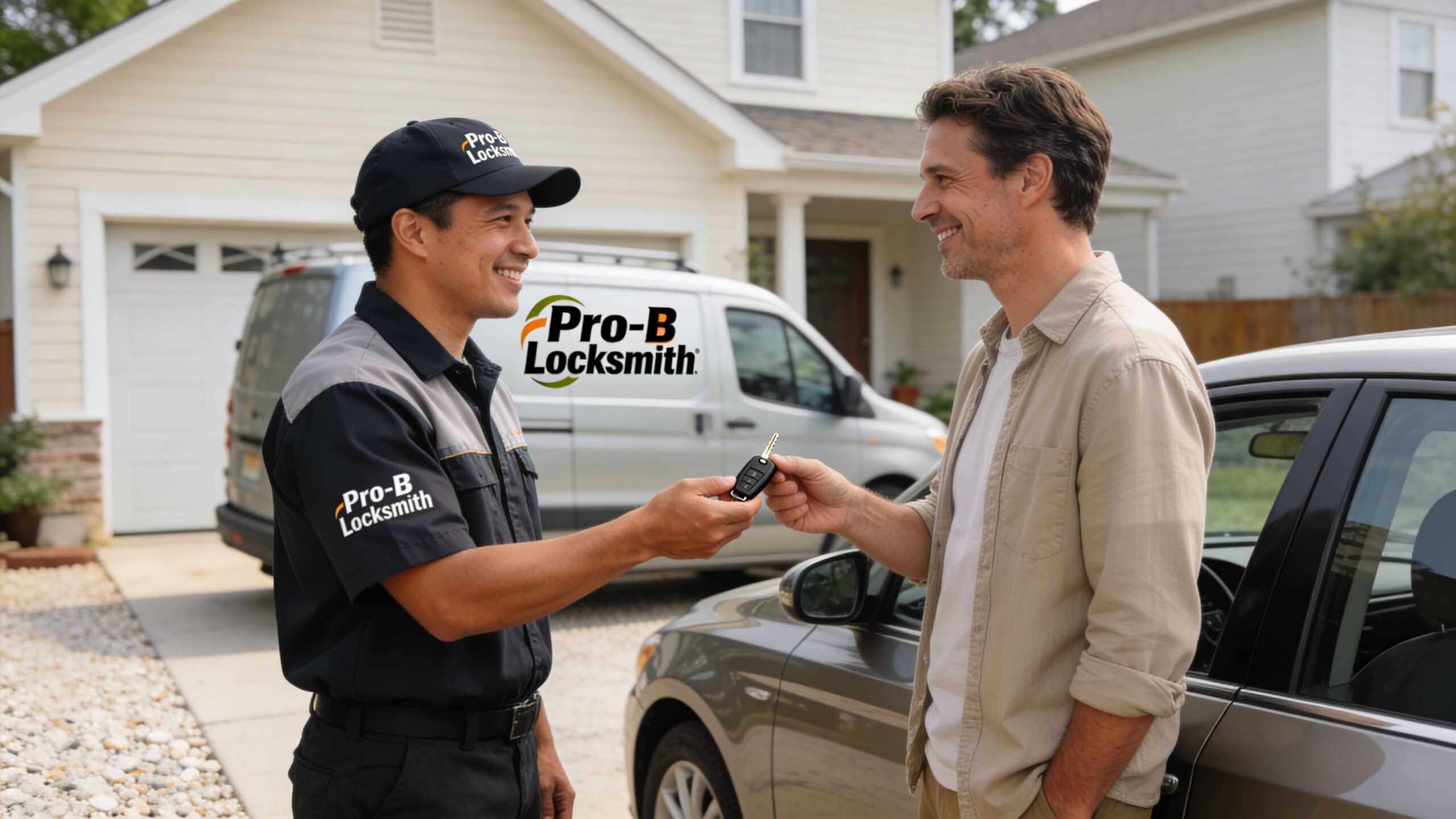
The first phone call
The first step is usually simple. You describe the vehicle, the symptoms, and whether you have any working keys left.
Useful details include:
- Year, make, and model
- Whether the key turns
- Whether the security light is flashing
- Whether a spare key works
- Whether you lost all keys or have one damaged key
- Your location in Port St. Lucie, Fort Pierce, Vero Beach, Stuart, or Jensen Beach
That short conversation helps separate a key-programming job from a lockout, an ignition issue, or a situation where the vehicle itself may need further diagnosis.
What arrives on site
A proper mobile setup is not just a van with blanks in a box.
For transponder work, the technician typically brings:
- Diagnostic programming equipment
- Laser key cutting equipment
- Key shells, transponder keys, and remotes
- Lock decoding tools
- Tools for non-destructive entry if the keys are locked inside
If the issue is not just the key, the same visit may also address ignition repair or verify whether the problem is mechanical, electronic, or both.
What happens during service
The technician verifies ownership, checks the vehicle, and confirms the failure mode.
Then the work usually follows a clean order:
- Gain access if it is a car lockout
- Cut the mechanical key if needed
- Program the transponder or key fob
- Test start the vehicle
- Test door locks, trunk, panic, and remote functions
- Erase old keys if security requires it
If the job involves a damaged ignition, the technician may stop and explain that before programming anything unnecessary. That matters. A good locksmith does not force a key sale when the fault is an ignition cylinder or reader issue.
Why drivers like mobile service
The biggest advantage is not just convenience. It is context.
The locksmith sees the vehicle where it failed. That helps with diagnosis. A key that works in a dry shop may fail in a damp driveway after coastal exposure. A problem that looks like a bad key on the phone may reveal itself as a worn ignition once the technician sees it in person.
That same mobile model also helps with other common calls. If you moved into a new home the same week you lost a car key, many drivers also ask for a lock change or rekey on the house. If you got locked out of the house while dealing with the car, a house lockout can often be handled too.
What you should expect: clear communication, up-front pricing, proof that the replacement key starts the car, and confirmation that old lost keys are removed when requested.
Frequently Asked Questions About Transponder Keys
What is the difference between a transponder key, a remote key, and a smart key
A transponder key has a chip that communicates with the immobilizer so the car will start.
A remote key adds buttons for lock, unlock, trunk, or panic. The remote functions and the transponder functions may live in the same housing, but they are not the same job.
A smart key or proximity key works with push-to-start systems. Instead of inserting the key into the ignition, the car detects the authorized fob nearby and allows start through the button.
Can a transponder key just lose its programming
Usually, people say that when the key suddenly stops working. In practice, the issue is often hardware-related instead. The chip may be damaged, the shell may be failing, the ignition antenna may not be reading properly, or moisture may have affected the key.
The car did not usually “forget” the key for no reason.
Will a dead fob battery stop the car from starting
Not always.
On many vehicles, the remote battery affects lock and unlock functions, but the transponder chip still works separately for starting. On others, especially newer proximity systems, battery condition matters more. If the remote stops working but the car still starts, that points toward one kind of issue. If both stop together, more diagnosis is needed.
Will insurance help cover a lost key
Sometimes, depending on your policy. Check your full coverage and roadside or key replacement benefits if you have them.
In many cases, though, the deductible and claim process make a direct locksmith call faster and simpler. If you want general answers before booking service, this locksmith FAQ page covers many of the questions drivers ask first.
If your key turns but your car will not start, or you need car lockout service, key fob replacement, ignition repair, a house lockout, or a lock change anywhere on the Treasure Coast, contact Pro-B Locksmith. Local mobile service means help comes to you in Port St. Lucie, Fort Pierce, Vero Beach, Stuart, or Jensen Beach. Call (772) 710-8169 for immediate help.