Tag: Port St Lucie locksmith

  • My Key Won’t Turn in the Ignition: A Port St. Lucie Driver’s Guide

    My Key Won’t Turn in the Ignition: A Port St. Lucie Driver’s Guide

    It’s a feeling every driver on the Treasure Coast dreads: you slide your key into the ignition, ready to go, and… nothing. The key is stuck solid. It won’t turn. Before you panic and picture expensive repair bills, take a breath. This common problem often has a surprisingly simple fix.

    From Port St. Lucie to Fort Pierce, we see this all the time. The good news is that a stuck key is rarely a sign of a major mechanical failure. It’s usually caused by a handful of predictable issues that you can often solve yourself in just a few seconds, right there in your driveway in Stuart or a parking lot in Vero Beach.

    Common Reasons Your Key Is Stuck

    Let’s walk through the most frequent culprits we encounter when a customer’s key won’t turn.

    The Steering Wheel Is Locked

    This is, without a doubt, the number one reason. If you turned the steering wheel after taking the key out, you likely engaged the anti-theft steering lock. This feature puts pressure on the ignition cylinder, physically blocking the key from turning. It’s a simple security measure, but it catches a lot of people off guard. A real example: a client in Jensen Beach called us in a panic, but this simple fix had them on their way in under a minute.

    Your Car Isn’t in Park or Neutral

    For safety, vehicles with automatic transmissions will only start when they are securely in Park (P) or Neutral (N). If your gear shifter is even slightly out of alignment—maybe it looks like it’s in Park but isn’t fully clicked in—the car’s neutral safety switch will prevent the ignition from engaging.

    A Worn-Out or Damaged Key

    Keys don’t last forever. Years of rattling around in a pocket or purse can cause the metal grooves to wear down, get bent, or even develop tiny, hairline cracks. If the key’s cuts no longer match the pins inside the ignition cylinder perfectly, it simply won’t work. This is a common issue for older vehicles we service in the Fort Pierce area.
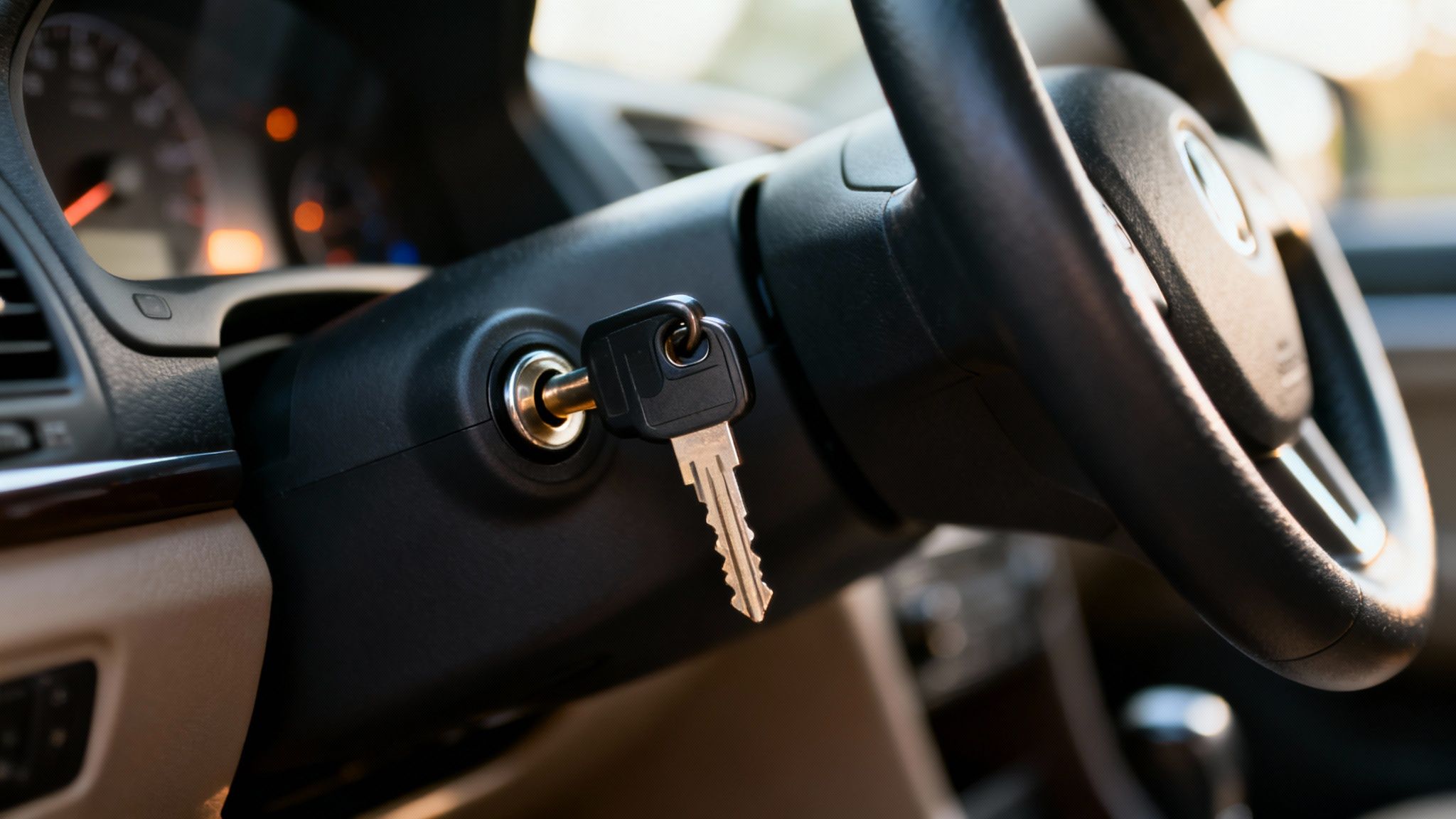
    Car key in ignition switch, illuminated dashboard in background, ready to start vehicle.

    A Faulty Ignition Cylinder

    While less common, the problem can sometimes be the lock itself. Over time, the internal pins and tumblers inside the ignition cylinder can get stuck or wear out. This internal failure will stop even a brand-new key from turning. If this is the case, an ignition repair is needed.

    Pro Tip: When the steering wheel is locked, it’s putting direct pressure on the ignition lock. The fix is usually just as simple: gently wiggle the steering wheel from side to side while turning the key. You’ll feel the pressure release, and the key should turn. This little trick solves the problem in the vast majority of cases.

    If you’ve tried these quick checks and you’re still stuck, don’t force it. The last thing you want is a broken key snapped off in your ignition. That’s when a simple problem becomes a much bigger one. Call (772) 710-8169 for immediate help; our mobile team is ready to assist anywhere from Port St. Lucie to Vero Beach.

    Quick Fixes You Can Try Right Now

    Before you start thinking the worst, here are a few simple steps you can take when your key gets stuck in the ignition. We get calls about this all the time from drivers between Stuart and Jensen Beach, and more often than not, one of these practical tips does the job.

    Let’s start with the number one reason this happens.
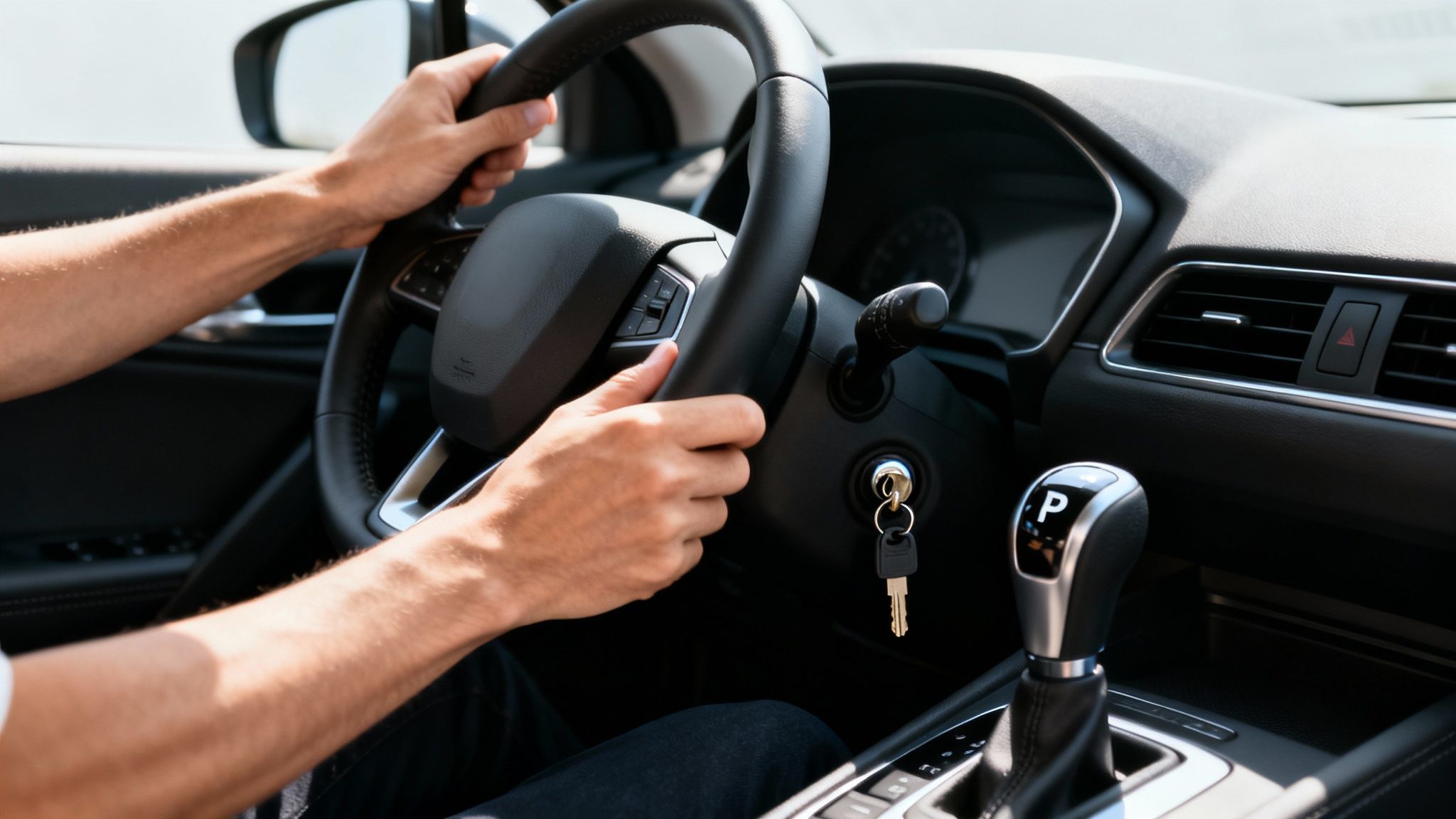
    A person's hands on a car steering wheel, with keys in the ignition and an automatic gear shifter.

    Step 1: Is Your Steering Wheel Locked?

    Most cars have a built-in anti-theft feature that locks the steering wheel when it’s moved after the key has been pulled out. It’s a great security measure, but it also puts pressure on the ignition cylinder, physically stopping the key from turning. This is probably the most common cause of panicked calls we receive.

    How to Fix It:
    You just need to take the pressure off the lock. While you gently try to turn the key, rock the steering wheel back and forth. You aren’t trying to force it, just wiggle it. You should feel a little “click” or release as the tension comes off the lock, and your key will suddenly turn.

    Step 2: Double-Check Your Gear Shifter

    Here’s another one we see all the time. For safety, cars with automatic transmissions will only start when they are in Park (P) or Neutral (N). It’s easy to think you’ve pushed the shifter all the way into Park when it hasn’t quite settled into position.

    How to Fix It:

    • First, make sure the gear selector is pushed firmly into the Park position.
    • Give it a little jiggle to ensure it’s properly seated.
    • If that doesn’t work, try shifting into Neutral and then turning the key.

    This simple step has saved plenty of drivers in the Vero Beach area a lot of frustration.

    If you’ve wiggled the wheel and checked the gear selector with no luck, stop right there. The absolute worst thing you can do is try to force the key. That’s how you end up with a key snapped off in the ignition, which turns a small problem into a much bigger, more expensive one.

    Step 3: What About the Car Battery?

    A dead battery won’t physically stop your key from turning in an old-school ignition, but it’s a different story with modern cars. Many newer vehicles have electronic steering locks or security immobilizers linked to the ignition. If the battery is too weak, it might not have enough juice to power these systems and tell them to release the lock.

    If you turn the key and get absolutely nothing—no dashboard lights, no clicks, just silence—a dead battery is a strong suspect. Check your dome light; if it’s dim or completely off, your battery is almost certainly the culprit.

    If you’ve tried these tips and are still getting nowhere, Call (772) 710-8169 for immediate help. Our mobile locksmiths can come right to your location in Port St. Lucie or the surrounding areas to diagnose and fix the issue.

    Checking for a Worn Key or Faulty Ignition

    Alright, so you’ve wiggled the steering wheel and checked the gear shifter, but that key still won’t budge. Now we need to look at the hardware itself. After thousands of starts over the years, both your car key and the ignition cylinder take a beating. It’s simple wear and tear, and a very common reason for a key to suddenly stop working.
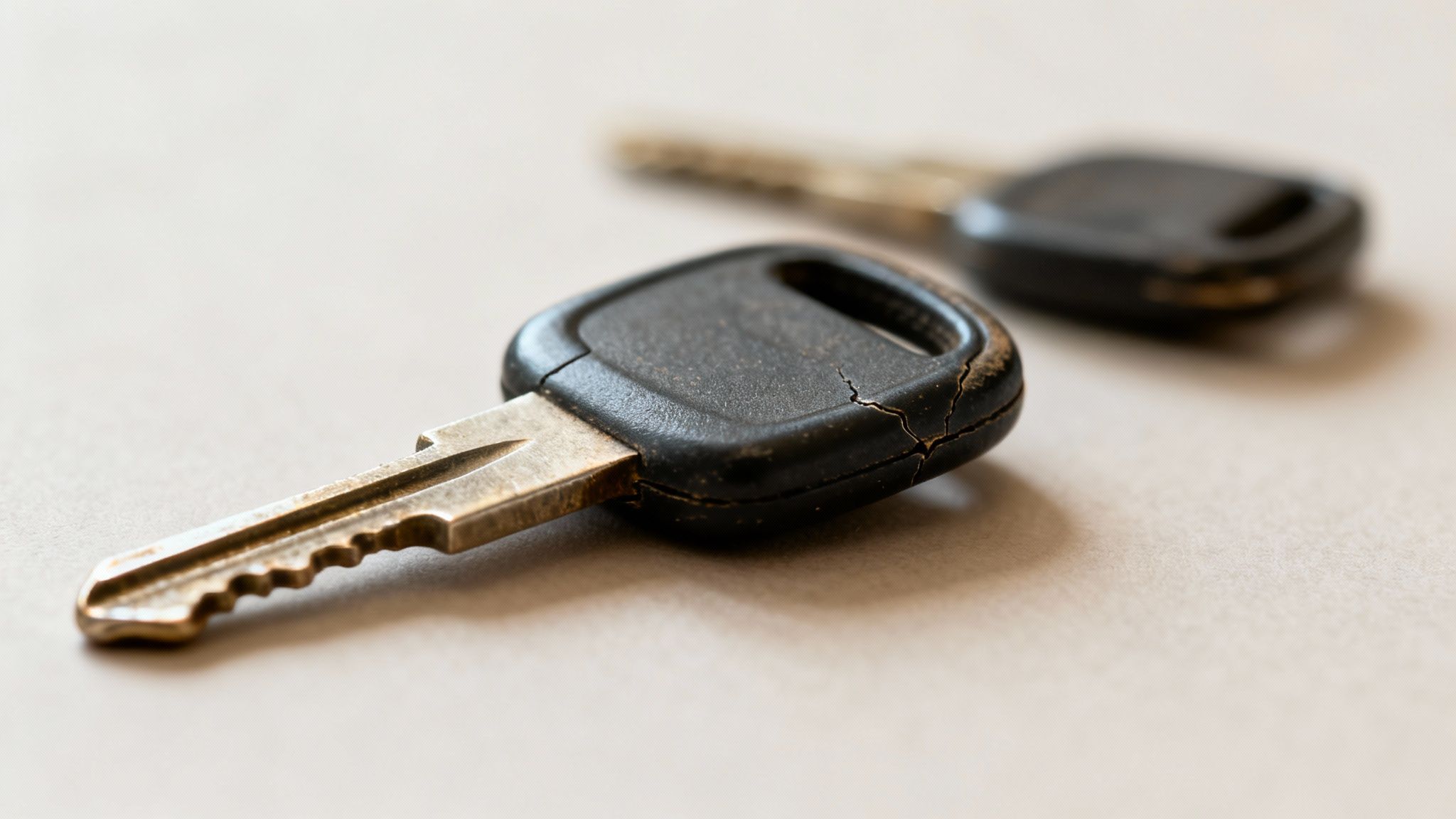
    Close-up of two old, worn car keys with black plastic handles on a light surface.

    Grab your key and give it a good, hard look. Are the edges of the cuts sharp, or have they become rounded and smooth? Lay it on a flat table—is there even a slight bend to it? A tiny crack you can barely see is more than enough to throw off the alignment with the pins inside the lock.

    Signs of a Failing Ignition

    The problem might not be the key, but the lock itself. If the key feels sloppy or loose when you insert it, or if you’ve been feeling it catch and stick on its way to the ‘start’ position, those are tell-tale signs. The internal tumblers are likely worn out.

    From our experience serving the Treasure Coast, key and ignition wear accounts for a huge chunk of these issues. You can learn more about common car key problems to see just how these parts fail over time.

    Crucial Warning: Whatever you do, don’t try to force it. A worn key is already weak, and cranking on it is the fastest way to snap it clean off inside the ignition. That’s how a simple service call turns into a much bigger, more expensive headache.

    If you suspect your key is damaged or the ignition is the culprit, it’s time to call in a professional. Call (772) 710-8169, and one of our mobile locksmiths can come right to you. We can perform an ignition repair or provide a key fob replacement on the spot, saving you the hassle and cost of a tow.

    When It’s Time to Call in a Pro for Ignition Repair

    There comes a point where DIY becomes “Don’t Inconvenience Yourself” further. If you’ve given the steering wheel a good jiggle and double-checked the gear shift with no luck, it’s time to stop. This is especially true if you can see your key is bent, cracked, or severely worn down.

    Pushing your luck by forcing a stuck key is one of the most common mistakes we see. All that muscle often does is snap the key blade right off inside the ignition cylinder. What was an annoying problem has now turned into a much bigger, more expensive one involving a delicate extraction.
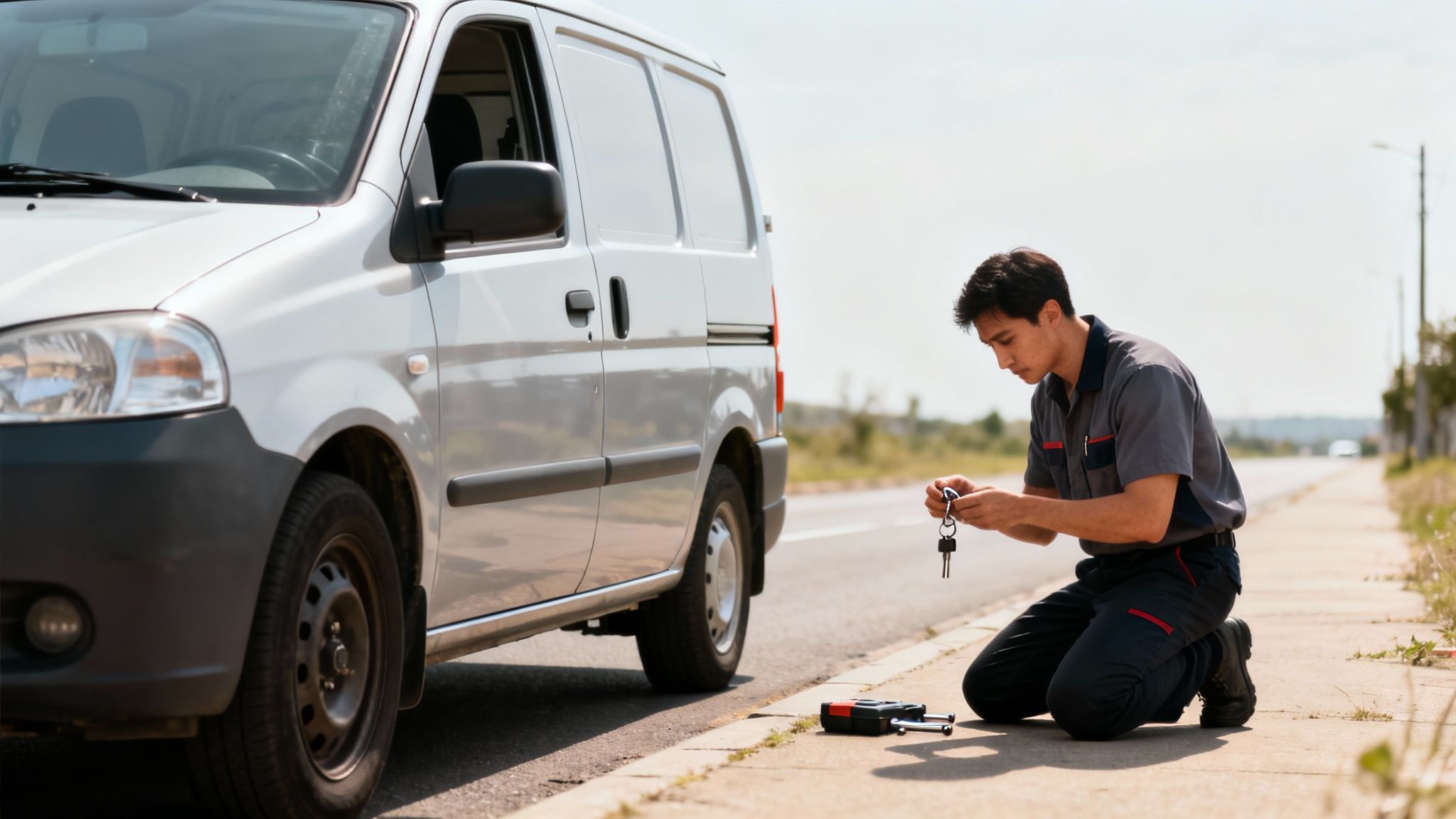
    A focused technician in uniform kneels beside a white service van, examining car keys.

    Why a Mobile Locksmith Is Your Best Bet

    This is exactly the moment a mobile locksmith shines. Why go through the hassle and cost of towing your car to a dealership in Port St. Lucie or Vero Beach? A professional technician can drive directly to you, whether you’re stranded in your own driveway in Jensen Beach or stuck in a parking lot over in Fort Pierce. On-site service is a game-changer.

    Choosing a mobile locksmith isn’t just about convenience—it’s the smarter, more efficient solution. We bring all the specialized tools needed to figure out the real problem, perform a precise ignition repair, and even cut and program a new key fob right there.

    Our vans are complete workshops on wheels. We’re equipped to handle everything from a car lockout to a full ignition rebuild or a complex key fob replacement. To see just how much we can do on the road, check out our full range of automotive locksmith solutions.

    So, if the quick fixes fail and your key still won’t budge, don’t gamble. Call (772) 710-8169 for immediate help that comes right to you.

    How to Prevent Future Ignition Problems

    Getting back on the road is a relief, but the last thing you want is a repeat performance. A few simple habits can go a long way in preventing your key from getting stuck in the ignition again. It really boils down to reducing the day-to-day stress on your car’s ignition system.

    First, take a hard look at your keychain. Is it loaded down with a dozen other keys, fobs, and heavy accessories? All that weight constantly dangles from your ignition, putting a surprising amount of strain on the delicate tumblers inside. Over time, this accelerates wear and tear. The easy fix is to lighten the load—keep just your car key and fob on their own ring.

    Simple Maintenance Habits

    Get into the habit of giving your key a quick visual check every so often. You’re looking for signs of wear, like the grooves becoming rounded or any subtle bends in the metal. A worn-down key not only struggles to align properly but can actually damage the ignition cylinder itself.

    • Get a Spare Key: The worst time to get a spare key made is when your original is already too worn out to copy accurately. Be proactive and get a duplicate made while your primary key is still in good shape. This guarantees you have a perfect reference copy.
    • Use Lubricant Sparingly: If you start to feel a bit of stickiness or resistance, a small puff of graphite lubricant is the right tool for the job. Avoid a wet lubricant like WD-40, as it can attract dust and gunk up the works.

    Taking these small preventative steps can genuinely extend the life of your ignition and key. And if you ever need expert advice on key duplication, a lock change for your home, or other security concerns, our team provides reliable locksmith services in Port St. Lucie.

    Common Questions About Ignition Issues

    As a locksmith serving the Port St. Lucie, Fort Pierce, and Stuart area, I hear a lot of the same questions when a driver gets stranded with a key that won’t turn. It’s a frustrating situation, so let’s clear up a few of the most common issues with practical, step-by-step answers.

    Can a Dead Car Battery Stop My Key from Turning?

    Yes, it absolutely can in modern vehicles. With older, purely mechanical ignitions, a dead battery wouldn’t stop the key itself from physically turning. But on most modern cars, that’s not the case.

    Many newer vehicles have electronic systems tied to the ignition, like an electronic steering wheel lock. These security features need power to disengage. If your battery is completely drained, the system can’t get the signal to unlock, which keeps your key from turning all the way. A dead giveaway is when you turn the key and get absolute silence—no clicks, no dash lights, nothing.

    What Is the Difference Between Ignition Repair and Replacement?

    This is a great question. The best way to think about it is that ignition repair is like surgery, while a replacement is a full transplant.

    • Ignition Repair: This is what we aim for first. It’s a delicate process where a locksmith takes the ignition cylinder apart to fix what’s broken inside. Maybe a tiny wafer is bent, or a spring is out of place. We fix that specific part, put it all back together, and it works like new. It’s almost always the cheaper and faster option.
    • Ignition Replacement: Sometimes, the damage is just too severe. If the internal housing is cracked or the whole cylinder is warped from a failed theft attempt, a repair just won’t cut it. In that case, we have to install a brand-new ignition cylinder.

    An experienced locksmith can tell you pretty quickly which path you need to take. For more answers to common issues like a house lockout or a car lockout, you can always check out our frequently asked questions page.


    When you’re stuck in Port St. Lucie, Fort Pierce, or anywhere on the Treasure Coast and need someone you can trust, give Pro-B Locksmith a call. We provide expert mobile service to get you moving again.

    ➡️ Get professional ignition repair and get back on the road fast by visiting us at https://problocksmith.com!

  • A Practical Guide to Car Key Fob Battery Replacement

    A Practical Guide to Car Key Fob Battery Replacement

    It’s a modern frustration that can stop you in your tracks: a dead key fob. Whether you’re trying to get to work in Port St. Lucie or stranded after a day at the beach in Stuart, it’s a major inconvenience. The good news is that most of the time, a simple car key fob battery replacement is all it takes to get you going again—and it’s a job you can definitely tackle yourself with a few practical tips.

    Is Your Key Fob Battery on Its Last Legs?

    Your key fob will almost always give you a heads-up before it dies completely. Catching these early warning signs can save you from the headache of getting locked out, a situation where you’d need a professional for a car lockout. Trust me, being proactive is a lot less stressful than finding yourself in a house lockout situation on a Sunday afternoon.

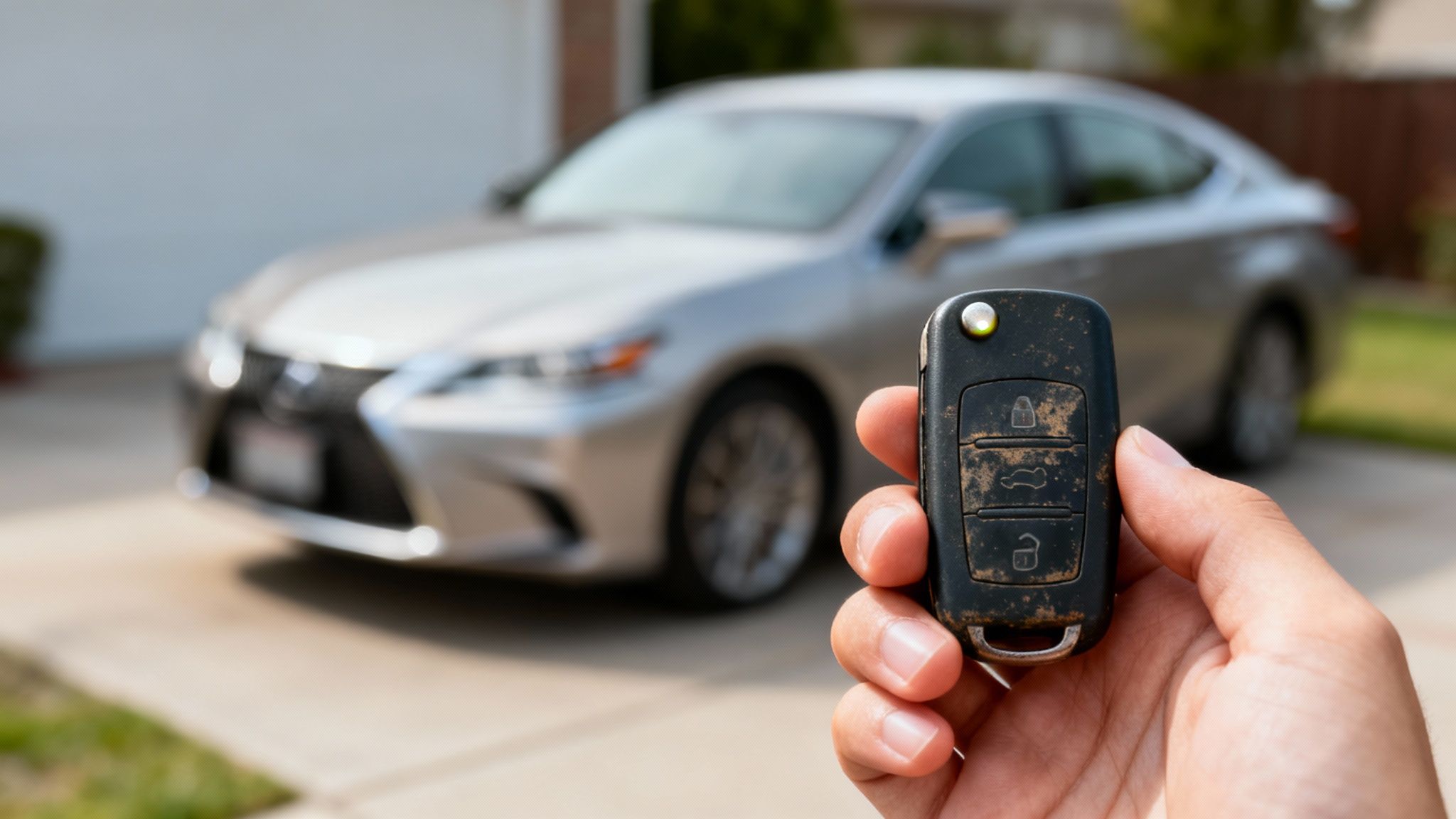
    A hand holds a worn car key fob with a silver car in the blurry background on a driveway.

    It’s no surprise that key fobs have become standard. They’re convenient and add a layer of security. This widespread adoption is why the car key battery market is expected to balloon to USD 0.90 billion soon. At the end of the day, every one of those fobs needs a new battery every 1-3 years depending on how you use it. You can see the full industry breakdown over at emergenresearch.com if you’re curious.

    Telltale Signs of a Dying Battery

    So, what should you look for? Here are the classic symptoms our technicians see all the time from Fort Pierce to Vero Beach:

    • Shrinking Signal Range: Remember when you could unlock your car from across the parking lot at the Indian River Mall? If you now have to be standing right next to the door, your battery is fading.
    • The “Button Mash”: You find yourself pressing the lock or unlock button multiple times, hoping one of them will finally register.
    • Works Sometimes, Fails Others: The fob seems to have a mind of its own, working perfectly one moment and ignoring you the next. This inconsistency is a dead giveaway.
    • Dashboard Warning: Many newer cars will just tell you straight up. A “Key Fob Battery Low” message on the dash is your final warning.

    If you’re noticing any of these, it’s time to change that battery. But if a fresh battery doesn’t fix it, the problem might be with the fob itself. In that case, you’re looking at a more complex repair or a full key fob replacement. When that happens, your best bet is to Call (772) 710-8169 for immediate help.

    Gathering the Right Tools and Battery

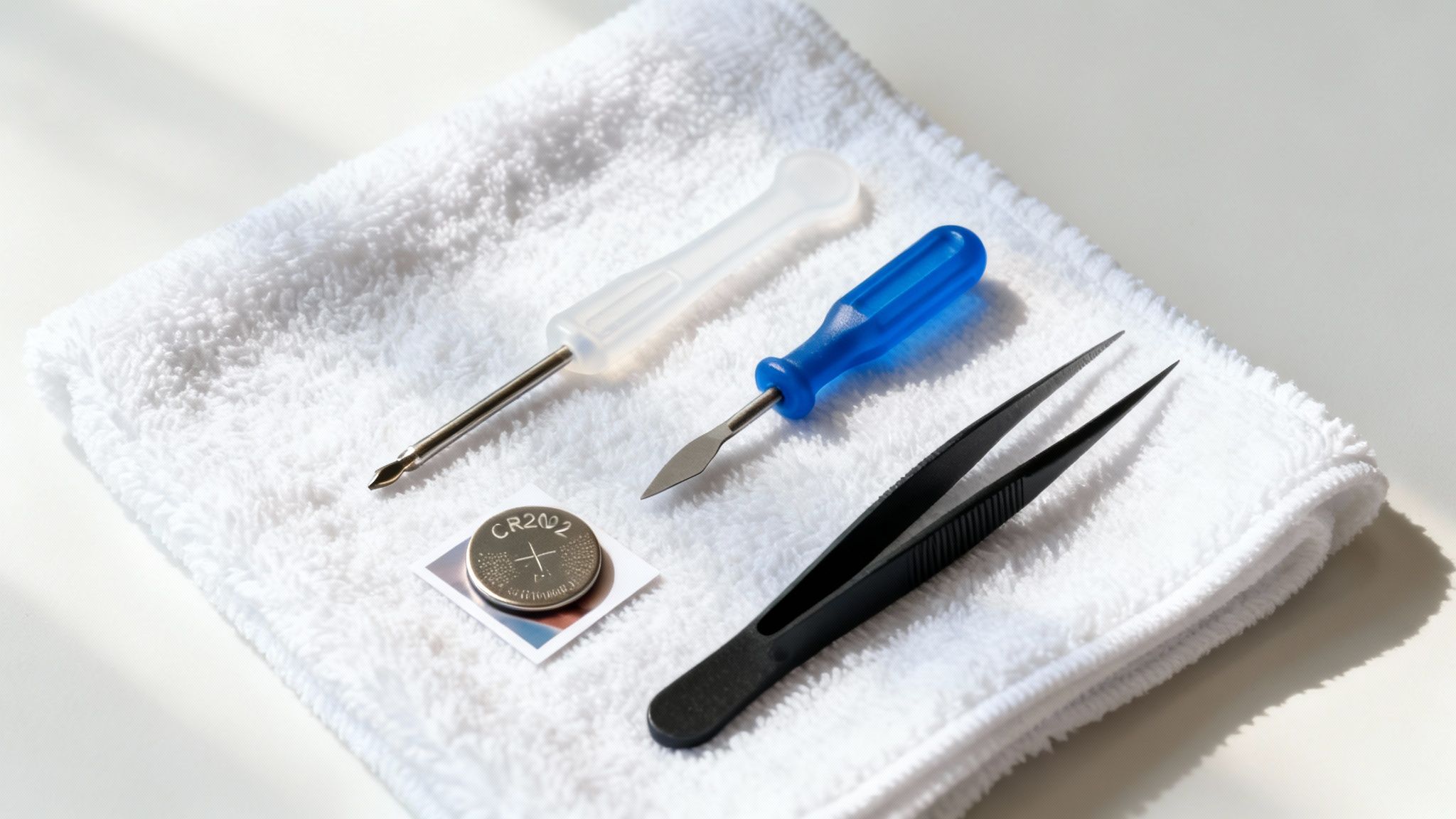
    Tools for car key fob battery replacement, including screwdrivers, tweezers, and a CR2032 battery.

    Before you even think about cracking open that key fob, a little prep work will save you a ton of headaches. Taking a moment to gather the right gear can turn this from a frustrating puzzle into a quick, five-minute fix, whether you’re in your Port St. Lucie garage or on a break in Fort Pierce.

    The good news is you don’t need a professional-grade toolkit. Most car key fob battery replacement jobs just need a couple of common household items.

    Your Essential Toolkit

    To get the job done right without scratching or breaking anything, here’s what I recommend having on hand:

    • A Small Flathead Screwdriver: This is usually perfect for popping open the plastic case along its seam. If you happen to have a plastic pry tool from an electronics repair kit, that’s even better for preventing scuffs.
    • The Correct Replacement Battery: The battery type is almost always printed right on the old battery itself. Look for common sizes like CR2032 or CR2025. You can find these at most grocery or hardware stores in Stuart or Jensen Beach.
    • A Microfiber Cloth: A simple but effective trick. Lay this down on your table to protect your fob’s finish from getting scratched up while you work.

    Pro Tip: Before you pull the old battery out, snap a quick photo of it with your phone. This is the easiest way to remember which way the new one goes in—positive side up or down. Trust me, it prevents the single most common mistake we see people make.

    Having the right battery is crucial. Putting in the wrong one won’t just fail to work; it could actually damage the delicate electronics inside your fob.

    If you open up your fob and realize you don’t have the right battery, don’t sweat it. And if you get stuck or notice any of the internal parts look broken, it’s best to stop right there. For a quick, professional key fob replacement, just Call (772) 710-8169 for immediate help.

    How to Safely Open Your Key Fob

    Cracking open a key fob for the first time can be a little nerve-wracking. I get it. It feels like you’re one wrong move away from breaking a very expensive piece of plastic. With every car maker doing things just a bit differently, it’s no wonder so many people we meet in Port St. Lucie and Fort Pierce are hesitant to try.

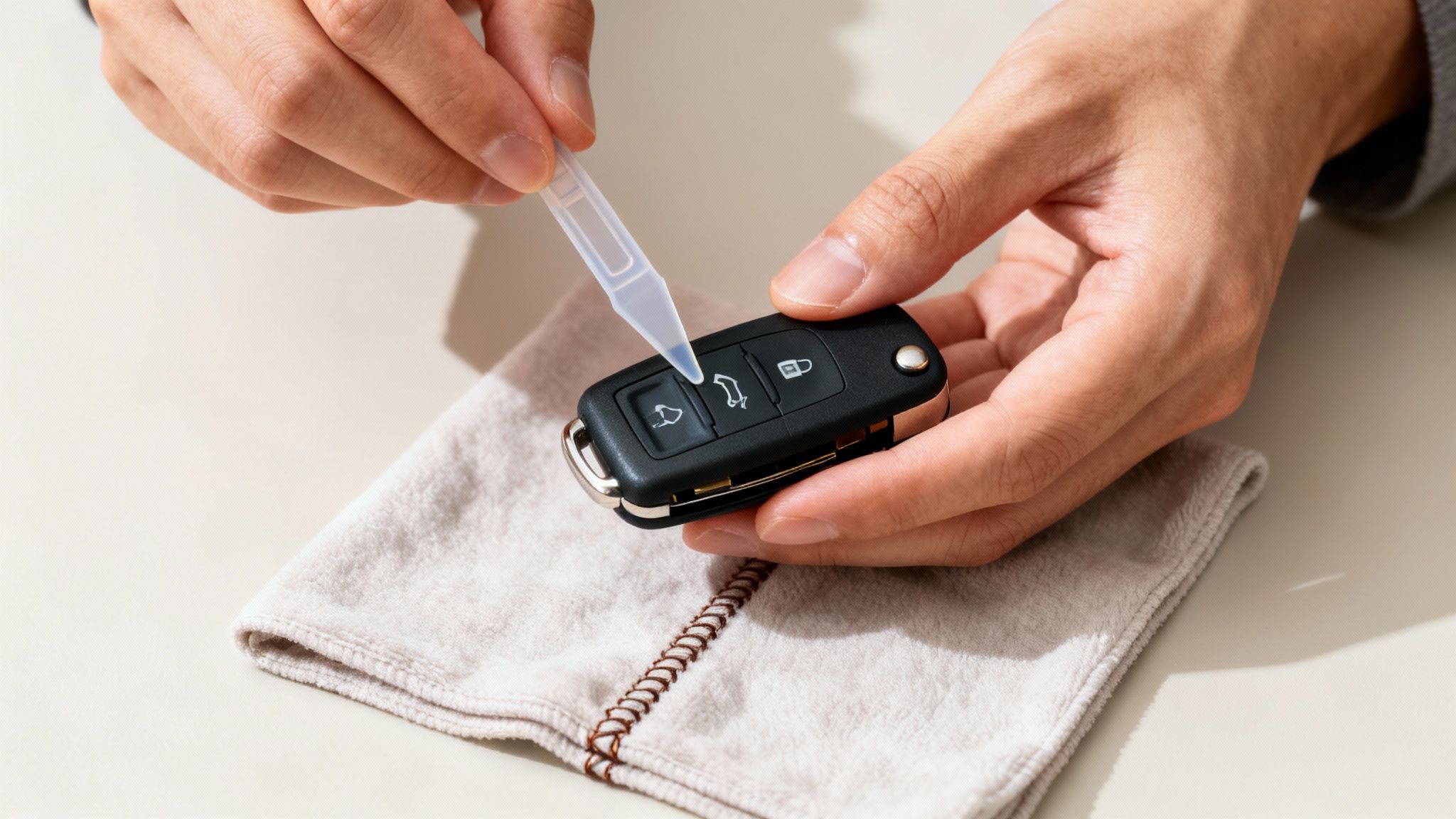
    The trick is to get inside without leaving a single scratch. That’s why a plastic pry tool is your best friend here. If you don’t have one, no worries—just wrap a small piece of tape around the tip of a tiny flathead screwdriver. This simple step can save your fob’s casing from ugly gouges.

    Close-up of hands applying liquid to a car key fob with a dropper on a light-colored cloth.

    Figuring Out Your Fob Style

    Most key fobs fall into one of a few common designs. Once you know which type you’re holding, you’re halfway to a successful battery swap. Here’s a step-by-step breakdown:

    • Clamshell Fobs (Toyota/Honda): You’ll see these a lot. They’re held together by internal clips. Just find the thin seam running along the side and gently work your pry tool in. Move slowly around the edge, and you’ll feel the two halves start to separate.
    • Switchblade Key Fobs (VW/Chevy): These have a key that pops out. The first move is always to release that physical key. Now, peer inside the slot where the key was—that’s usually where you’ll find the perfect little notch to start prying.
    • Screw-In Fobs (Ford): Some fobs, especially on older Fords, are held together with a tiny Phillips-head screw. You’ll absolutely need a jeweler’s screwdriver for this. Once that screw is out, the casing should pry apart fairly easily.

    The golden rule? Never force it. If the casing isn’t budging, take a breath and double-check for a hidden screw or latch you might have missed. A broken fob is a much bigger headache than a dead battery and almost always means a full key fob replacement.

    This isn’t just about convenience; it’s part of a huge global shift. The market for these smart keys is set to grow by a staggering USD 4.59 billion, all because we love the security and ease they bring. If you’re curious, you can see the full market breakdown over at Technavio.

    What if you open it and a tiny spring goes flying? Don’t panic. But if you can’t figure out how to put Humpty Dumpty back together again, or worse, you accidentally damage the delicate circuit board, it’s time to call in a pro.

    For fast, on-the-spot help anywhere from Jensen Beach to Vero Beach, Call (772) 710-8169 for immediate help.

    Troubleshooting Key Fob Problems After Battery Replacement

    So you’ve popped in the new battery, snapped the fob back together, and… nothing. It’s a frustrating moment, but don’t worry. Before you assume the worst, there are a few common issues we see all the time with DIY car key fob battery replacement jobs around the Port St. Lucie area.

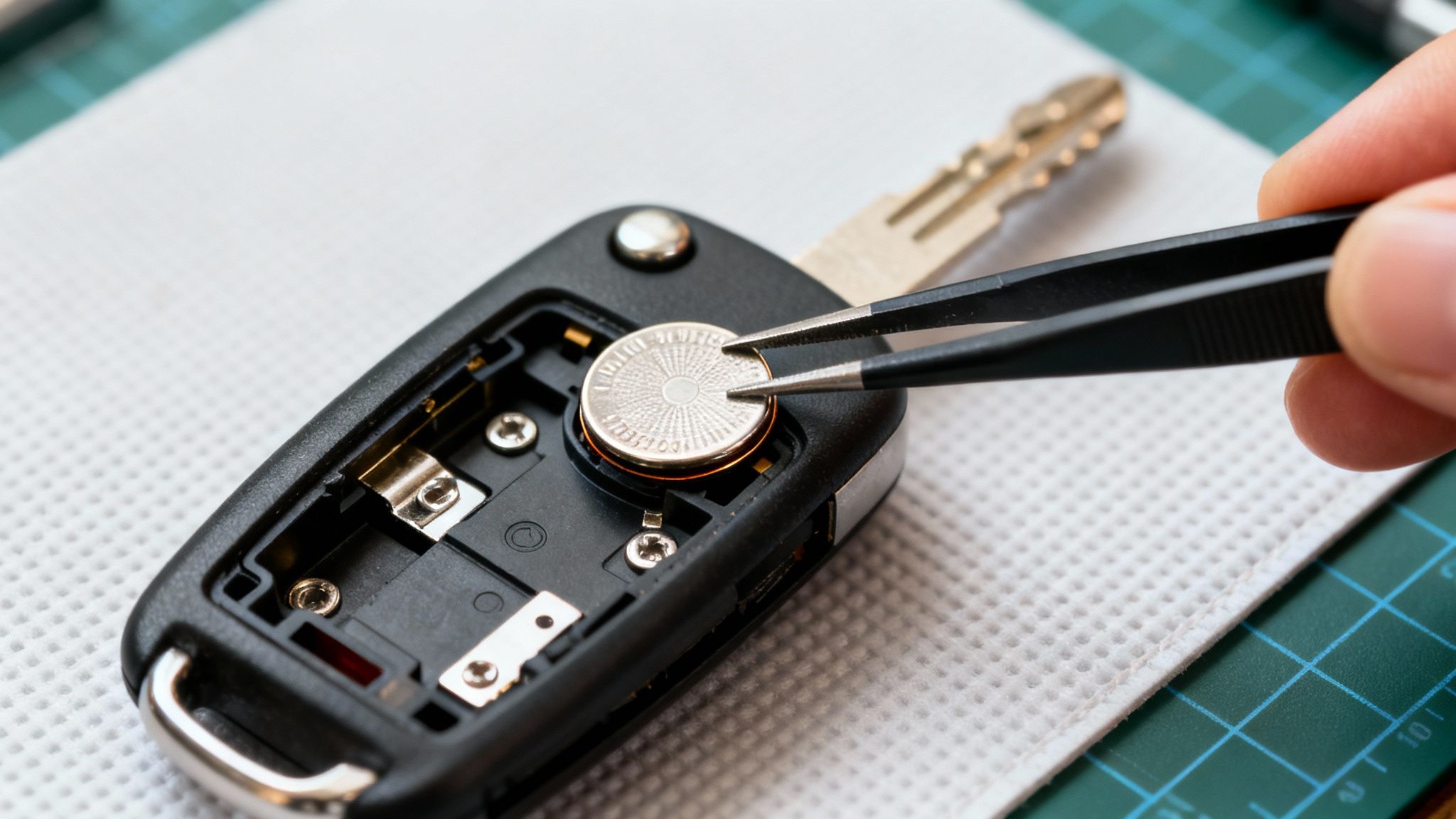
    Close-up of a person using tweezers to replace a coin cell battery in a car key fob.

    Often, the fix is much simpler than you think. The very first thing to check is also the easiest mistake to make.

    Is the Battery Installed Correctly?

    It happens more than you’d believe: the battery is just in upside down. Most key fobs need the positive (+) side facing up, but some models are the complete opposite. Just pop the case back open and double-check the orientation. Look for those tiny markings inside the housing, or compare it to the photo you took before you started.

    Another potential culprit? A faulty new battery. It’s rare, but sometimes a “new” battery can be a dud right out of the package. If you have a multimeter, you can check its voltage. If not, just trying a second new battery is the fastest way to rule this out.

    One of the most common issues we run into in the field is bent battery contacts. Those small metal prongs that touch the battery can get accidentally flattened when you’re swapping things out. If they aren’t making a solid connection, the circuit isn’t complete.

    You can often fix this yourself. Grab a pair of non-conductive tweezers or even a simple toothpick and gently pry the contacts slightly upward. The key here is gently—they are delicate and can snap if you use too much force.

    When Simple Fixes Don’t Work

    If you’ve re-seated the battery, confirmed its charge, and checked the contacts, but your fob still isn’t responding, the problem might be more complicated. Sometimes the internal transponder chip gets damaged or loses its programming during the process. At this stage, you’re beyond a simple DIY fix, and messing with it further could cause even more damage, potentially leading to an ignition repair later.

    For advanced issues like key fob replacement or reprogramming in Fort Pierce, Stuart, or Vero Beach, it’s time to bring in a professional. Call (772) 710-8169 for immediate help, and our team can diagnose the problem and get you a working solution right on the spot.

    When a DIY Fix Isn’t the Answer

    Knowing how to swap out a key fob battery is a great skill to have, but it’s just as crucial to know when to put the tools down and call a pro. Sometimes, a dead battery is just the most obvious symptom of a bigger problem, and trying to force a DIY fix can turn a minor annoyance into a serious expense.

    There are a few clear signs that tell you it’s time to get some expert help. For instance, if you pop in a new battery and the fob still won’t talk to your car, it probably needs to be reprogrammed. That’s a job that requires specialized diagnostic equipment, and trying it yourself can sometimes wipe all your keys from the car’s memory, leaving you stranded.

    Red Flags That Point to a Deeper Problem

    If you run into any of these issues, don’t risk making things worse. It’s almost always smarter—and cheaper in the long run—to let a professional take a look.

    • A Cracked Casing: If the plastic housing is cracked or broken, the sensitive electronics inside are left exposed to dust, moisture, and everyday bumps. That’s a recipe for failure.
    • Moisture or Corrosion Inside: See any water droplets or rusty-looking green or white gunk on the battery contacts or circuit board? That’s a sure sign of water damage, which can fry the internal components.
    • The Fob is Still Dead: You’ve put in a fresh, correct battery, and… nothing. The problem is likely deeper, maybe a failed transponder chip or a broken connection on the circuit board.

    This is where things get tricky. As the average vehicle age in North America climbs past 12.5 years, the technology inside both our cars and our keys has become incredibly complex. The transponder chips rely on precise power from the correct battery to handle their security functions.

    Trying to solder a broken connection or clean up serious corrosion can easily wreck the delicate electronics, and you could end up needing a much more expensive ignition repair or even a full lock change.

    Instead of taking that gamble, your best bet is to call a mobile locksmith. Our team at Pro-B Locksmith provides expert automotive locksmith services throughout Jensen Beach, Stuart, and the surrounding areas. We come right to you.

    Just give us a call at (772) 710-8169 for immediate help.

    Your Top Key Fob Battery Questions Answered

    Working across the Treasure Coast, we hear a lot of the same questions about key fob batteries. Here are the straight-up answers to the ones that pop up most often.

    Will I Have to Reprogram My Fob After Changing the Battery?

    Almost certainly not. For most cars you see on the road—whether it’s a Ford in Fort Pierce or a Honda over in Jensen Beach—the fob is designed to hold onto its unique code, even with the battery out.

    As long as you get the new battery in within a few minutes, you won’t have any issues. The car will remember its key.

    How Can I Be Sure It’s the Battery and Not the Fob Itself?

    Good question. The tell-tale signs of a weak battery are pretty classic: you have to get closer and closer to your car for it to work, or you find yourself mashing the button a few times to get a response.

    If the little red light on your fob still blinks but the car isn’t listening, the battery is almost always the culprit. If you pop in a fresh battery and the problem is still there, then you can start suspecting an issue with the fob’s internal electronics.

    Expert Tip: Always start with the simplest, cheapest fix. A battery replacement solves a non-responsive key fob more than 90% of the time, so don’t immediately assume you need a costly replacement.

    If a new battery doesn’t do the trick, you might be looking at a full key fob replacement or a reprogramming service. We’ve compiled more answers to common lock and key issues on our comprehensive FAQ page. It’s always better to get a clear answer than to guess and risk causing a bigger problem.


    When a simple fix isn’t enough, Pro-B Locksmith is ready to provide fast, professional service right where you are. For expert key fob diagnostics, programming, or replacement in Port St. Lucie, Vero Beach, and beyond, visit us at https://problocksmith.com.