Tag: patio door security

  • How to Fix a Patio Door Lock: A Treasure Coast Homeowner’s Guide

    How to Fix a Patio Door Lock: A Treasure Coast Homeowner’s Guide

    When your patio door lock starts acting up, it's more than just a hassle—it's a real security concern for your home here in Port St. Lucie. The good news is, before you start thinking about a costly replacement, the fix is often something you can handle. Most of the time, the problem boils down to one of three things: misalignment, debris in the mechanism, or worn-out parts.

    Diagnosing Your Stuck or Broken Patio Door Lock
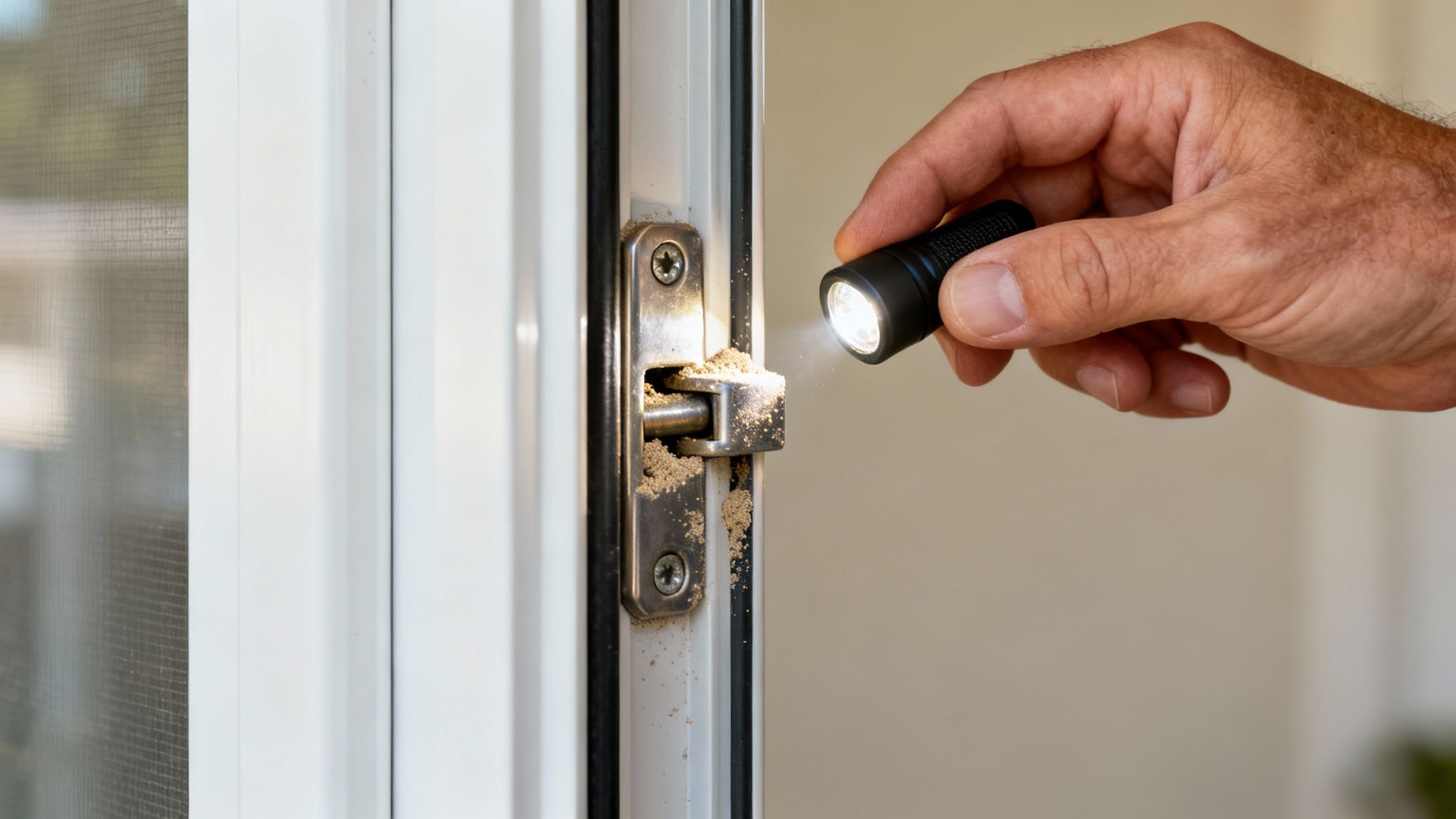
    A hand shines a flashlight on a patio door lock mechanism covered in termite frass.

    We get calls all the time from folks on the Treasure Coast whose patio door lock suddenly decided to quit. It’s easy to assume the lock itself is broken, but our coastal climate—with all its humidity, salt, and sand—is usually the real culprit. Figuring out why it’s failing is the first, and most important, step to getting it fixed right.

    A classic example we see in Stuart and Vero Beach homes is a door that gets tough to lock after a big storm or a sudden temperature drop. That almost always points to misalignment. Your house settles, the frame shifts just a hair, and suddenly the latch and the strike plate aren't lining up correctly. If you're locked out or locked in, Call (772) 710-8169 for immediate help; trying to force a stuck door can cause serious damage.

    Quick Diagnosis of Common Patio Door Lock Problems

    To help you get started, here's a quick reference table. Match your door's behavior to the likely cause.

    SymptomLikely CauseDifficulty Level
    Key is hard to turn or won't go inDebris in the keyway, worn-out cylinderEasy to Moderate
    Lock feels stiff when turning the knobNeeds lubrication, internal parts are corrodedEasy
    Handle is loose or wobblyMounting screws are looseEasy
    You have to lift or push the door to lock itDoor is misaligned, rollers are wornModerate
    The key turns but the latch doesn't moveBroken internal mechanism (cam or actuator)Difficult (Often requires replacement)

    This table should give you a solid starting point for troubleshooting.

    Common Signs of Failure

    Let's do a little detective work. Look and listen for these clues to pinpoint what's really going on with your lock.

    • Grinding or Scraping Noises: Hear that? It’s often the sound of the door dragging on the track because the rollers are shot. This throws the whole lock alignment out of whack.
    • A Loose or Wobbly Handle: Give the handle a jiggle. If it feels sloppy, the mounting screws have likely backed out, or worse, a component inside has snapped. This is a common issue in Jensen Beach homes from frequent use.
    • The Key Turns But Nothing Happens: This one is a dead giveaway. The internal link between the key cylinder and the latch is broken. The lock has failed internally and needs a professional lock change.
    • Visible Debris or Corrosion: Don't underestimate the power of sand, dirt, and rust, especially here. A quick look with a flashlight can tell you if the lock is just clogged up.

    Here's a little perspective: A 2022 industry analysis showed that most homeowners choose to repair or replace just the lock unit itself instead of the entire door frame. It really highlights how a timely, targeted repair is often the smartest and most effective solution.

    If you’re stuck on the wrong side of a door that won't budge, don't panic. Our emergency lockout services can get you back inside without damaging your door. For any other issue, taking a few minutes to diagnose the problem first will save you a ton of time and make sure you're actually fixing the right thing.

    Gearing Up for the Job
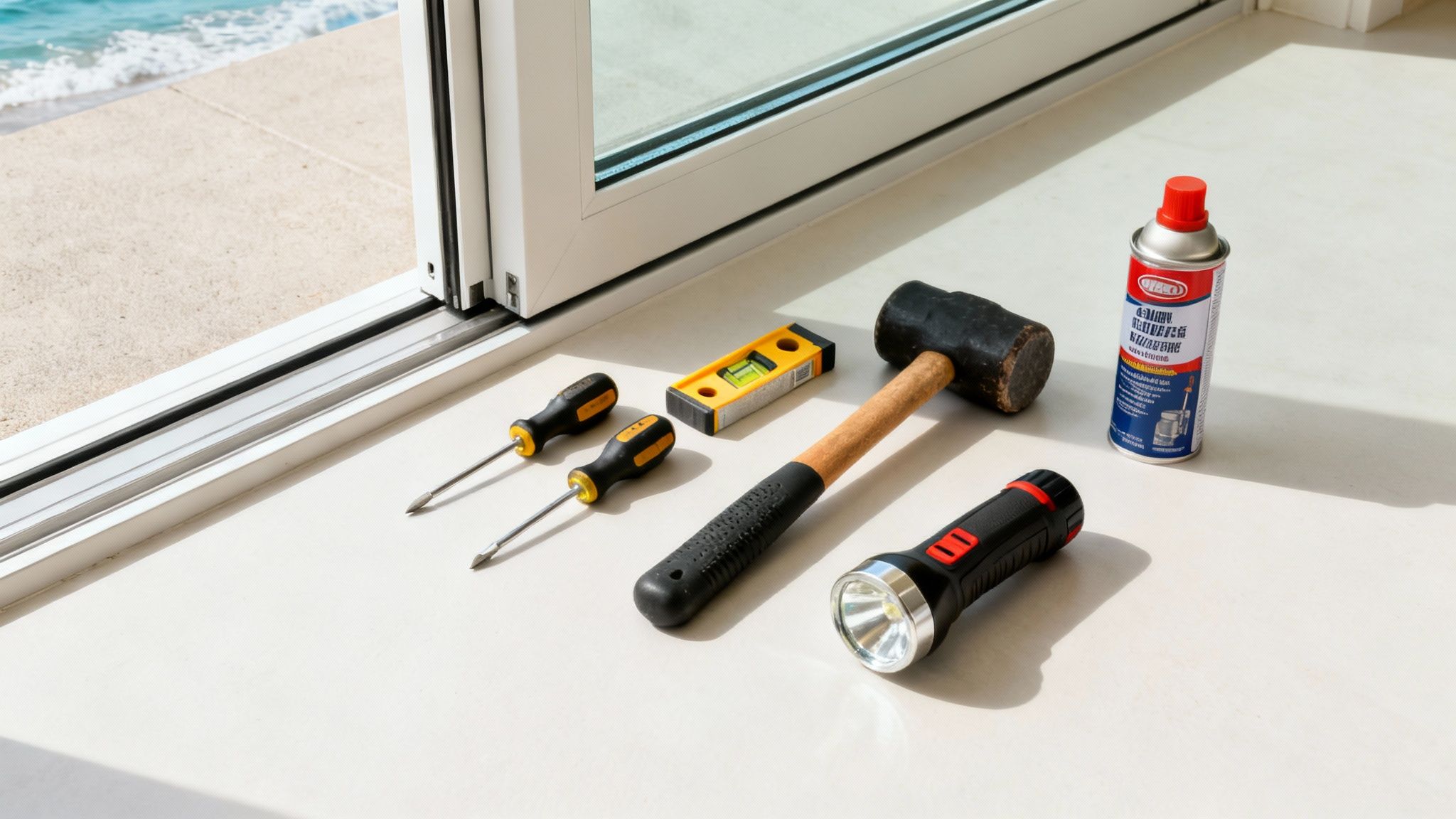
    Tools like screwdrivers, level, sledgehammer, flashlight, and spray can for home repair.

    Before you dive in and start taking things apart, let's talk about tools. Trying to fix a patio door lock without the right gear can turn a quick fix into a full-blown disaster, and you might even damage your door. The good news is, for most common lock problems, you probably already have what you need sitting in your garage.

    A successful repair starts before you even touch a screw. Just like a chef preps their ingredients, getting your tools ready first makes the whole process smoother and a lot less frustrating. This is a practical step that applies to any home repair, from a simple lock change to something more complex like an ignition repair on your car.

    Your Essential Repair Toolkit

    For the kind of patio door lock issues we see all the time here in Port St. Lucie, you don't need a professional-grade toolbox. A few basics will get you through most adjustments and maintenance tasks.

    Here's a quick list of what you should grab:

    • A Good Screwdriver Set: You'll need both Phillips and flathead screwdrivers for the handle, lock assembly, and strike plate. A multi-bit driver is a fantastic space-saver if you have one.
    • Silicone-Based Lubricant Spray: This is your secret weapon. You absolutely want a silicone-based spray because it lubricates without creating a sticky mess that attracts our Florida sand and grime.
    • Stiff Brush & Vacuum: An old toothbrush is perfect for scrubbing gunk out of the lock mechanism. Follow up with a vacuum and its crevice tool to get everything clean.
    • Flashlight or Headlamp: Let's be honest, you can't fix what you can't see. Most lock parts are hidden in shadow, so good light is a must.
    • Rubber Mallet: If the strike plate is just a little off, a few gentle taps with a rubber mallet can nudge it back into place without leaving dents.

    A Quick Tip from a Treasure Coast Pro: Stay away from oil-based lubricants like WD-40 for your locks. While it's a great product for other things, on locks, it leaves a tacky film. Here on the coast, from Fort Pierce to Jensen Beach, that sticky residue becomes a magnet for salt and sand, which will clog up your lock and make things worse down the road.

    A Quick Pre-Repair Checklist

    Got your tools? Great. Now, take just five minutes to prep your work area. This little bit of prep work can save you a world of hurt.

    First thing’s first: give the bottom track of your sliding door a thorough cleaning. You'd be surprised how often a lock issue is really just a door alignment problem caused by sand, dirt, and pet hair built up in the track.

    Next, make sure you have plenty of light. If you're working in a shady spot, grab a work light. Squinting at tiny screws in the dark is a surefire way to strip them or lose them. If you get started and realize the problem is bigger than you thought, or if you're missing a critical tool, don't try to force it. Sometimes it’s just smarter and faster to call in a pro.

    If you hit a snag or find yourself in a house lockout situation, just give us a call. You can reach us at (772) 710-8169 for immediate help.

    Getting Your Patio Door Aligned Just Right
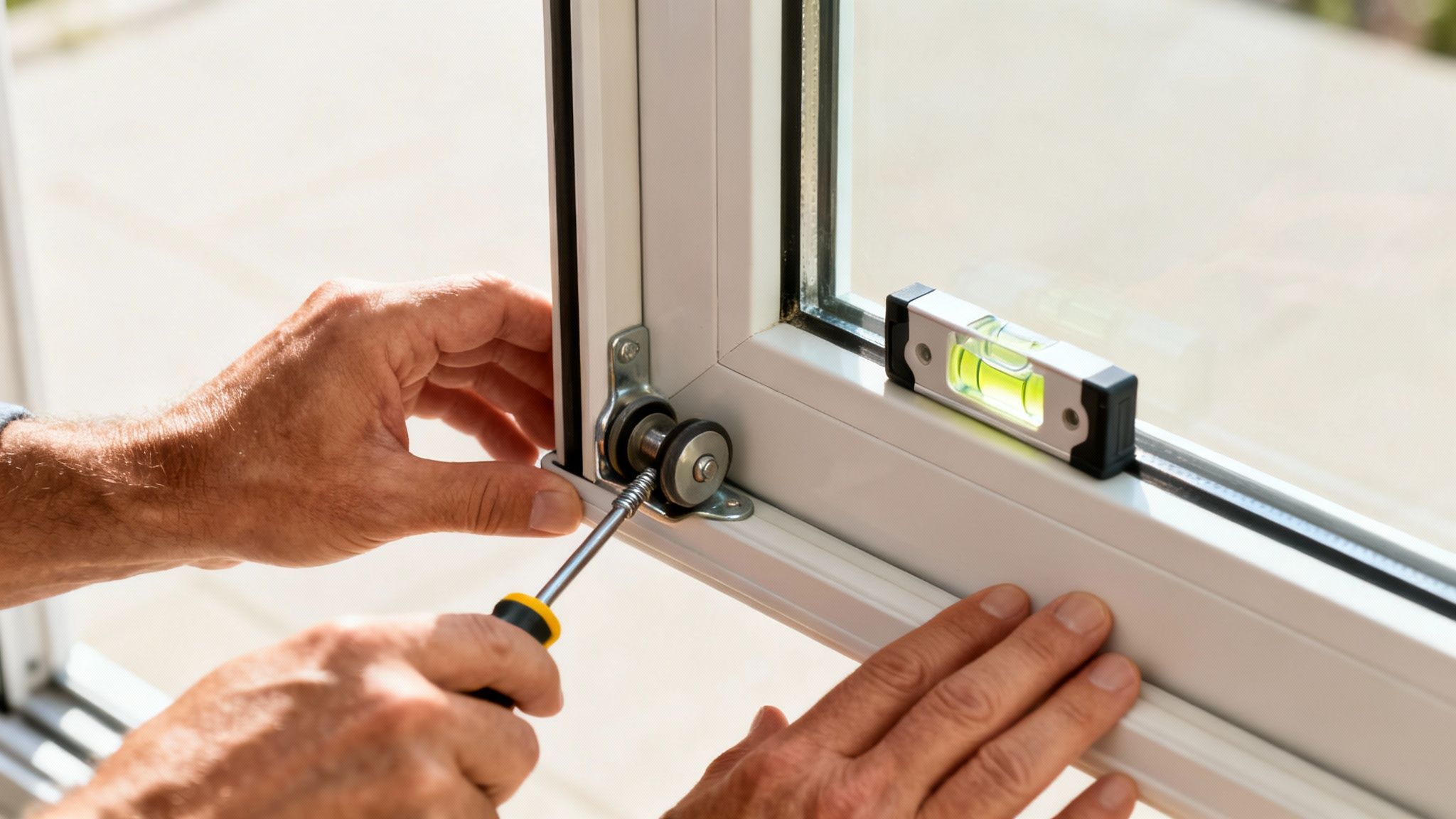
    Close-up of hands adjusting a patio door lock mechanism with a screwdriver, with a spirit level on the frame.

    When we get a call about a "broken" patio door lock in Fort Pierce or Vero Beach, we can tell you that 9 times out of 10, the lock mechanism is just fine. The real culprit? The door itself has fallen out of alignment. This is by far the most common problem we run into, and the good news is, it's often the most fixable.

    Over the years, the constant use and the simple settling of your house can cause a heavy sliding door to sag ever so slightly. That tiny shift is all it takes for the lock's latch to miss the strike plate on the jamb. If you have to jiggle, lift, or ram the door shut to get it to lock, you're dealing with a classic case of misalignment.

    Adjusting the Door Rollers

    The fix almost always starts with the rollers, which are the small wheels tucked away at the bottom of the door. They're what allow the door to glide, and they have adjustment screws that let you raise or lower each side of the panel.

    • How to find the screws: Look along the bottom edge of your door, typically near the corners. You'll see little holes, which are often covered with plastic plugs. Just pop those plugs out with a flathead screwdriver to access the adjustment screws inside.
    • Making the adjustment: You'll usually need a Phillips head screwdriver for this part. Turning the screw clockwise will raise that side of the door, and turning it counter-clockwise will lower it. It's a bit of a feel-it-out process.

    The trick is to make small, gradual adjustments—a quarter-turn at a time is plenty. After each turn, slide the door back and forth to check its movement and see how the lock lines up. A practical tip is to use a level on top of the door to get it perfectly straight. You're aiming for a smooth glide and a latch that slips into place without any force.

    My rule of thumb: if you’ve been turning screws for 20 minutes and the door still isn't sitting right, the rollers are probably shot. They might be cracked, corroded, or just plain worn out. No amount of adjusting will fix that, and it's time to think about replacing them.

    Fine-Tuning the Strike Plate

    Let's say you've got the door rolling perfectly level, but the latch is still just barely missing the mark. This is where a quick strike plate adjustment can save the day. The strike plate is that metal piece on the door frame where the lock's hook or latch goes.

    All you have to do is loosen the two screws holding it in place—don't take them all the way out. This gives you just enough play to slide the plate up or down. Nudge it into the perfect spot so the latch engages smoothly, then tighten the screws back down firmly. You’d be surprised how often this tiny tweak makes all the difference.

    If you’ve gone through these steps and are still wrestling with the lock, the problem is likely more than just alignment. Worn-out rollers can be a pain to replace, and if the issue is internal to the lock, a professional lock change is often the safest and most effective solution. When you feel like you're in over your head, don't hesitate to call (772) 710-8169 for immediate help.

    Deep Cleaning and Lubricating the Lock Mechanism
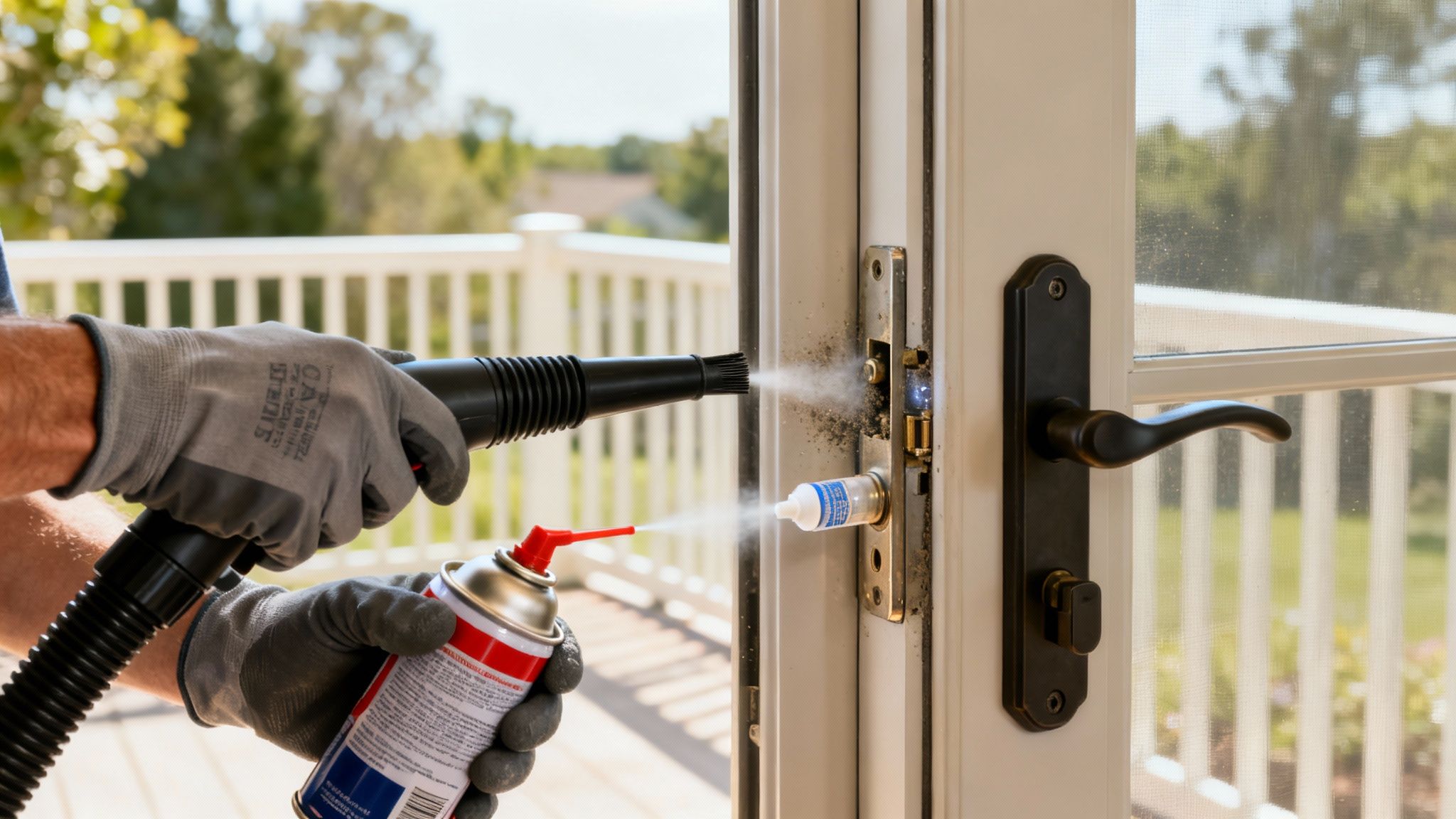
    Gloved hands cleaning a dirty patio door lock mechanism with lubricant spray and a vacuum tool.

    So, you've checked the door alignment and it’s spot on, but the lock still feels like it’s fighting you every time? If it’s stiff, gritty, or just plain stubborn, the problem is almost certainly inside the lock mechanism itself.

    Living here on the Treasure Coast, we see this all the time. Our wonderful combination of humidity, salty air, and fine sand is brutal on mechanical parts. That mix gets inside the lock, creating a corrosive gunk that causes friction and can eventually seize the whole thing up.

    This isn’t just a one-time fix; it’s about regular upkeep. A proper deep clean can bring back that smooth, like-new feel and stop a minor headache from becoming a major failure. And if you do get locked out because the mechanism jammed, don't force it. Just give us a quick call at (772) 710-8169, and we'll get it sorted.

    The Right Way to Clean and Lubricate

    Before you reach for that can of WD-40, hold on. It's critical to understand that the goal is to remove debris, not just soak it in oil. A sticky, wet lubricant will only act like a magnet for more sand and dust, creating a gritty paste that makes the problem even worse down the line.

    Here’s the professional, step-by-step approach we take on every job:

    • Blast Away the Grime: First, grab a vacuum cleaner with its narrow crevice tool. Get right in there and suck out any loose dirt, sand, and dust from the keyway, the latch opening, and any visible gaps. For the really stubborn stuff, a can of compressed air is fantastic for blowing it out.
    • Choose the Right Lubricant: Once the lock is clean, it's time to lubricate. You need a silicone or graphite-based spray lubricant. These are considered "dry" lubricants, meaning they don't leave a sticky residue that attracts new contaminants.
    • Apply with Precision: Use the little red straw that comes with the spray can and insert it directly into the keyway. A short, one-second burst is all you need. Then, work your key in and out a few times to spread the lubricant evenly. Give the latch mechanism itself a quick spray, too.

    Expert Tip: Don’t overdo it. A little goes a long way. The aim is a thin, protective coating, not a dripping mess. Over-lubricating is a common mistake that actually causes more buildup.

    This whole process is surprisingly fast. In fact, most industry data shows that routine servicing like this usually takes a homeowner between 20 and 45 minutes. It’s a small bit of time that can save you from a much longer and more expensive lock replacement. You can find more details on patio door maintenance trends on this market insights page.

    For anyone in Port St. Lucie, Fort Pierce, and especially our beachfront neighbors in places like Jensen Beach, this cleaning should be on your home maintenance calendar twice a year. A quick spring and fall cleaning will keep your patio door lock working perfectly and dramatically extend its life, keeping your home secure.

    Knowing When to Repair Versus Replace Your Lock

    Look, a simple adjustment can solve a lot of patio door lock headaches. But there comes a point when a lock is just… done. Forcing a failing lock to keep working isn't just a hassle; it’s a real security risk for your home and family here in Port St. Lucie.

    Learning to spot a lock that's on its last legs can save you from getting locked out at the worst possible time. A quick repair is fine for minor hiccups, but knowing when to pull the trigger on a full replacement is a crucial part of keeping your home secure.

    Clear Signs You Need a New Lock

    Some problems go way beyond what a little cleaning or a few turns of a screwdriver can fix. If you're seeing any of these issues, the lock’s internal mechanism has likely failed, and it's time to start shopping for a new one.

    • The Key Just Spins: You put the key in and turn it a full 360 degrees, but nothing happens. This is a classic sign that an internal piece, like the cam, has snapped. The lock is officially out of commission.
    • Cracks in the Lock Body: Get up close and inspect the metal casing around the lock. See any hairline cracks, especially near the screw holes? That's metal fatigue. The lock's integrity is shot, and it could easily fail if someone tries to force it.
    • Serious Rust or Corrosion: Our salty, humid air in Jensen Beach and Stuart is brutal on metal. If you can see significant rust flaking off the internal components, that mechanism is too far gone to ever work reliably again.

    A Critical Security Insight: A weak lock is practically an open door. Simply repairing or reinforcing a compromised patio door lock can slash the odds of a successful forced entry by an estimated 40–60%. That's a huge security boost you can't afford to ignore. You can discover more insights about patio door security on this market research page.

    Think Upgrade, Not Just Replacement

    When your lock finally gives up the ghost, don't just think of it as a repair. See it as an opportunity. This is your chance to seriously upgrade the security on one of your home's most common entry points for burglars.

    Today's patio door locks are leaps and bounds ahead of the old standard hardware. You have options now that offer real protection:

    • Multi-Point Locking Systems: These are fantastic. They bolt the door into the frame at the top, middle, and bottom, making it incredibly resistant to being pried open.
    • Reinforced Strike Plates: A simple but effective upgrade. A heavy-duty strike plate with long screws digs deep into the door frame, providing much more strength against kicks or shoulder slams.
    • High-Security Cylinders: Cylinders designed to resist picking and drilling add another tough layer of defense against more skilled intruders.

    When you've decided it's time for a new lock, a professional lock change is always the smartest move. It guarantees the new hardware is installed perfectly for both security and smooth, long-lasting operation. To see what your options are, take a look at our guide to professional residential locksmith services.

    If you’re ready to boost your home's security, call (772) 710-8169 for immediate help and a professional installation.

    Got Questions About Your Patio Door Lock? We've Got Answers.

    As a locksmith working up and down the Treasure Coast, I've seen it all when it comes to stubborn patio doors. From Port St. Lucie to Vero Beach, homeowners tend to run into the same handful of frustrating problems. Here are some of the questions I hear most often, with answers straight from years of hands-on experience.

    What's This Going to Cost Me? A Look at Patio Door Lock Repair Costs in Port St Lucie

    The price tag really hinges on what's actually broken.

    For a simple DIY fix, like cleaning out the track and using a good quality lubricant, you're only looking at about $20 in supplies. If the door just needs a professional alignment, you can typically expect that to run between $75 and $150.

    Now, if the mortise lock—the mechanism hidden inside the door frame—has given up the ghost, you're looking at a full replacement. For parts and labor, that can range from $150 to over $300, depending on the quality and security level of the new hardware. If a failed lock has you stuck on the wrong side of the door, give us a call at (772) 710-8169. We’ll give you a clear, honest quote right over the phone.

    Can I Just Grab Any Handle Set from the Hardware Store?

    I get this question a lot, and unfortunately, the answer is almost always no. Patio door hardware is frustratingly specific. The single most important factor is the "center-to-center" measurement—the exact distance between the mounting screw holes. Get this wrong, and nothing will line up.

    Your best bet is to take the old handle completely off the door and bring it with you. Even better? Snap a few clear pictures of it and show them to a professional. We can identify the brand and model in a second, saving you a couple of return trips and a lot of frustration.

    My Key Snapped Off in the Lock… Now What?

    First off, take a deep breath. Whatever you do, don't try to fish the broken piece out with another key or a paperclip. I’ve seen this countless times, and it almost always pushes the fragment deeper into the cylinder, making a simple extraction a much bigger, more expensive problem. A broken key can be as frustrating as a car lockout, but patience is key.

    If you can see a piece of the key sticking out, you might get lucky and be able to gently pull it straight out with a pair of needle-nose pliers. If it's broken off flush or is deep inside, it’s time to stop and call for help. We have special tools designed to hook and remove broken keys without damaging the tiny pins inside the lock. It’s delicate work.

    Expert Tip: A broken key is a huge red flag. It means either the key itself was old and fatigued, or the lock cylinder is gunked up and hard to turn. After we get the piece out, you should absolutely lubricate the lock or have the cylinder serviced to prevent it from happening all over again.

    Should I Repair This Old Lock or Just Replace It?

    This decision really comes down to a few key things: the lock's age, its overall condition, and the specific problem you're facing.

    If it's a simple fix—like debris in the keyway or a minor alignment issue—a repair is your most cost-effective option. It gets the door working securely again without a major investment.

    On the other hand, if your lock is over a decade old, shows visible rust (a huge problem here in Stuart and Jensen Beach with the salt air), or has failing internal parts, replacement is the smarter long-term move. A brand-new lock doesn't just solve the current problem; it’s a genuine security upgrade for your home. You can see the various locksmith services available in our Treasure Coast communities to figure out what's best for your home.


    When you need fast, reliable, and professional locksmith services on the Treasure Coast, trust Pro-B Locksmith. We handle everything from emergency lockouts to high-security upgrades, including services like key fob replacement and ignition repair, ensuring your peace of mind.

    Learn more and schedule your service at https://problocksmith.com.

  • How to Secure Sliding Glass Doors in Your Florida Home

    How to Secure Sliding Glass Doors in Your Florida Home

    A solid plan for securing a sliding glass door means looking at it from multiple angles. For homeowners in Port St. Lucie and across the Treasure Coast, this is a critical part of home safety. It starts with ditching that flimsy factory latch for something much tougher, like a double-bolt or keyed lock. From there, adding a physical barrier—think a sturdy security bar in the track—and reinforcing the glass itself with security film are smart moves that make a world of difference.

    Why Your Sliding Glass Door Is a Security Risk

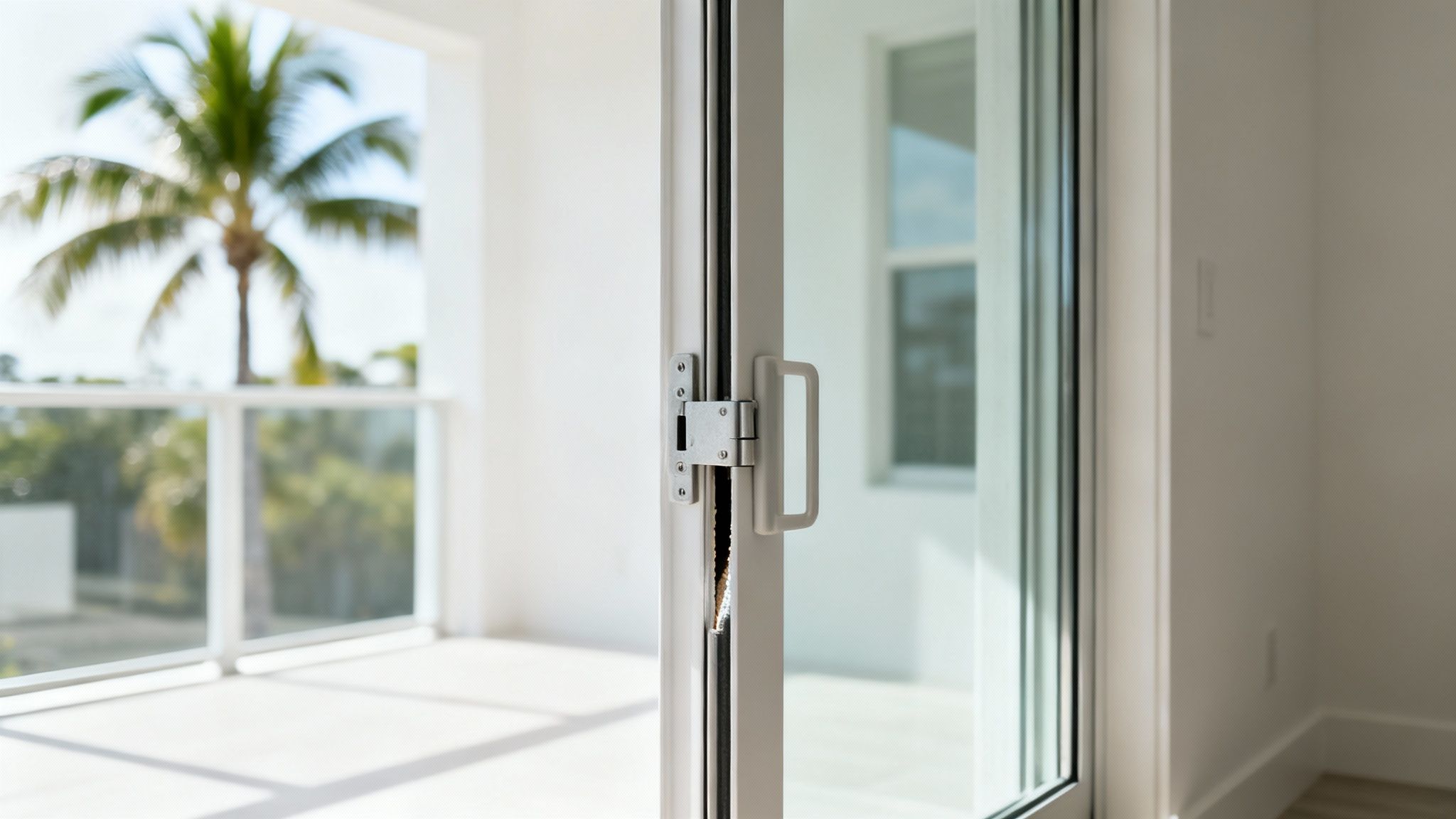
    Close-up of a partially open sliding glass door with a security latch, leading to a balcony and palm tree.

    That gorgeous view from your sliding glass door is one of the best things about living in Port St. Lucie. It brings the outdoors in, filling your home with natural light. The problem is, that beautiful entryway is often the biggest security loophole in your entire house, a fact that burglars know all too well.

    What many homeowners from Fort Pierce to Jensen Beach don't realize is just how weak the standard latch on most sliding doors really is. These basic locks can often be jiggled open or forced with very simple tools, offering almost no real resistance to someone who wants in. Whether it's an older home in Vero Beach or a newer build in Stuart, this is a common vulnerability.

    Common Vulnerabilities Burglars Exploit

    Burglars are all about finding the easiest way in. And frankly, a standard sliding glass door gives them a few great options to choose from. Knowing what they're looking for is the first step to shutting them down for good.

    Here are the key weaknesses they love to exploit:

    • Flimsy Factory Locks: That simple latch is an intruder's first stop. It can often be pried open with a screwdriver or forced with a bit of muscle.
    • Lifting the Door: It sounds crazy, but older or poorly installed doors can sometimes be lifted right off their tracks from the outside, making the lock completely useless.
    • Exposed Location: Sliding doors are usually on the back of the house, out of sight from the street. This gives a burglar plenty of privacy to work on getting in without being noticed.

    A layered security strategy is always the best defense. Relying on a single lock is like putting a "Welcome" mat out for trouble. When you combine physical barriers, stronger locks, and reinforced glass, you turn your weakest link into a powerful deterrent.

    The numbers don't lie. Research shows that sliding glass doors are a major weak point, with some studies suggesting up to 22% of all break-ins happen through these patio doors. This is almost always because people are still relying on the inadequate locks that came with the door. You can learn more about these home security findings to see just how critical an upgrade is.

    If you have a bad feeling about your door, don't wait for a break-in or a frustrating house lockout to do something about it. A professional lock change is a fast and effective solution. Call (772) 710-8169 for immediate help to secure your home.

    Simple Security Upgrades You Can Do Today

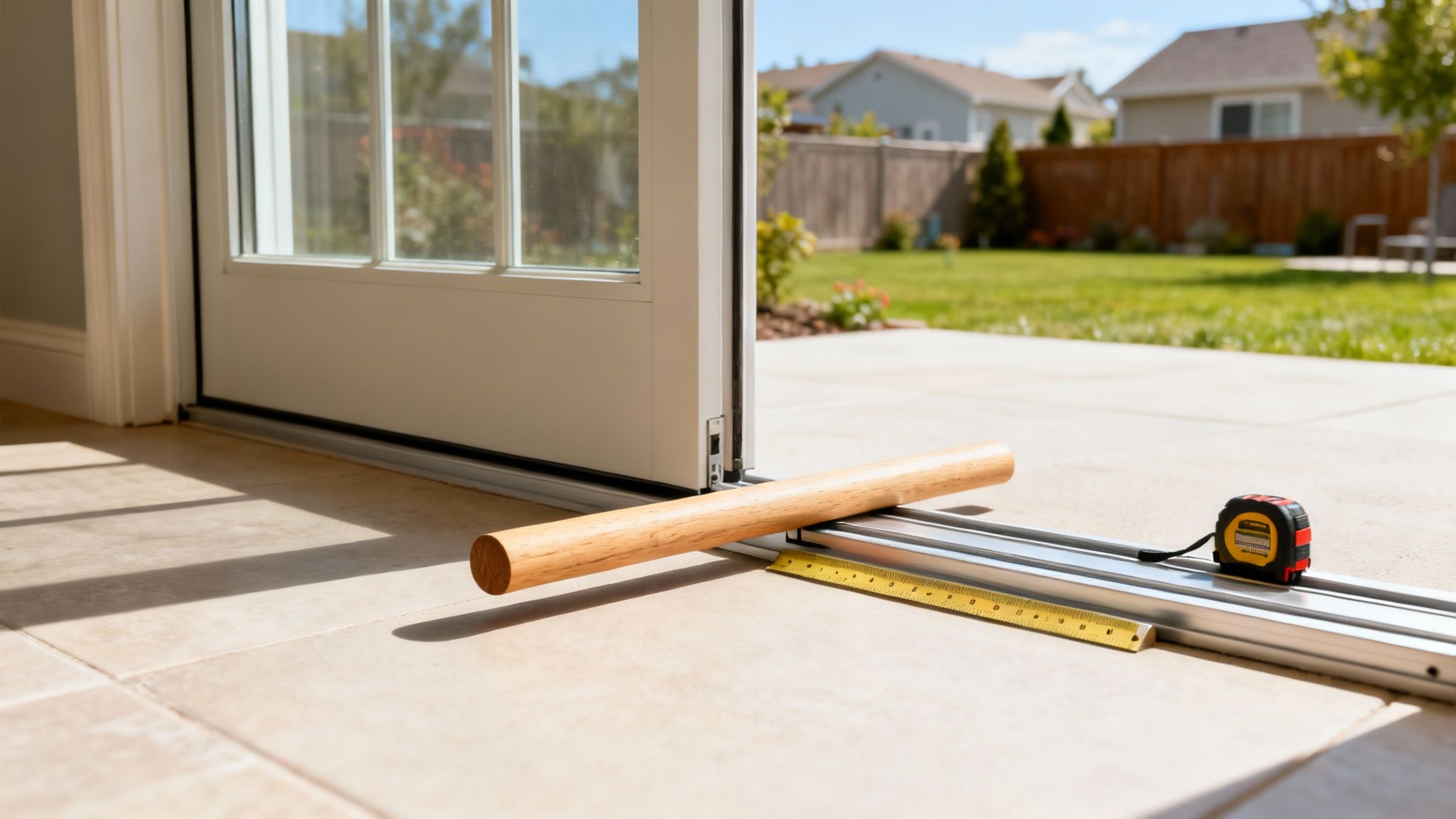
    A wooden dowel, tape measure, and ruler lie on a sliding glass door track for security.

    You don’t have to break the bank to make a huge difference in your home’s security. In fact, some of the most effective ways to secure a sliding glass door are surprisingly simple, cheap, and can be done in just a few minutes. For anyone living in Fort Pierce or anywhere on the Treasure Coast, these quick fixes are the fastest way to get some immediate peace of mind.

    The goal with these upgrades is straightforward: add a physical barrier that stops the door from sliding open, even if the main lock is compromised. It’s all about creating a secondary line of defense that makes forcing the door open a whole lot harder.

    The Power of a Simple Security Bar

    The old-school wooden dowel or security bar is a classic for a reason—it just works. When you lay one in the bottom track, it physically blocks the door from moving. It’s a beautifully simple concept, but the devil is in the details. Just dropping a random stick in the track isn't enough.

    For this to be truly effective, the bar needs to be cut to the perfect length. Here's a step-by-step guide:

    1. Close and Lock: Ensure your sliding door is fully closed and locked.
    2. Measure the Track: Use a tape measure to find the exact distance in the track between the inside edge of the sliding door's frame and the door jamb.
    3. Cut Precisely: Get a sturdy wooden dowel (at least 1" thick) or a metal rod and cut it to that exact measurement. A snug fit is crucial; you don't want any wiggle room for an intruder to exploit.

    While a dowel is great, a Charley bar is a more permanent and convenient option. These are hinged bars that mount right onto the door frame and swing down to lock, so you never have to bend over or worry about misplacing the bar.

    This simple physical block is often the most powerful deterrent. It’s a clear visual cue to any potential intruder that your door is reinforced, and it’s a method that brute force can’t easily overcome.

    If you're not sure which bar is right for you, or if the door seems misaligned and the bar doesn't sit properly, it might be a sign of a bigger issue with the track or rollers. If you’re running into trouble, Call (772) 710-8169 for immediate help so we can check out your door’s condition.

    Adding Auxiliary Locks for Layered Security

    A security bar is a fantastic start, but adding a secondary lock can really elevate your defense. You can find plenty of great options at hardware stores in Stuart or Vero Beach, and most are designed for an easy DIY installation.

    A loop lock is a great example. It’s a two-piece device: a "loop" mounts on the door frame and a "pin" goes on the sliding door itself. When you engage it, the pin slides into the loop, locking the two panels together. This does more than just stop the door from sliding—it also helps prevent it from being lifted off its tracks, a surprisingly common entry method for burglars.

    Another solid choice is a double-bolt lock. Unlike the flimsy thumb-turn latch that comes standard on most doors, this lock drives two bolts into the frame and requires a key to open. It's a serious upgrade and adds a formidable layer of protection, often being a great intermediate step before you consider a full lock change.

    These DIY solutions are the bedrock of good sliding door security. They're cost-effective, easy to install, and will immediately make your home a much tougher target.

    Reinforcing the Glass Against Break-Ins

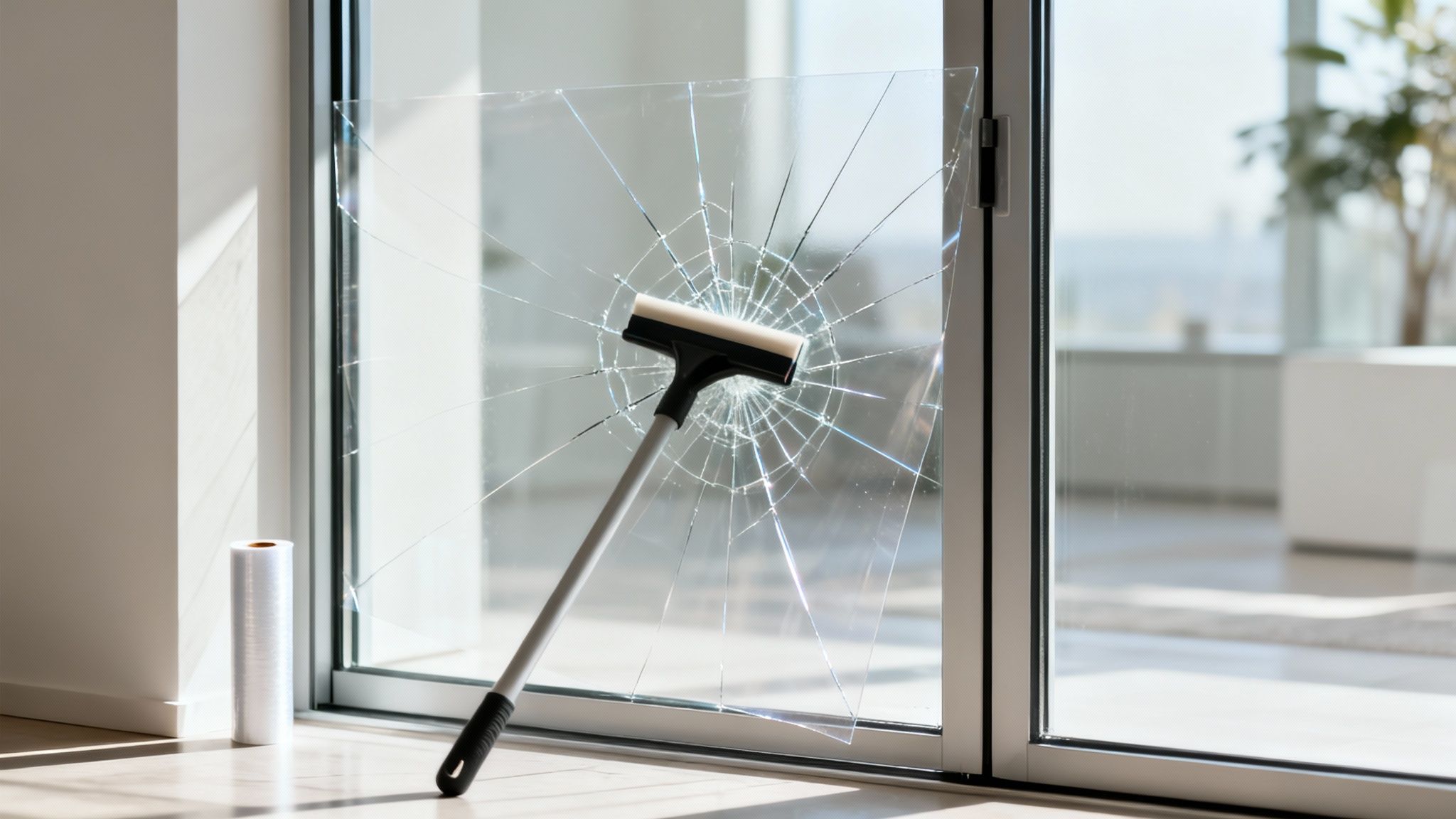
    A squeegee stuck in the center of a shattered sliding glass door with plastic wrap on the floor.

    Beefing up your door's lock and track is a fantastic start, but you're only solving half the problem. A determined intruder might not even bother with the lock. They'll just go for the most direct path—straight through that huge pane of glass.

    And here in Florida, a smash-and-grab isn't our only concern. When tropical storms start brewing, that same sheet of glass becomes a major weak point against high winds and flying debris.

    That’s why strengthening the glass itself is a non-negotiable layer in your home security. It makes your home a much tougher target for burglars and adds a crucial defense against storm damage, which is a constant worry for anyone living along the Treasure Coast.

    Applying Security Film for Immediate Protection

    One of the quickest and most cost-effective ways to reinforce your glass is by applying a high-quality security film. Essentially, it's a super-strong, transparent layer that adheres directly to the glass surface.

    When it's installed correctly, this film works wonders by holding shattered glass together. Instead of the pane exploding into a thousand dangerous pieces, it will just spiderweb and stay in the frame. This gives you two massive advantages:

    • It’s a huge deterrent. Smashing through filmed glass is loud, messy, and takes a lot of effort. Most burglars want a quiet, easy job, and this extra barrier is often enough to make them move on.
    • It adds storm protection. During a hurricane in Port St. Lucie, the film can be the one thing that stops wind and rain from blasting into your home through a broken window.

    Security films are sold in different thicknesses, measured in mils. For home use, a film that is 4 to 8 mils thick really hits the sweet spot between solid protection and visual clarity. You can go thicker, but they can be trickier to install without bubbles or flaws.

    Pro Tip: A common mistake I see is people opting for a very thin film just to save a few dollars. While anything is better than nothing, investing in a proper security-grade product ensures you're buying real protection, not just a false sense of security.

    Upgrading to Laminated or Tempered Glass

    If you're looking for the absolute best defense, replacing the standard glass with modern safety glass is the way to go. It’s a bigger investment, sure, but it’s an incredibly smart move if you're already planning a renovation or need to replace an old, drafty door in your Jensen Beach home.

    The shift to stronger glass has completely changed home safety. Today's safety glass, whether it's tempered or laminated, is four to five times more resistant to impact than the old-school glass in many existing doors. Considering how many burglars specifically target sliding doors because of the breakable glass, this upgrade alone can dramatically cut your risk.

    • Tempered Glass: This glass is treated with heat to make it incredibly tough. If it ever does break, it shatters into small, dull, pebble-like chunks instead of long, dangerous shards.
    • Laminated Glass: This is the gold standard for security. It's basically a sandwich—a tough plastic interlayer (PVB) fused between two layers of glass. Even if the glass cracks under extreme force, that interlayer holds everything together, creating a barrier that's incredibly difficult to get through.

    Choosing between security film and a full glass replacement usually boils down to your budget and current needs. If you want professional advice on the best route for your home or need a lock change to go with your newly reinforced glass, our team is here to help. Call (772) 710-8169 for immediate help to discuss your options.

    When DIY Isn't Enough: Advanced Locks a Professional Should Install

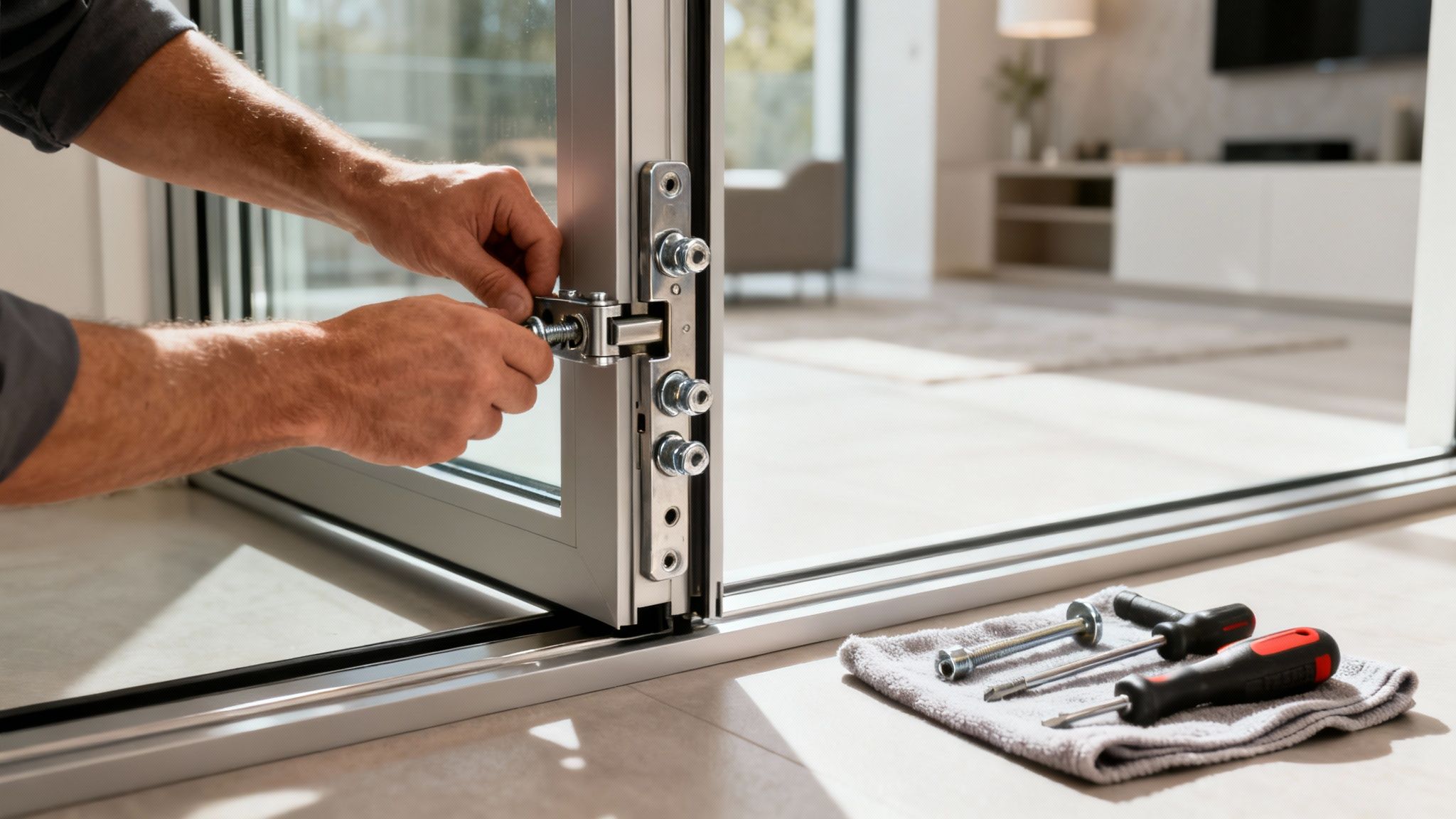
    Close-up of hands installing a lock mechanism on a modern sliding glass door, with tools nearby.

    Sometimes, a security bar or a simple add-on lock just won't cut it. For homeowners in Stuart and Vero Beach who want true, fortress-like security, it’s time to bring in the pros. Advanced locking systems offer a level of protection that off-the-shelf hardware simply can't compete with.

    These aren't your average hardware store locks. We’re talking about precision-engineered mechanisms that demand expert installation. Trying to install one yourself can easily lead to a misaligned lock, a damaged door frame, or—worst of all—a system that gives you a false sense of security. Whether you're in a house lockout situation or proactively upgrading, professional service is key.

    The Power of a Multi-Point Locking System

    Imagine a lock that secures your door in multiple places at once. That's the idea behind a multi-point locking system. When you turn the key, it doesn't just engage one latch; it drives several heavy-duty bolts into the door frame at the top, middle, and bottom.

    This design makes prying the door open nearly impossible. The force from an attempted break-in gets distributed across the entire frame instead of being focused on one weak point. It essentially anchors your sliding door, turning it into a solid barrier.

    • Pry-Resistant: With locking points up and down the frame, there's no single spot for a burglar to exploit.
    • Enhanced Stability: These systems are great for preventing the door from being lifted off its track, a common weak spot on older sliding doors.
    • Superior Seal: As a nice bonus, especially for us here on the Treasure Coast, they pull the door tightly into the frame, which can improve weather sealing and energy efficiency.

    A professional installation is absolutely non-negotiable for these systems. Our technicians have the specialized tools and training to ensure every single locking point aligns perfectly. An improperly installed multi-point lock is little better than the standard latch it replaced.

    High-Security Keyed Locks

    Another fantastic professional-grade upgrade is a high-security keyed lock built specifically for sliding doors. These are a world away from basic locks and are engineered to defeat the common tricks burglars use.

    They are built with complex internal mechanisms and hardened steel, making them highly resistant to:

    • Picking: Intricate keyways make it extremely difficult for even a skilled person to manipulate the lock.
    • Drilling: Hardened steel components are designed to chew up drill bits, stopping a common forced-entry method in its tracks.
    • Bumping: Special pins and unique designs prevent the use of "bump keys" to jar the lock open.

    Industry security standards like PAS 24 have become critical for certifying that doors can withstand common burglary tools. In fact, models that meet these standards have been shown to reduce successful break-ins by over 80% compared to non-certified ones. You can find more details on these security accreditations and their impact on home safety.


    Choosing Between DIY and Professional Security

    Deciding whether to stick with a DIY solution or call a professional can be tough. This table breaks down the key differences to help you choose the right path for your home, budget, and peace of mind.

    FeatureDIY Solutions (Bars, Simple Locks)Professional Installation (Multi-Point Locks)
    Security LevelGoodExcellent
    InstallationSimple, user-installedRequires specialized tools & expertise
    Cost$20 – $100$300 – $800+ (including hardware & labor)
    Pry ResistanceModerateVery High
    Lift-Out ProtectionVaries, often minimalHigh
    Best ForRenters, budget-conscious homeowners, adding a secondary layerMaximum security, primary residences, high-risk areas

    Ultimately, while DIY options offer a solid boost in security, nothing compares to a professionally installed system for complete protection and confidence.


    When you're ready to explore these advanced options for your Port St. Lucie home, the first step is a professional assessment. For a full breakdown of how we can fortify your home, take a look at our residential locksmith services.

    If you need help right away, whether it's for an upgrade or an emergency like a car lockout, just Call (772) 710-8169. We'll help you find the perfect security solution for your sliding doors.

    Essential Maintenance for Lasting Security

    It doesn't matter how fancy your lock is or how tough the glass is—if the door itself isn't in good shape, your security is compromised. Especially in a humid climate like we have here in Port St. Lucie, the daily grind can really wear down your sliding door's components, creating weak points an intruder can exploit. A little routine maintenance is one of the most effective, yet most overlooked, ways to keep your home secure.

    Think about it: a door that sticks, grinds, or sits crooked in its frame is more than just a daily hassle. It's a security flaw. When a door doesn't align properly, even the best locks might not engage correctly, basically leaving your home unlocked. Spending just a few minutes every couple of months on upkeep makes sure all your security upgrades can actually do their job.

    Your Practical Maintenance Checklist

    Here's a quick and easy check-up you can do yourself. Running through these steps can catch small issues before they become major security vulnerabilities that might lead to needing a full lock change.

    • Clean Out the Tracks: The bottom track is a magnet for dirt, sand, and pet hair. All that gunk can jam up the rollers, push the door out of alignment, and make it a real pain to lock. Grab a vacuum with the crevice tool to get the worst of it, then use a stiff brush for anything left behind.
    • Lubricate the Rollers: Once the tracks are clean, hit the rollers with a silicone-based lubricant. This is key. A door that glides smoothly is one that locks securely, and this simple step prevents the grinding that wears down parts over time.
    • Check and Tighten Hardware: All the opening and closing can cause the screws on the handle and lock assembly to work themselves loose. Take a screwdriver and just snug them up. A wobbly handle is one of the first things a potential burglar will jiggle to test for weakness.

    If your door doesn't sit perfectly flush in the frame, that's a red flag. It might seem minor, but it can be just enough to prevent a deadbolt from fully seating, creating a critical failure point.

    Neglected maintenance is a silent security threat. A door that won't close flush or lock smoothly is a sign that its core function is compromised, making it an easy target for intruders.

    If you've gone through this checklist and the door still feels wobbly or the lock is fighting you, you might be looking at a bigger issue. It could be worn-out rollers or a lock mechanism that's on its last legs. Don't wait until you're dealing with a complete house lockout or a busted lock. For a professional repair or security assessment in Fort Pierce or Stuart, Call (772) 710-8169 for immediate help.

    Common Questions About Sliding Door Security

    Over the years, our locksmiths have heard just about every question you can imagine when it comes to securing sliding glass doors. Whether you're in Port St. Lucie or Vero Beach, the concerns are often the same. Let's tackle some of the most common questions our technicians get asked out in the field.

    Are New Sliding Glass Doors Safer Than Old Ones?

    There's really no comparison. Modern sliding doors are engineered with security as a core feature, not an afterthought. They often come straight from the factory with multi-point locking systems and tough, tempered or laminated glass.

    Older doors, particularly those that are 15+ years old, usually just have a flimsy latch and a single pane of glass. It’s a design that practically invites trouble. If your home in Fort Pierce or Stuart still has one of these originals, the upgrades we've discussed aren't just good ideas—they're essential. This is a common reason for a lock change in older local homes.

    Will Security Film Really Stop an Intruder?

    It won’t turn your glass into a bank vault, but it's a fantastic deterrent. Security film is designed to hold shattered glass together. So, instead of the glass collapsing quietly to the ground after a hard impact, it stays in the frame, creating a messy, noisy, and time-consuming obstacle.

    An intruder wants to be fast and quiet. Security film denies them both. The racket and the extra time it takes to get through the glass is often enough to make them give up and find an easier target. It's also a great bonus for hurricane prep in our Florida climate.

    Can I Install a Smart Lock on My Sliding Door?

    You bet. Smart home tech has finally caught up with sliding doors. You can get anything from a simple sensor that pings your phone when the door opens, all the way to fully automated locks you can control from an app. A good locksmith can help you find a model that works with your specific door and integrates smoothly with your other smart devices. We also handle automotive needs like key fob replacement and ignition repair.

    Not sure where to start? Call (772) 710-8169 for immediate help. We can take a look at your door and point you toward the best options. You can also find more answers on our local locksmith FAQ page.

    What Does a Professional Locksmith Installation Cost?

    The cost really depends on what you need. Something straightforward like installing a high-quality secondary lock is a very affordable upgrade that adds a ton of value. On the other end, retrofitting a full multi-point locking system is more of an investment, but it provides a massive boost to your home's long-term security.

    The best approach is to get a direct quote. We can come out, assess your door and your specific needs, and give you a clear, honest price with no surprises. You'll probably find that serious peace of mind is more affordable than you think.