

It's one of the most frustrating ways to start your day in Port St. Lucie or Fort Pierce. You're running late, keys in hand, and you find your car door is frozen solid. It won’t budge. The quick fix is usually about applying a little gentle heat—think a commercial de-icer spray, a hairdryer on a low setting, or even just your own warm breath on the lock.
But here’s the most important thing to remember: never use brute force or pour hot water on it. That’s a fast track to causing some serious, and expensive, damage to your car. If you find yourself in a bind and need immediate, damage-free assistance, call (772) 710-8169 for immediate help.
Why Florida Cars Aren't Immune to Frozen Locks
Drivers all over the Treasure Coast, from Vero Beach to Stuart, have felt that sinking feeling on a surprisingly cold morning. You’re ready to go, but your car has other plans. While we might not get northern blizzards, a sudden cold snap in Florida—especially right after a damp or rainy day—is more than enough to freeze the moisture caught in your door seals and lock cylinders.
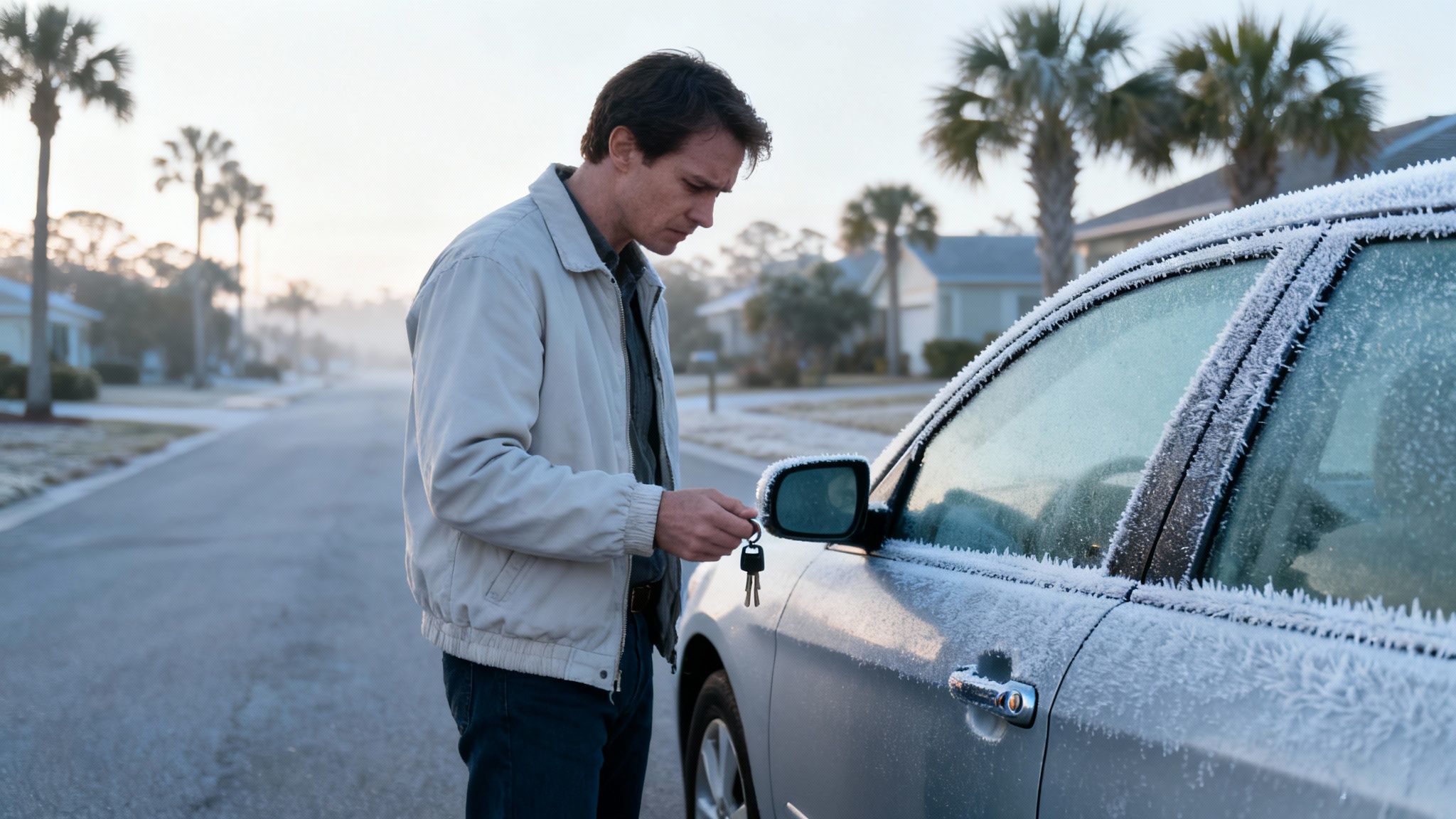
It’s a real-world problem for local residents. Imagine being late for your commute down US-1 in Fort Pierce or finding yourself stuck in a chilly parking lot in Jensen Beach, just because your key won’t turn. This guide offers practical, local, and solution-focused advice for that immediate, infuriating problem.
The Real Problem With A Frozen Car Door
When your car door or lock is iced over, the natural reaction is to pull harder on the handle or try to force the key. That’s just about the worst thing you can do. The ice forms a surprisingly strong bond, and trying to muscle your way through it can create a handful of costly new problems.
- Torn Weather Stripping: The rubber seals lining your car door are more delicate than they look. Yanking on a frozen door can easily tear this stripping, which then leads to annoying wind noise and water leaks down the road.
- Broken Door Handles: So many modern door handles are made of plastic. Forcing one against the grip of ice can cause it to snap right off in your hand, a common issue we see in our repair calls.
- Snapped Keys: Trying to force a key into a frozen lock cylinder is a recipe for disaster. The metal can break, leaving you with a piece of the key stuck inside the lock—a mess that almost always requires a locksmith to fix. If you end up in that spot, you'll need a professional for an emergency car lockout service.
The real issue isn't the ice itself. It's the permanent damage you can cause by trying to overpower it. A single moment of impatience can turn a minor winter annoyance into a major repair bill for services like ignition repair or even a full lock change.
This guide is here to walk you through how to handle the situation safely and get back on your way. We'll cover everything from practical DIY tricks to knowing when it's time to call in a professional locksmith in Port St. Lucie, Stuart, or Vero Beach.
How to Safely Thaw A Frozen Car Lock Without Causing Damage
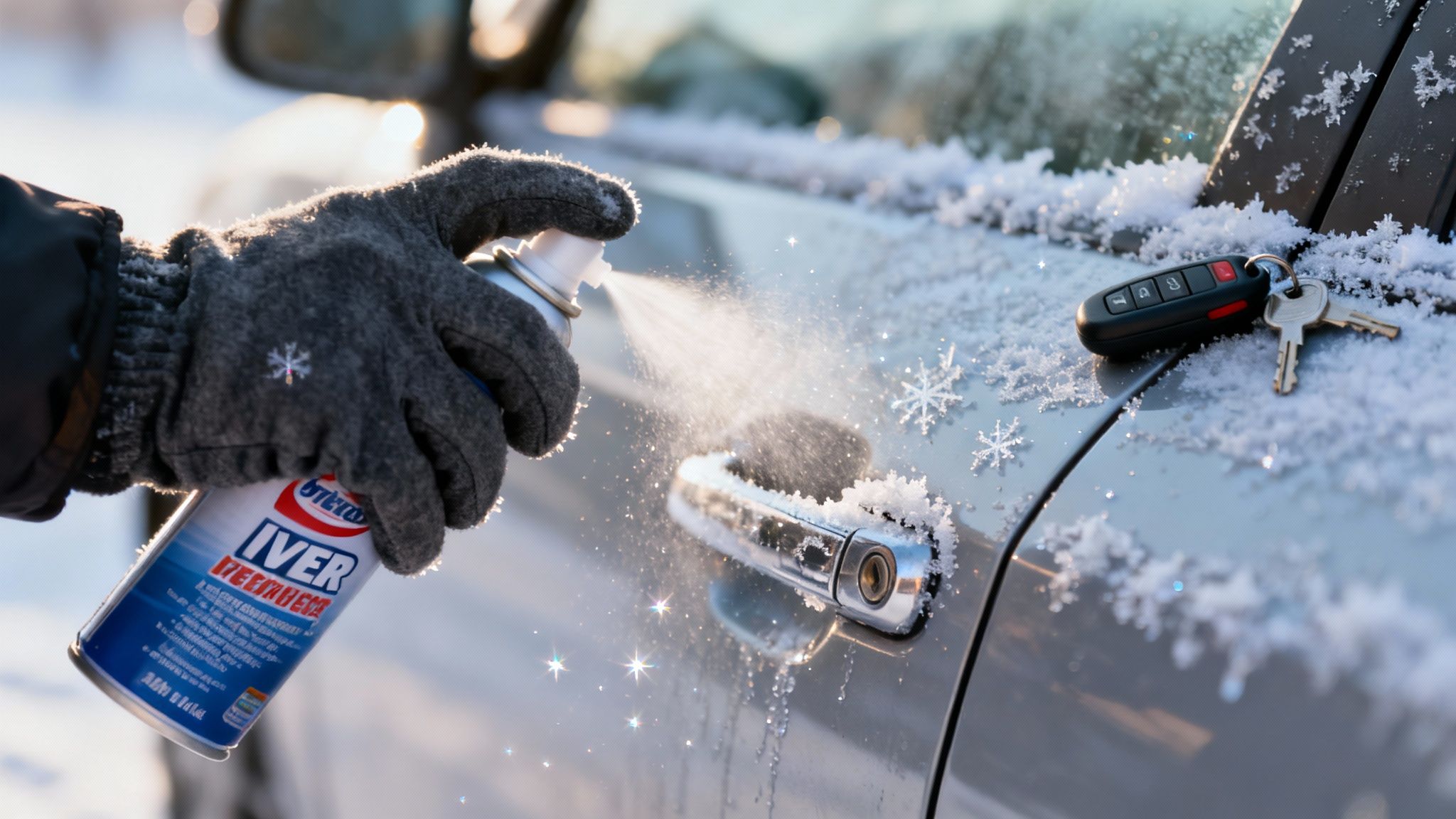
It’s one of the most frustrating winter morning rituals on the Treasure Coast: your car key slides into the lock but refuses to turn. Your first instinct might be to just force it, but that's the absolute worst thing you can do. Forcing a key is the fastest way to snap it off in the lock, turning a small annoyance into a major headache that requires a professional locksmith to fix.
The real goal is to introduce just enough warmth to melt the ice, and to do it gradually. If you have a can of commercial de-icer spray, you're in luck—that's your best bet. These sprays are formulated with chemicals like calcium chloride, which not only melt the ice but also help stop it from refreezing right away.
Smart DIY De-Icing Tricks
No de-icer on hand? No problem. You probably have a few useful tools in your home or even your pocket. Here are some step-by-step explanations for safe de-icing:
One of the oldest tricks in the book involves carefully heating your car's metal key blade with a lighter or match. Just heat it for a few seconds—you want it warm to the touch, not glowing red hot. Gently insert the warm key into the lock, hold it there for a moment to transfer the heat, and repeat the process. This is often just enough to melt the tiny ice crystals jamming the lock cylinder.
Another surprisingly effective fix is hand sanitizer. Most sanitizers have a high concentration of isopropyl alcohol, which has a much lower freezing point than water. Just squeeze a small dab onto your key or directly into the lock, and the alcohol will help dissolve the ice. This is a great practical tip for anyone caught unprepared in Fort Pierce or Jensen Beach.
Comparing DIY Car Lock De-Icing Methods
When you're stuck in the cold, it helps to know your options. Here’s a quick look at common DIY methods for thawing a frozen car lock, comparing how well they work and what to watch out for.
| Method | Effectiveness | Potential Risks | What You Need |
|---|---|---|---|
| Warm Key | Good | Overheating the key can damage the fob’s chip. Handle with care to avoid burns. | Lighter or match, metal key |
| Hand Sanitizer | Good | Can be a bit messy. Some formulas may leave a slight residue over time. | Alcohol-based hand sanitizer |
| Warm Breath | Fair | The moisture in your breath can refreeze, potentially making the problem worse. | Just you! |
| Graphite Lubricant | Fair (as preventative) | Not effective for melting existing ice, but excellent for preventing freezes. | Lock lubricant spray |
| Commercial De-Icer | Excellent | Can be slightly corrosive to paint if over-sprayed. Best option overall. | Automotive de-icer spray |
Ultimately, while the warm key or hand sanitizer tricks work well in a pinch, keeping a can of commercial de-icer in your home or bag during the winter is the most reliable solution for Treasure Coast drivers.
Crucial Safety Warning: Whatever you do, never pour hot or boiling water on a frozen lock or car window. The sudden, extreme temperature change can easily crack the glass or ruin your car's paint. Worse yet, the water will run down into the lock mechanism and refreeze, leaving you in a tougher spot than when you started.
This isn't just an occasional problem, either. A recent European study revealed that 10-15% of all automotive service calls during the winter are directly related to frozen or malfunctioning door latches. It's a surprisingly common issue, even in milder climates like ours.
What To Avoid At All Costs
Patience is your best friend when dealing with a frozen car lock. Besides avoiding the hot water mistake, there are a few other common missteps that can lead to expensive repairs for drivers from Stuart to Vero Beach.
- Don't Use Brute Force: I can't say this enough: never try to muscle the key into turning. The pins inside the lock are delicate and can bend or break easily. A snapped key is a whole different level of problem, often requiring a complex extraction and potentially a new ignition repair.
- Avoid Using Your Breath (If You Can): Blowing warm air into the lock can work in a pinch, but the moisture from your breath often makes things worse by refreezing, especially on a truly cold Florida morning.
- Skip the Salt: While salt melts ice on the roads, it's also incredibly corrosive. You don't want that anywhere near the inside of your lock, where it will cause rust and long-term damage.
If you’ve tried these safe methods and the lock still won't give, or if you feel any serious resistance, it’s time to stop pushing your luck. Forcing it further only risks a broken key or a damaged lock cylinder.
Instead of guessing, get an expert involved. Our automotive locksmith services are built for these exact situations. For fast, damage-free help with frozen car doors and locks, call (772) 710-8169 for immediate help.
Dealing With a Door Frozen to the Frame
You turn the key, hear the click, but the door won’t budge. It’s not the lock this time; the door itself is literally frozen shut, glued to the car's frame by a stubborn sheet of ice. This is a classic problem, especially after a damp, chilly night in places like Vero Beach where moisture on the rubber weather stripping freezes solid.
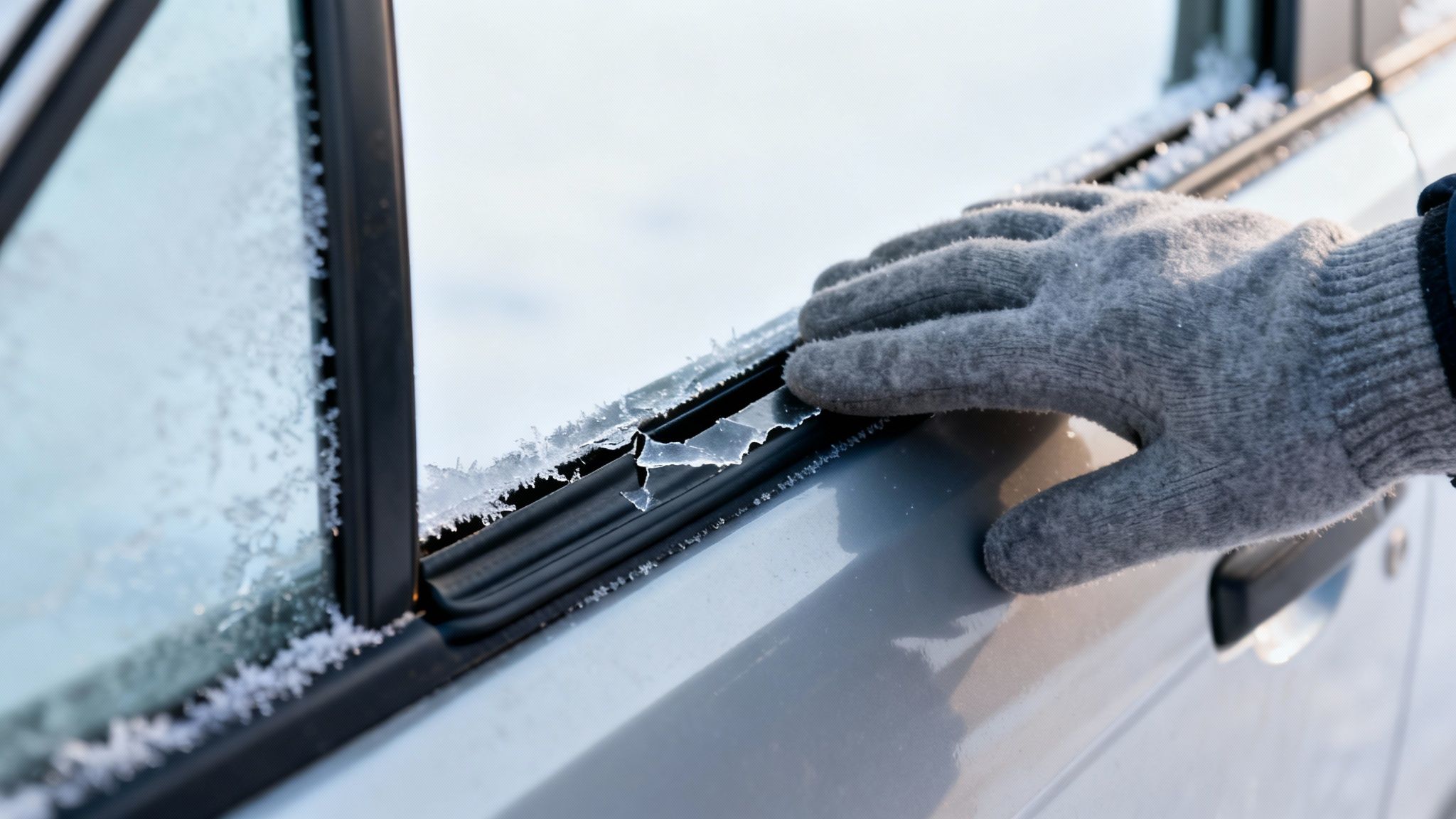
Your gut reaction is probably to grab the handle and pull with everything you've got. Don't do it. Yanking on a frozen door is the fastest way to tear the weather stripping, a fix that's surprisingly expensive. A damaged seal doesn't just look bad; it can lead to frustrating water leaks, drafts, and that annoying wind whistle when you're driving down the highway.
Gentle Techniques to Break the Ice Seal
The real trick is to crack the ice seal without harming the rubber gasket. This is about finesse, not brute force. Follow these steps:
Start by placing your palm flat against the door, right along the edge, and give it a solid push. Work your way around the entire perimeter of the door, pushing firmly every few inches. Often, this slight pressure is all it takes to fracture the thin ice and pop the door free. If your driver-side door is being stubborn, try the others—the passenger door or a rear one might not be frozen as badly.
If pushing doesn't do the trick, you can step things up a bit with one of these safe methods:
- Lukewarm Water: This is one of the few times water is your friend. Carefully pour some lukewarm—never hot—water along the top of the door frame. It's often enough to melt the ice holding the seal.
- DIY De-Icer Spray: Grab a spray bottle and mix two parts rubbing alcohol with one part water. Spray this solution directly along the frozen seal to dissolve the ice quickly.
- Commercial De-Icer: A store-bought de-icer spray also works wonders. Just be sure to wipe any residue off your car’s paint once the door is open.
Patience is your best tool here. A torn weather stripping will cost you way more in time and money than the few extra minutes it takes to gently work a door free. Rushing is a recipe for an expensive repair bill.
When the Door Is Free but Still Stuck
Sometimes, even after you've broken the ice, the internal latch mechanism is just too cold and sluggish to work properly. If you've freed the seal but the latch won't release, take a breath.
If you’re stuck in Port St. Lucie, Fort Pierce, or anywhere on the Treasure Coast and can't get your door open without risking damage, professional help is just a phone call away. For any type of car lockout, a skilled locksmith can figure out what's wrong and get you inside without causing any harm. When you're in a bind, call (772) 710-8169 for immediate help.
Proactive Steps to Prevent Frozen Locks and Doors
An ounce of prevention is truly worth a pound of cure, especially when it comes to frozen car doors. Knowing how to thaw a lock is one thing, but making sure it never freezes in the first place is the real pro move. Just a few minutes of prep before a Treasure Coast cold snap can save you a ton of frustration on a chilly morning.
The whole game is about keeping moisture out. Water is the enemy here, and if you can create a barrier on your car's most vulnerable spots, ice won't stand a chance.
Weatherproof Your Door Seals and Locks
The two places where ice loves to form are the rubber weather stripping around your doors and the lock cylinder itself. Each one needs a slightly different approach.
Treat Rubber Seals with Silicone Spray: Those rubber gaskets lining your car doors are like sponges for moisture. When the temperature drops, that trapped water freezes and basically glues your door shut. The fix is simple: wipe the seals down with a clean, dry cloth, then apply a light coating of silicone spray. It conditions the rubber, keeps it flexible, and, most importantly, repels water.
Use Graphite Lubricant in Your Locks: Don't wait until the lock is already frozen. A quick shot of a graphite-based lubricant into the keyhole is a fantastic preemptive strike. It pushes out any moisture that might be lurking inside. We always recommend graphite over oil-based products like WD-40 for locks; oil can get gummy over time and attract dirt, while graphite provides dry, long-lasting protection.
Our Go-To Tip: After you spray the lubricant in, work your key in and out of the lock a few times. This simple action spreads the graphite all over the internal pins and tumblers, ensuring everything is coated and ready for winter.
What About Your Key Fob?
In an age of keyless entry, a dead fob is the new lockout. Cold weather is brutal on small batteries, and it can zap the life right out of your key fob, weakening its signal. You might be standing there, pressing the unlock button with no response, thinking the car's locks are frozen solid.
Before you jump to conclusions, try warming the fob up for a few minutes in your hands or a warm pocket. If that doesn't do the trick, the battery is probably toast. We always tell people to keep a spare CR2032 battery (or whatever your fob takes) at home.
If you get stuck out in Stuart or Jensen Beach, remember that most push-to-start cars will still recognize a weak fob if you hold it directly against the start button. But if you're truly stuck and need a new battery or a full key fob replacement, just call (772) 710-8169. Our mobile team can sort it out for you right there on the spot.
This whole issue with water getting into car doors is a massive challenge for auto manufacturers everywhere. The global automotive door market is always trying to figure out better ways to seal off these sensitive mechanisms. From Asia-Pacific to Europe, water freezing in key slots and on weather stripping is a problem that affects drivers worldwide, not just those in traditionally frigid climates.
Of course, taking care of your locks is just one piece of the puzzle. Keeping your vehicle in great shape overall is key to its longevity. You might even consider looking into professional auto detailing services to give your car comprehensive care. A few small, proactive steps can make all the difference and ensure you’re never left standing out in the cold.
When To Call An Emergency Locksmith in Port St. Lucie
There’s a lot you can handle yourself with a little patience and the right technique. But sometimes, a frozen lock isn't just a minor inconvenience—it's a sign of a bigger problem. Knowing when to step back and call in a professional is key to avoiding a much more expensive repair down the road.
If you've tried the basics and you're still locked out, it's probably time to get some expert help.
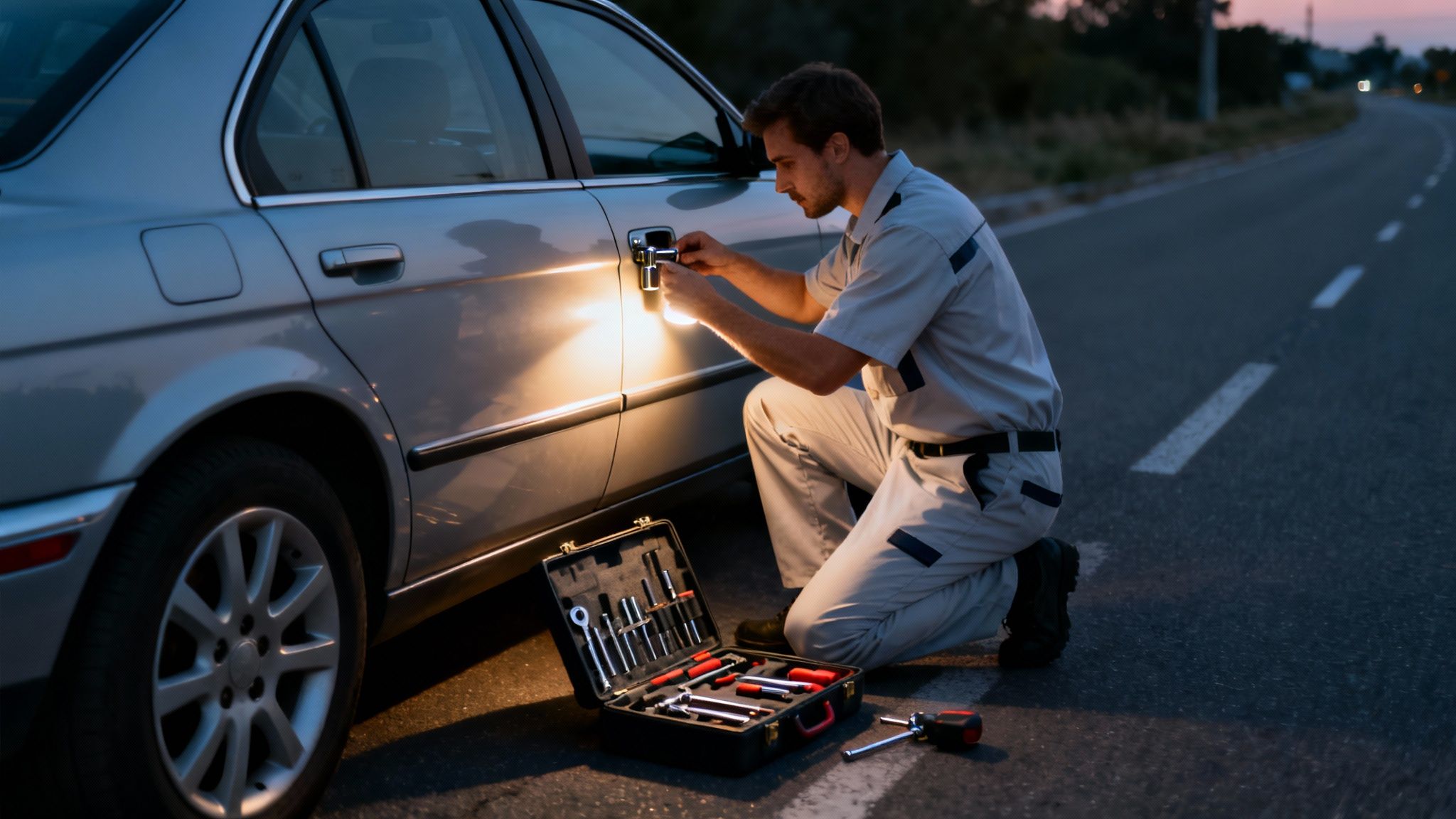
There are a few definite red flags that tell you it's time to stop what you're doing. Pushing your luck beyond these points almost always leads to damage.
Red Flags That Signal You Need a Pro
Recognizing these scenarios can save you a ton of frustration and money. If any of these happen, put down the de-icer and pick up the phone:
- Your Key Snaps Off in the Lock. This is a full-stop situation. Trying to dig the broken piece out yourself is a surefire way to destroy the lock cylinder. We have specialized extraction tools that can get the fragment out without wrecking the lock, a crucial part of our car lockout service.
- The Internal Mechanism Is Frozen Solid. You've managed to thaw the keyhole, but the key still won't turn, or the handle won't engage. The ice is likely deeper inside the door, freezing the actual latch mechanism. Forcing it will break delicate metal or plastic components.
- Electronic Locks Are Failing. Extreme cold can be brutal on car electronics. If your key fob is dead in the water and the manual lock is also stuck, you might be looking at a frozen actuator or a wiring issue. This requires a technician with the right diagnostic tools to figure out.
The biggest reason to call a professional locksmith is for non-destructive entry. Our job is to get you back in your car without scratching the paint, denting the door, or breaking the lock you called us to fix. We're not just opening doors; we're preserving your vehicle's integrity.
The Advantage of a Local Mobile Locksmith
When you’re stranded in the cold, the last thing you want is to be stuck waiting for a dispatcher from a national call center. A local mobile locksmith is a completely different experience. Our team is based right here in St. Lucie County, which means we can offer incredibly fast response times across the Treasure Coast.
We solve complex problems right where you are, whether that's a car lockout in Port St. Lucie, a house lockout in Stuart, or an ignition repair in Fort Pierce. Our mobile vans are fully equipped for more than just a simple lockout. We can perform an ignition repair if the cold caused it to fail, cut a brand new key, or even handle a complete key fob replacement on the spot. Many forward-thinking automotive services now use tools like automotive live chat solutions to connect with customers instantly, and we believe in that same level of direct, fast communication.
Don't risk turning a simple freeze into a major repair bill by forcing a stubborn lock. Our experienced technicians can diagnose the real issue and get it fixed safely. If you need a reliable locksmith in Port St. Lucie, we're always ready to help.
For fast, professional assistance that gets you back on the road, call (772) 710-8169 for immediate help.
Answering Your Questions About Frozen Car Locks
Even here on the Treasure Coast, a sudden cold snap catches people by surprise. When you're trying to get to work in Port St. Lucie or run errands in Stuart, a frozen car door is the last thing you need. We get a lot of calls about this, so we've put together answers to the most common questions our locksmiths hear.
It's easy to panic when you're stuck, but trust me, there's usually a simple, safe fix. The trick is knowing what actually works versus what can cause a whole lot of expensive damage.
Is It Safe To Pour Hot Water On My Frozen Car Lock?
Absolutely not. Please, don't do this. It’s probably the most common—and most damaging—myth out there for dealing with frozen locks.
Pouring boiling water onto freezing cold glass or metal creates a massive temperature shock. That’s a recipe for a cracked windshield or ruined paint. On top of that, the water has to go somewhere. It’ll run down into the lock and along the door seals, where it will refreeze, often creating a thicker, more solid block of ice than you started with. This is a real example of a good intention leading to a costly repair.
My Key Fob Stopped Working In The Cold. Is The Lock Frozen?
It might not be the lock at all. Cold weather is brutal on small batteries, and the one in your key fob is a prime target. When the battery gets cold, its power output drops, and the signal it sends might be too weak to reach your car's receiver.
Before you assume the worst, follow this step-by-step check:
- Hold the key fob tightly in your hands or stick it in your pocket for a few minutes. Warming it up can sometimes give the battery just enough juice to work.
- Next, try your manual key. If it turns in the lock without a problem, then the issue is almost certainly a weak fob battery. You just need a simple key fob replacement.
- If the manual key won't turn or even go in all the way, then you're definitely dealing with a frozen lock cylinder.
Stuck somewhere in Fort Pierce or Jensen Beach? Call (772) 710-8169 for immediate help. Our mobile locksmiths can get your lock open and even handle key fob battery replacements right on the spot.
Your best defense is always preparation. A few minutes of preventative care before a cold front moves through Vero Beach can save you from being locked out in the first place.
Can I Use WD-40 To Unfreeze My Car Lock?
You can, but you really shouldn't. While WD-40 is designed to displace water and might get you out of a jam, it's not a real lubricant and can cause more harm than good in the long run.
Over time, it leaves behind a sticky film that attracts dust, dirt, and grime. This gunk builds up inside the lock, gumming up the delicate pins and tumblers. Eventually, you’ll end up with a lock that’s even harder to turn, frozen or not.
A much better solution is a dedicated de-icer spray with a graphite or silicone base. These are made specifically for locks—they melt the ice safely and lubricate the mechanism without leaving that damaging residue. If your lock is constantly giving you trouble, it might be a sign it needs a professional cleaning or a full lock change.
For any issues with frozen car doors and locks, from emergency lockouts to ignition repair, trust the local experts. Pro-B Locksmith offers fast, reliable, and damage-free service across the Treasure Coast, including Port St. Lucie, Fort Pierce, Vero Beach, Stuart, and Jensen Beach. Learn more about our comprehensive solutions at https://problocksmith.com.

