When your car won't start in Port St. Lucie and you see that dreaded security light flashing, the first thing to try is incredibly simple: use your key fob to lock and then unlock the doors. This simple cycle can often reset the system and re-establish the connection between your key and the car's security module. It's a quick, practical tip that just might get you back on the road in Fort Pierce or Vero Beach.
Diagnosing Your Anti Theft System Problem
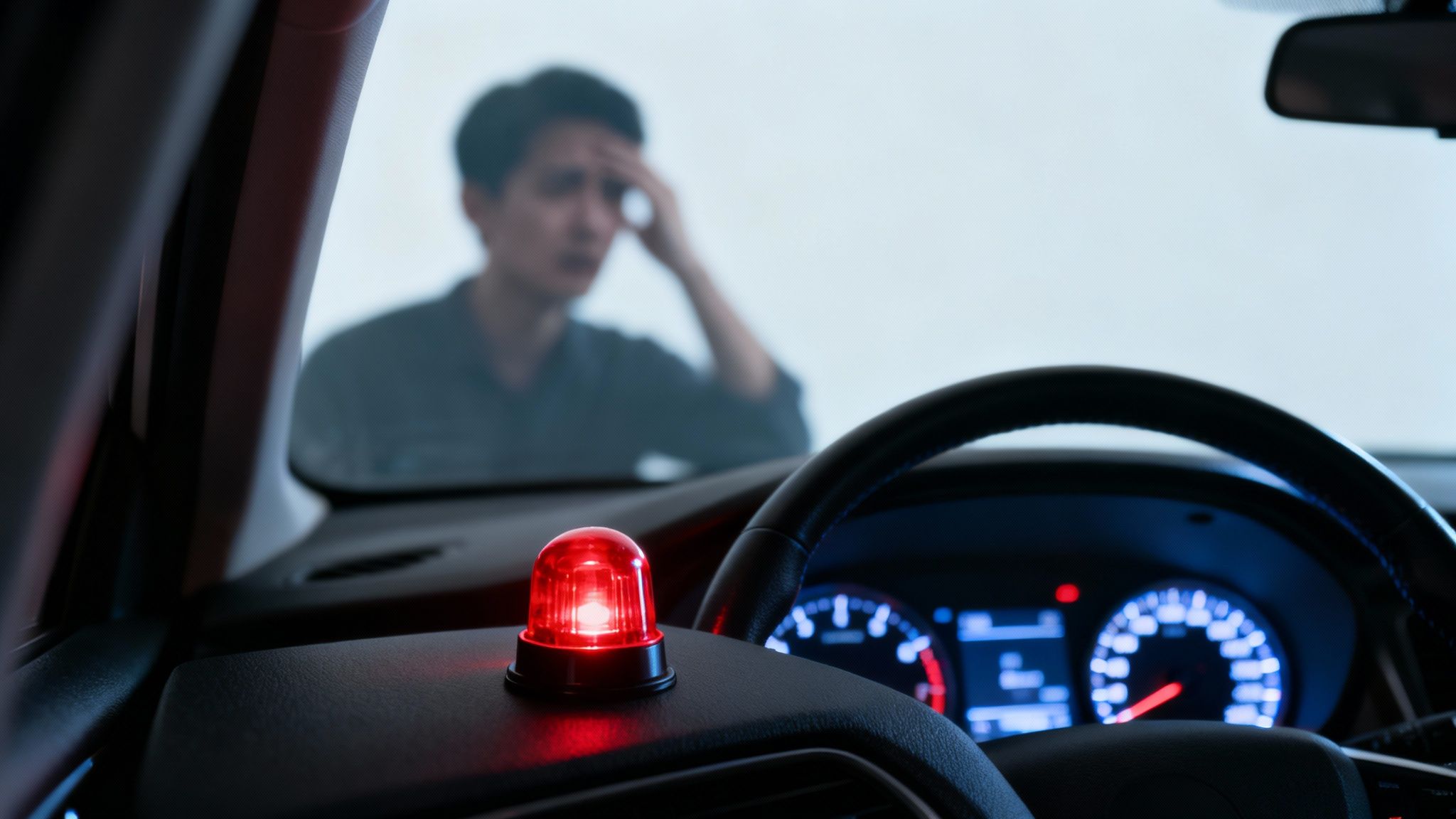
When your car suddenly refuses to start or the alarm starts blaring for no apparent reason, it’s easy to assume the worst. But before you jump into trying to disable the anti-theft system, you have to be sure that’s actually the problem.
Misdiagnosing the issue can send you down a frustrating rabbit hole of "fixes" that do nothing but waste your time and money. As local locksmiths, we get calls all the time from folks around Fort Pierce and Jensen Beach who are convinced their immobilizer is shot, only to find out it was a much simpler issue like a dead key fob. Let's walk through how to tell if the security system is truly the culprit.
Telltale Signs of an Engaged Security System
A triggered or faulty anti-theft system has a few classic symptoms. If your car is doing any of these, there’s a very high probability the security system is the source of your headache.
- Flashing Security Light: This is your biggest clue. You'll see a little light on the dash, often an icon of a key or a padlock, flashing rapidly or staying lit when you try to start the car. A slow, steady blink when the car is off is normal; a frantic one when you turn the key is a red flag.
- Engine Cranks But Won't Start: You turn the key and hear the starter going—that familiar "rur-rur-rur"—but the engine never actually catches and runs. This is a classic immobilizer move; it's cut off the fuel or spark to prevent theft.
- Engine Starts and Immediately Dies: Some systems are designed to let the engine fire up for just a second or two before shutting it down. If the car starts and then instantly dies, every single time, you're almost certainly looking at a security system issue.
- No Crank, No Start at All: In some cars, particularly newer ones, the anti-theft system won't even let the starter engage. You'll turn the key, the dashboard lights will come on, but you'll get complete silence from the engine.
Pro Tip: Before you do anything else, grab your spare key. If the spare works perfectly, the problem isn't with your car's security system—it's an issue with the transponder chip or battery in your main key. This is a common call for a key fob replacement we see in the Stuart area.
Differentiating From Other Common Car Problems
It’s incredibly easy to mistake a security lockout for a different mechanical issue. A no-start situation can point to a lot of things. Here’s a quick rundown of how to distinguish a security fault from other common problems we see around Stuart and Vero Beach.
To make it easier, here's a quick reference table.
Symptom Checker Is It Your Anti Theft System
| Symptom | Likely Anti-Theft System Cause | Other Potential Causes | Your First Action |
|---|---|---|---|
| Engine cranks but won't catch | Immobilizer has cut fuel/spark | Fuel pump failure, clogged fuel filter, ignition system issue | Check for a flashing security light on the dash. |
| Engine starts then immediately dies | Immobilizer is shutting the engine down | Faulty mass airflow sensor, vacuum leak, bad fuel pressure regulator | Try your spare key; if it works, the issue is your primary key. |
| Nothing happens when you turn the key (no crank) | Advanced immobilizer preventing starter engagement | Dead battery, bad starter, faulty ignition switch, neutral safety switch issue | Check if your headlights are bright. Dim lights point to a dead battery. |
| Alarm goes off randomly | Faulty door/hood sensor, low car battery | Short in the electrical system, faulty key fob | Check that all doors, trunk, and hood are securely closed. |
This table should help you narrow down the possibilities before you start troubleshooting.
For example, a dead battery is the number one reason cars don't start. The giveaway here is that you'll usually hear a rapid clicking sound when you turn the key, or the dash lights will be extremely dim or won't turn on at all. An anti-theft issue typically lets the dash lights shine at full brightness.
If you have a faulty starter, you might just hear one loud "click" when you turn the key, but no cranking. In contrast, an immobilizer often lets the engine crank over and over without ever starting. A bad alternator is different, too—it won't stop the car from starting, but it will cause it to die while you're driving once the battery's charge is used up.
Knowing these differences is key. If you’re stranded and can't figure it out, it's time to call in a professional. For fast, reliable help, you can learn more about our emergency lockout services across the Treasure Coast. Getting the right diagnosis from the start will save you from trying fixes that could potentially damage your vehicle.
Call (772) 710-8169 for immediate help, and a certified technician will figure out the real problem the first time.
Simple DIY Resets You Can Try First
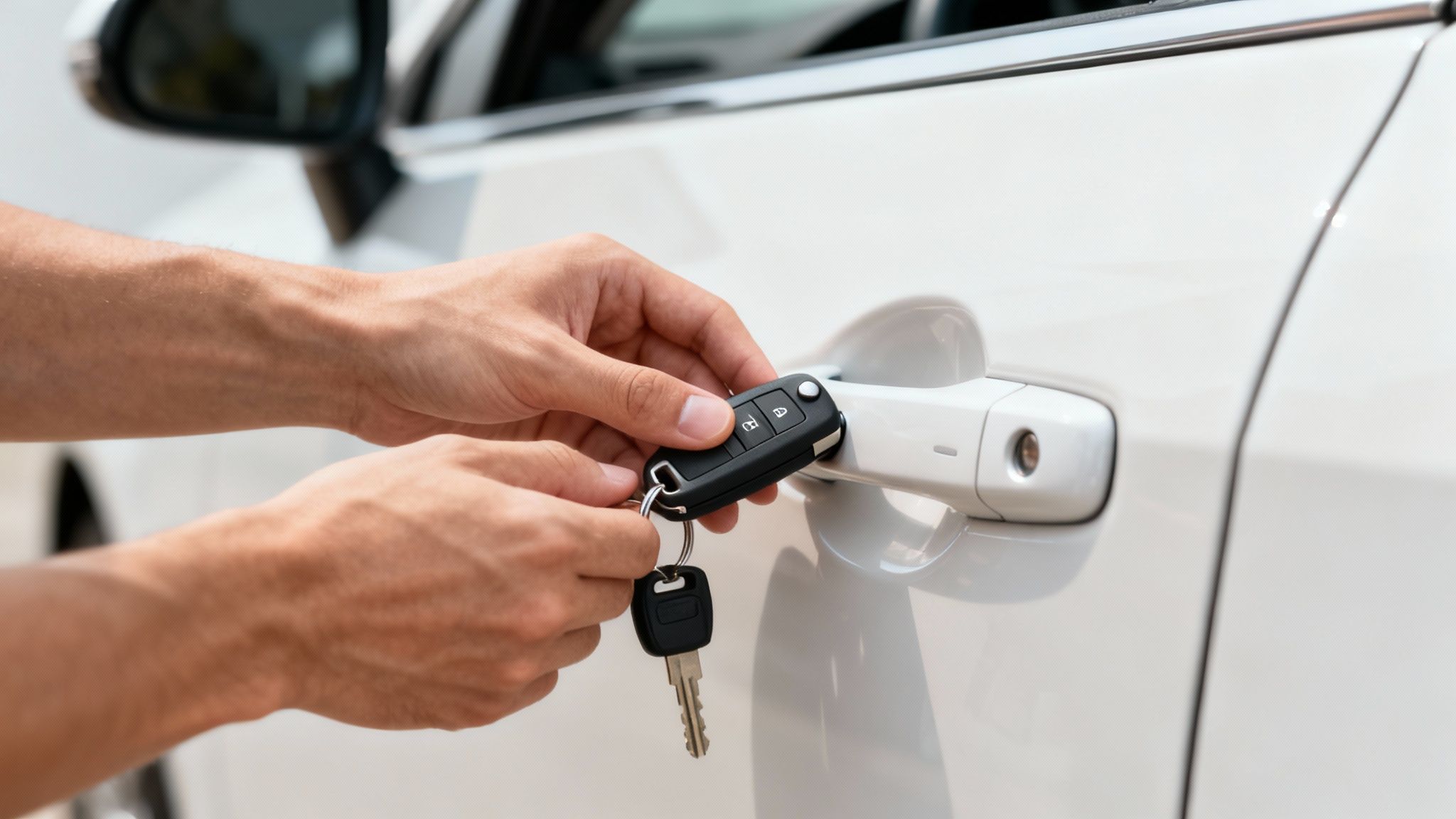
So, you've done a quick check and the evidence is pointing to a glitchy anti-theft system. Don't panic. Before you even think about calling a tow truck in Port St. Lucie, there are a few safe, manufacturer-intended resets you can try right where you are.
These practical tips don't require any special tools. They're designed to re-establish the digital "handshake" between your key and your car's security module, which can sometimes get out of sync.
The Key in the Door Trick
This is your first, and often most successful, move, especially on slightly older cars. It’s a wonderfully low-tech and practical step. The car's computer is programmed to see a physical key turning the lock as a legitimate action from the owner, not a forced entry.
- First, get out and make sure every door, the trunk, and the hood are shut tight.
- Now, use your actual key—not the button on the fob—to lock the driver's side door.
- Give it about 30 seconds.
- Finally, use the physical key again to unlock the door.
That simple, manual action is often all it takes to tell the security system, "Hey, the owner is here," and convince it to stand down. This simple turn of the key has gotten countless people in our community back on the road.
The Key Fob Cycle
If turning the key in the door didn't do it, your key fob is next up. This method works on the same principle, but uses the fob's radio signal to communicate with the car.
Start by moving about 10 to 15 feet away from your vehicle. Press the lock button on your fob and wait for the familiar chirp or flash of the lights. Then, after a brief pause, press the unlock button. Get back in and try to start the car. This quick lock/unlock cycle can often resynchronize the fob with the vehicle's brain. Just keep in mind, if your fob’s battery is on its last legs, this probably won’t work.
The Ignition Cycle Reset (The "10-Minute Relearn")
Alright, this one is a bit more involved, but it's a standard procedure for many GM, Chrysler, and other domestic vehicles common in our area. It's a way to force the car's computer to re-recognize the transponder chip in your key. Follow these steps exactly for it to work.
- Put your key in the ignition and turn it to the "ON" position. This is the spot where the dashboard lights up, but you haven't actually started the engine.
- Look for the security light on your dash—it will probably be flashing or solid. Just leave it.
- Now, the hard part: wait. Leave the key in the "ON" position for about 10 to 15 minutes.
- After the time is up, that security light should turn off or stop flashing. That’s your signal that the key has been relearned.
- Turn the key to the "OFF" position and let it sit for about 10 seconds.
- Take a breath, and try to start the engine. It should now turn over.
Why This Works: The ignition cycle reset gives the Body Control Module (BCM) or Engine Control Unit (ECU) enough time to properly validate your key's transponder chip. It’s a built-in security process to stop thieves from using bypass tools.
Knowing When to Throw in the Towel and Call for Help
These DIY methods are your first line of defense, but it's critical to know when you're beaten. If you’ve patiently tried all of these resets and the engine still won't crank, it’s time to stop. Continuing to cycle the ignition can drain your battery or cause bigger electronic headaches.
This is the point where a professional touch is necessary. A mobile locksmith can come directly to you in Port St. Lucie, Fort Pierce, or Stuart with the proper diagnostic tools to pinpoint the real issue, whether it's a dead transponder chip, a bad ignition switch, or something else entirely. Don't risk making things worse—call us at (772) 710-8169 for immediate help. We can often perform a key fob replacement or ignition repair on the spot, saving you a frustrating and expensive trip to the dealership.
For more answers to common vehicle security issues, take a look at our locksmith service frequently asked questions.
How Modern Vehicle Immobilizers Work
If your car was built in the last 25 years or so, it's protected by more than just a blaring alarm. Modern vehicles use a silent but powerful technology called an engine immobilizer. Understanding how this system works is the first step to figuring out why it's suddenly giving you a headache.
Forget what you've seen in movies about hotwiring cars. For any modern vehicle you see driving around Port St. Lucie or Jensen Beach, that's pure fantasy. The immobilizer is designed to make sure the engine will only start when it recognizes one specific, authorized key.
The Digital Handshake
So, how does it work? Deep inside the plastic head of your car key or key fob, there's a tiny transponder chip. This chip is passive—it doesn't have its own battery. It waits to be powered up wirelessly when you put the key in the ignition.
Wrapped around the ignition cylinder is an antenna ring. When you turn that key, the ring sends out a low-frequency radio signal, which zaps the transponder chip with just enough energy to wake it up. In response, the chip beams a unique alphanumeric code back to the car's Engine Control Unit (ECU) or Body Control Module (BCM).
If the code from the key matches the one stored in the car's computer, you've got a successful digital handshake. The ECU then gives the green light to the fuel pump and ignition systems, and your car starts right up. But if the code is wrong, or if no code is received, the ECU locks everything down. No fuel, no spark. The engine will crank all day long, but it will never fire.
This intricate back-and-forth is exactly why a simple metal copy of your key from a hardware store won't start your car. It might unlock the door, but without that correctly programmed transponder chip, the engine stays dead. This is a common reason we're called for key fob replacement services.
This technology is a huge reason car theft has gotten so much harder. In fact, the global vehicle anti-theft system market was valued at USD 14.10 billion in 2024 and is expected to climb to USD 26.30 billion by 2032. This growth is all about these kinds of advanced security features. You can read more about these security advancements on databridgemarketresearch.com.
Common Triggers for Immobilizer Faults
So if these systems are so reliable, what makes them fail? From our experience as locksmiths serving Vero Beach and Fort Pierce, we see the same culprits over and over again. This digital handshake can be interrupted for a few key reasons, leaving you stranded.
- Damaged Transponder Chip: All it takes is one hard drop onto a concrete floor or exposure to a strong magnet to wreck the delicate chip inside your key. The key itself might look perfectly fine, but the chip is toast.
- Dead Key Fob Battery: While the transponder chip itself is passive, a weak or dead battery in your key fob can still cause interference, especially on push-to-start vehicles that rely on a stronger signal.
- Signal Interference: Believe it or not, powerful radio frequency (RF) signals can jam the communication between your key and car. This can happen if you're parked near big radio towers or even have a stack of other transponder keys on the same keychain.
- Faulty Antenna Ring: The ring around the ignition can wear out or get damaged, making it unable to power up or read your key's chip.
- ECU Glitches: In rare cases, the car's main computer can develop a glitch and simply "forget" the codes for its authorized keys.
When any of these things happen, your car thinks it's being stolen and goes into lockdown. Trying to bypass the system without fixing the root problem is a waste of time and can even create bigger electronic issues. If you're dealing with a stubborn immobilizer in the Stuart area, it’s a sure sign you need professional diagnostic tools.
Call (772) 710-8169 for immediate help. A certified technician can handle an expert key fob replacement or ignition repair without any guesswork.
When You Absolutely Need a Professional Locksmith
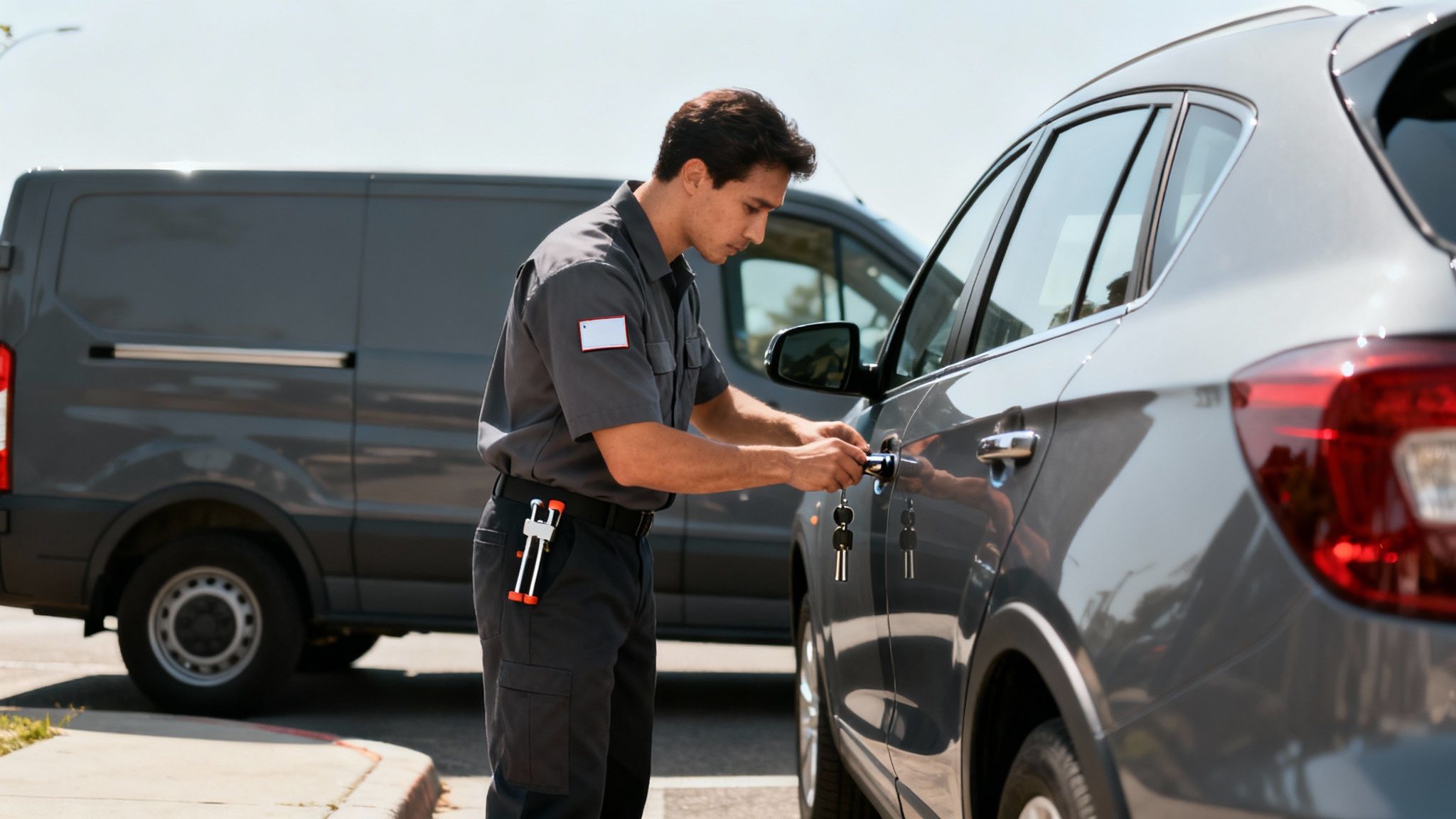
While trying a few simple resets is a smart first move, it's critical to know your limits when you're dealing with a vehicle's sensitive security electronics. I've seen it happen too many times: a minor glitch turns into a major, expensive repair because someone pushed a little too far.
Knowing when to stop fiddling is just as important as knowing what to try in the first place. Once you've hit a wall, making a professional call is always the safer, faster, and often cheaper choice in the long run.
Signs It's Time for Professional Help
So, you've tried the simple tricks and your car is still giving you the silent treatment. You've probably reached the end of what can be fixed without specialized equipment. That stubbornly flashing security light that refuses to go away? That's your car's way of telling you the problem runs deeper.
Here are the most common situations we run into around Port St. Lucie where a professional is the only real option:
- You've Tried All the DIY Resets. You patiently went through the key-in-the-door method and the 10-minute ignition cycle, but the car remains dead. This isn't just a simple glitch; something has likely failed.
- The Security Light is Blinking a Code. Some cars use that little light to communicate. A specific pattern—like flash-flash-pause-flash—isn't random. It's a diagnostic code pointing to a specific fault that only a tech with the right scanner can translate.
- You've Lost Every Single Key. If you don't have a working key, there's nothing to reset. A mobile locksmith can come to you in Fort Pierce, cut a new key, and program it on the spot. No towing, no dealership hassle.
- Your Key is Physically Damaged. A key snapped in the ignition or a fob that went through the wash might have a busted transponder chip inside. No amount of resetting will fix a key that can no longer talk to the car. This is a clear case for an ignition repair or key replacement.
My Two Cents: Constantly trying to crank the engine when the anti-theft system is active can do more harm than good. You'll drain the battery for sure, and you could even send voltage spikes that damage the Engine Control Unit (ECU)—your car's very expensive brain.
The Risks of Pushing Your Luck
Going down the rabbit hole of aggressive "fixes" you found on some random forum is a huge gamble. These methods often suggest disconnecting wires or trying to bypass sensors, which can wreak havoc on modern, computer-driven vehicles. The global anti-theft system market is expected to hit USD 28.34 billion by 2034, which tells you just how complex and integrated these systems have become. They aren't designed for easy disassembly. You can read more on this market growth in research from Precedence Research.
Trying to force the issue can lead straight to:
- Frying the Body Control Module (BCM): This little computer runs everything from your power windows to your security system. Damaging it is a complicated and costly mess.
- Destroying the Ignition Cylinder: Forcing a broken key or trying to rig the ignition can break delicate internal parts, meaning you'll need a full ignition repair.
- Bricking the Car: In a worst-case scenario, you could corrupt the vehicle's main computer, rendering it completely useless until a specialist reprograms or replaces it.
Why a Local Locksmith Is Your Best Bet
Instead of taking that risk, a quick call saves you a world of time, stress, and money. A mobile automotive locksmith who serves the Fort Pierce, Stuart, and Jensen Beach areas comes right to you, so you don't even have to think about a tow truck.
Our technicians show up with the same high-tech diagnostic tools and key-programming machines you'd find at a dealership. We can handle just about anything right in your driveway or office parking lot. Find out how our automotive locksmith services can get your problem sorted out quickly and without breaking the bank.
Don't let a small security hiccup spiral into a financial nightmare. Call us at (772) 710-8169 for immediate help, and we’ll get a certified pro on the way to safely get you moving again.
How to Prevent Future Anti-Theft Lockouts
Dealing with a car that won't start because of a security system glitch is a massive headache. You’ve got places to be. While knowing the quick resets is useful, the best strategy is to avoid the problem in the first place.
A few simple, preventative habits can keep your car's anti-theft system working for you, not against you. This will keep you reliably on the move, whether you're in Port St. Lucie or cruising around the Treasure Coast. A proactive approach starts with the very thing you use every day: your car key.
Start With Your Key and Fob
From my experience, the single most common point of failure we see on locksmith calls in our local service area is the key itself. A damaged key, a dead battery, or a weakened transponder chip is the number one trigger for an immobilizer lockout. Think of your key as a tiny, sophisticated computer that needs a little care.
- Change the Fob Battery: Don't wait for it to die. As a rule of thumb, pop a new battery in your key fob every 18-24 months. A weak battery sends a faint signal that your car's receiver can easily miss, which can make the system think it's being hotwired.
- Handle With Care: Avoid dropping your keys on concrete or getting them wet. The delicate transponder chip inside can be easily damaged, making the key useless even if it looks perfectly fine on the outside.
- Separate Your Keys: Avoid keeping multiple transponder keys on the same keychain. It sounds strange, but their signals can actually interfere with each other, confusing your car’s antenna when you’re trying to start it.
The Spare Key Isn't Just a Backup—It's a Lifesaver
Having a properly programmed spare key is more than just a convenience; it's your single best defense against a lockout disaster. A spare is your ultimate diagnostic tool.
If your primary key suddenly stops working, grab the spare. If the spare works, you know instantly the problem is the first key. If the spare also doesn't work, then you know the issue is likely with the car itself. That simple test can save you a ton of time and guesswork.
Lost your spare? Never had one? Don't wait until you're stranded. A professional locksmith can create and program a new key fob replacement on-site for a fraction of what a dealership will charge. It's a small investment that provides huge peace of mind.
A cheap, poorly cloned key from an unlicensed vendor is a major gamble. These keys often have weak signals or use faulty chips that can fail without warning. We’ve seen them corrupt a car's computer, turning a simple lockout into a much more expensive repair.
Pay Attention to Your Surroundings
Sometimes, the problem isn't your key but where you parked. Strong radio frequency (RF) interference can completely disrupt the signal between your key and your car. This is a temporary communication failure that can happen when you're parked near:
- Large radio or cell phone towers
- Power stations
- Certain commercial buildings with powerful security systems
If your car suddenly refuses to start in a location like this, try pushing it a few feet away. Often, just moving out of that "dead zone" is all it takes to re-establish the connection.
These preventative measures are simple, but they're incredibly effective. The global market for vehicle anti-theft systems hit USD 14.60 billion in 2024 and is still growing fast. This reflects just how complex these systems are becoming, making professional maintenance and repair far more reliable than trying to disable them yourself. You can learn more about the growth of the anti-theft system market at imarcgroup.com.
By taking care of your keys and being mindful of where you park, you can dramatically reduce the chances of an unexpected lockout. But if you do find yourself in a bind anywhere from Stuart to Jensen Beach, don't hesitate. Call (772) 710-8169 for immediate help, and we'll get you back on the road safely and swiftly.
Your Top Questions About Car Anti-Theft Systems
When it comes to vehicle security, there's a lot of confusing information and myths floating around. As locksmiths on the ground here in Port St. Lucie and the surrounding towns, we field the same questions day in and day out. Let's cut through the noise and give you some direct, no-nonsense answers based on our hands-on experience.
Can a Factory Anti-Theft System Be Disabled Permanently?
This is easily one of the most common questions we get. The short answer? No, not in any practical or safe way.
Modern factory immobilizers aren't just an add-on; they're deeply woven into the car's Engine Control Unit (ECU). Think of it as part of your car's central nervous system. Trying to permanently disable or bypass it is a recipe for disaster. You're risking severe, unpredictable electrical problems that can be an absolute nightmare to diagnose later.
A botched bypass could easily brick the ECU, leaving your car permanently inoperable. Beyond that, it might even void your car insurance policy since you've intentionally removed a critical safety feature.
The only proper, professional solution for a faulty system is always repair, not removal. This usually involves services like:
- Key Fob Replacement & Reprogramming: Getting your key and car back in sync.
- Ignition Repair: Fixing a faulty antenna ring or ignition switch that isn't reading the key.
- ECU Diagnostics: Finding and fixing the glitches within the car’s computer.
Will Disconnecting the Car Battery Reset the System?
The idea of a simple "hard reset" by pulling the battery cable is tempting, but it's rarely effective on modern anti-theft systems. Sure, that trick might fix a minor glitch with your radio, but immobilizers are designed with persistent memory that holds key data even without power. They're built specifically not to forget your programmed keys.
In fact, disconnecting the battery can sometimes make the situation worse. Some higher-end vehicles interpret a sudden power loss as a tampering attempt, which can trigger a full security lockdown. Now, instead of a simple communication error, you have a system actively trying to prevent a perceived theft. It's a low-success tactic that we generally advise against.
Why Is My Dashboard Security Light Blinking?
That little flashing light on your dash is your car's way of communicating. A slow, steady blink when the car is off is completely normal—it’s just letting you know the security system is armed and on guard. It’s when that behavior changes that you need to pay attention.
A rapid, frantic blink when you try to start the car, or a solid light that stays on, is a clear signal of a fault.
This almost always means the car is failing to recognize the transponder chip in your key. The usual suspects are a dead battery in the key fob, physical damage to the key itself, or a problem with the car’s antenna ring around the ignition.
The very first thing you should do is try your spare key. If the spare works perfectly, you know the problem is isolated to your main key. If neither key works, the issue lies within the vehicle, and it’s time to call a professional. For immediate help in the Stuart or Jensen Beach area, Call (772) 710-8169 for immediate help.
What Does It Cost to Fix an Anti-Theft System Issue?
The cost to sort out an anti-theft problem can vary dramatically depending on the root cause. A simple key fob battery is just a few dollars. But if the entire key fob needs to be replaced and programmed, calling a mobile locksmith is often the most cost-effective solution.
- Key Fob Replacement: This typically runs between $150 and $400, which is almost always significantly less than dealership prices.
- Ignition Switch Repair: This is a more involved job and the cost will depend heavily on your car's make and model.
The key is getting an accurate diagnosis first. For a clear, upfront quote tailored to your specific car in the Fort Pierce or Vero Beach area, a professional assessment is your best bet. Don't guess—get an expert opinion.
If you're facing a stubborn anti-theft issue or need any other locksmith service, from a car lockout to a house lockout or lock change, Pro-B Locksmith provides fast, reliable, and professional help across the Treasure Coast. From car lockouts to on-site key fob replacement, we have the tools and expertise to solve your problem correctly the first time. Visit us at https://problocksmith.com to learn more.