

The quickest and safest way to unfreeze a car door lock is with a commercial lock de-icer spray or a homemade mixture of two-thirds rubbing alcohol and one-third water. If you don't have either on hand, you can gently warm your metal key with a lighter or your breath before carefully inserting it. Just remember, never pour hot water on the lock. This can damage your car's paint and electronics, and the water will quickly refreeze, often making the problem much worse. If you're in Port St. Lucie and find yourself in a bind, call (772) 710-8169 for immediate help.
That Sudden Florida Chill And Your Frozen Car Door
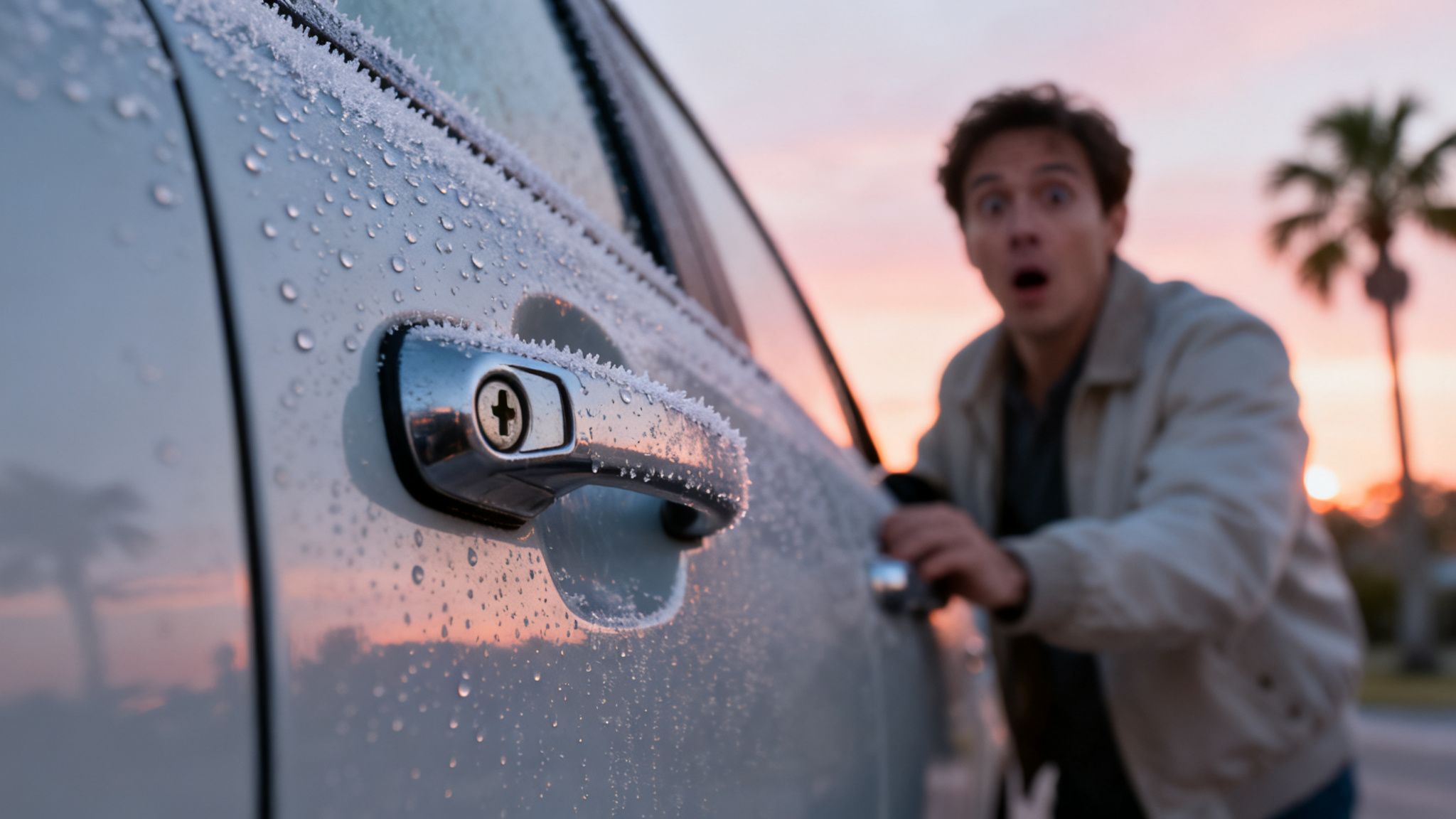
It’s a bizarre and frustrating feeling for most Florida drivers. You head out on a surprisingly cold morning in Port St. Lucie or Stuart, stick your key in the door, and… nothing. It won't turn. While we're spared from blizzards, our high humidity paired with a sudden cold snap creates the perfect recipe for moisture to work its way into the lock mechanism and freeze solid.
This isn't just an annoyance; trying the wrong thing can cause real damage. The gut reaction is often to force the key or douse the lock with hot water from the kettle. Unfortunately, these "solutions" usually lead to a broken key snapped off in the lock, a cracked window from the thermal shock, or ruined paint. The real trick is to apply gentle, gradual heat or use a de-icing agent to safely melt the ice. This avoids turning a simple car lockout into a much bigger problem.
Why Patience Is Your Best Tool
Finding your car door frozen shut when you're already running late in Vero Beach can be stressful. But taking a deep breath and being methodical is your best bet. Trying to force a key into a frozen lock is a recipe for disaster. You’re far more likely to damage the delicate internal tumblers or break the key itself than you are to get the door open.
Even in our warmer climate, this problem is more common than you'd think. Across the country, 10-15% of all winter-related service calls are for frozen or jammed door latches. It's such a persistent issue that the automotive industry is actively working on it, with the door latch market projected to grow as manufacturers develop better cold-weather solutions. You can read more about these automotive industry trends from Future Market Insights.
A gentle approach is always the best first step. Trying to force a frozen lock can quickly turn a minor inconvenience into a costly repair, like needing a broken key extraction or even a full ignition repair.
Quick Fixes For A Frozen Car Lock
When you're faced with a frozen lock in the Stuart area, a few simple, safe methods are your best first line of defense. This table ranks the most common quick fixes by their safety and effectiveness.
| Method | What You Need | Safety Level | Estimated Time |
|---|---|---|---|
| Lock De-Icer Spray | Commercial de-icer product | Very Safe | < 1 minute |
| Rubbing Alcohol Mix | Spray bottle, rubbing alcohol, water | Very Safe | 1-2 minutes |
| Warm Your Key | Lighter, match, or your own hands | Safe | 1-3 minutes |
| Hair Dryer | Extension cord, hair dryer | Safe (with caution) | 5-10 minutes |
| Hand Sanitiser | Alcohol-based gel or liquid | Moderately Safe | 2-5 minutes |
While these methods are great starting points, remember that stubborn ice or underlying mechanical issues might require a more professional touch. A car lockout can quickly escalate if the wrong tool is used.
Safe First Steps to Try
Before you reach for any tools or sprays, try these simple, no-cost tricks first. They can often solve the problem in seconds.
- Check Other Doors: It's a classic for a reason. Often, only the most-used driver's side door freezes shut. Give the passenger door or even the rear doors a try. Getting inside is the first goal.
- Warm the Key: Cup the metal blade of your key in your hands for a minute, or gently warm it with your breath. This bit of heat is sometimes just enough to thaw the very first part of the lock mechanism and let the key slide in.
- Press on the Door: If the lock turns but the door feels stuck, the rubber weather stripping is likely frozen to the car's frame. Give the door a few firm pushes near the handle. This can often break the ice seal without causing any damage.
If these initial attempts don’t do the trick, don't get discouraged. There are more effective, locksmith-approved methods to try next. But if you’re in a real bind in Fort Pierce or Jensen Beach and need to get on your way, don't hesitate. Call (772) 710-8169 for immediate help with any car lockout situation.
Safe And Practical Ways To Thaw Your Locks
When you find yourself locked out by a frozen car door, the last thing you want to do is make the problem worse. Your goal should be gentle persuasion, not brute force. I’ve seen countless situations from Fort Pierce to Vero Beach where a little patience would have saved a costly repair.
The biggest mistake people make is trying to force the key into the frozen lock. This almost always ends one way: with a key snapped off inside the mechanism. Now you've turned a simple frozen lock into a job that definitely requires a professional, like a broken key extraction. Let’s go over a few field-tested techniques that will get you back in your car without damaging anything.
Using Gentle Heat Sources
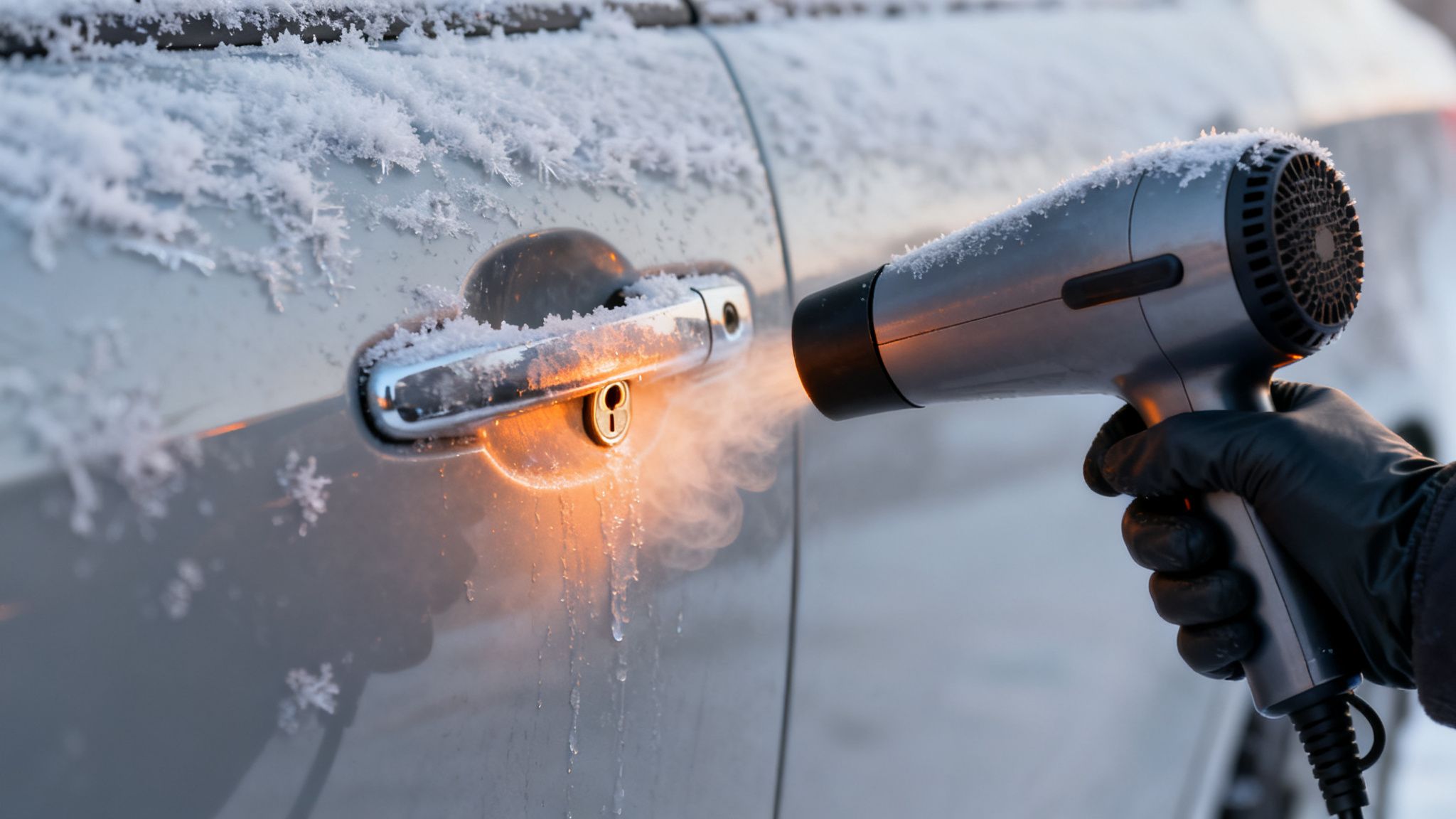
One of the most reliable and safest ways to thaw a lock is with a little bit of gentle, indirect heat. A hairdryer set to its lowest heat setting is perfect for this.
Just hold it a few inches away from the lock and door handle, moving it around continuously. You're not trying to blast it with heat; you just want to slowly raise the temperature enough to melt the ice trapping the internal components. It might take a minute or two, but it’s a much better alternative to damaging your car’s paint with high, direct heat.
An old-school trick that still works wonders is heating your key. Carefully warm the metal blade of your car key with a lighter or a match for just a couple of seconds. The goal is to get it warm, not red-hot. Slide the warm key into the lock and gently jiggle it. The heat will transfer directly to the tumblers inside, melting the ice right where it matters. You might have to repeat this process a few times, but it’s incredibly effective.
The Best DIY De-Icing Solutions
If you don't have a heat source handy, a chemical de-icer is your next best option. You can actually whip up a very effective one using stuff you probably have at home. A simple mix of two parts rubbing alcohol (isopropyl) to one part water in a spray bottle does the trick beautifully.
For a reliable DIY solution, mix 70% isopropyl alcohol with water in a spray bottle. The alcohol drops the freezing point of water all the way down to -20°F, which quickly dissolves ice without leaving a sticky residue that could gum up the lock later. Apply it right into the keyhole, then insert your key and work it gently. Remember, data shows that door handles break in 5-10% of forced attempts during a freeze, so gentleness is key. You can find more insights on automotive latch durability from Market Research Future.
Pro Tip: In a pinch, hand sanitizer can be a real lifesaver. Most contain a high concentration of alcohol, which works just as well for melting ice. Just squirt a little bit on your key or directly into the lock.
If you’ve tried these methods and the lock is still stubbornly frozen, or if the worst happens and your key breaks, it’s time to stop and call for help. Pushing your luck will only lead to more significant damage to the lock or even the ignition system. For fast, damage-free help with any car lockout, Call (772) 710-8169 for immediate help. We provide a full range of automotive locksmith services to get you back on the road safely.
Dealing With a Door That's Frozen Shut
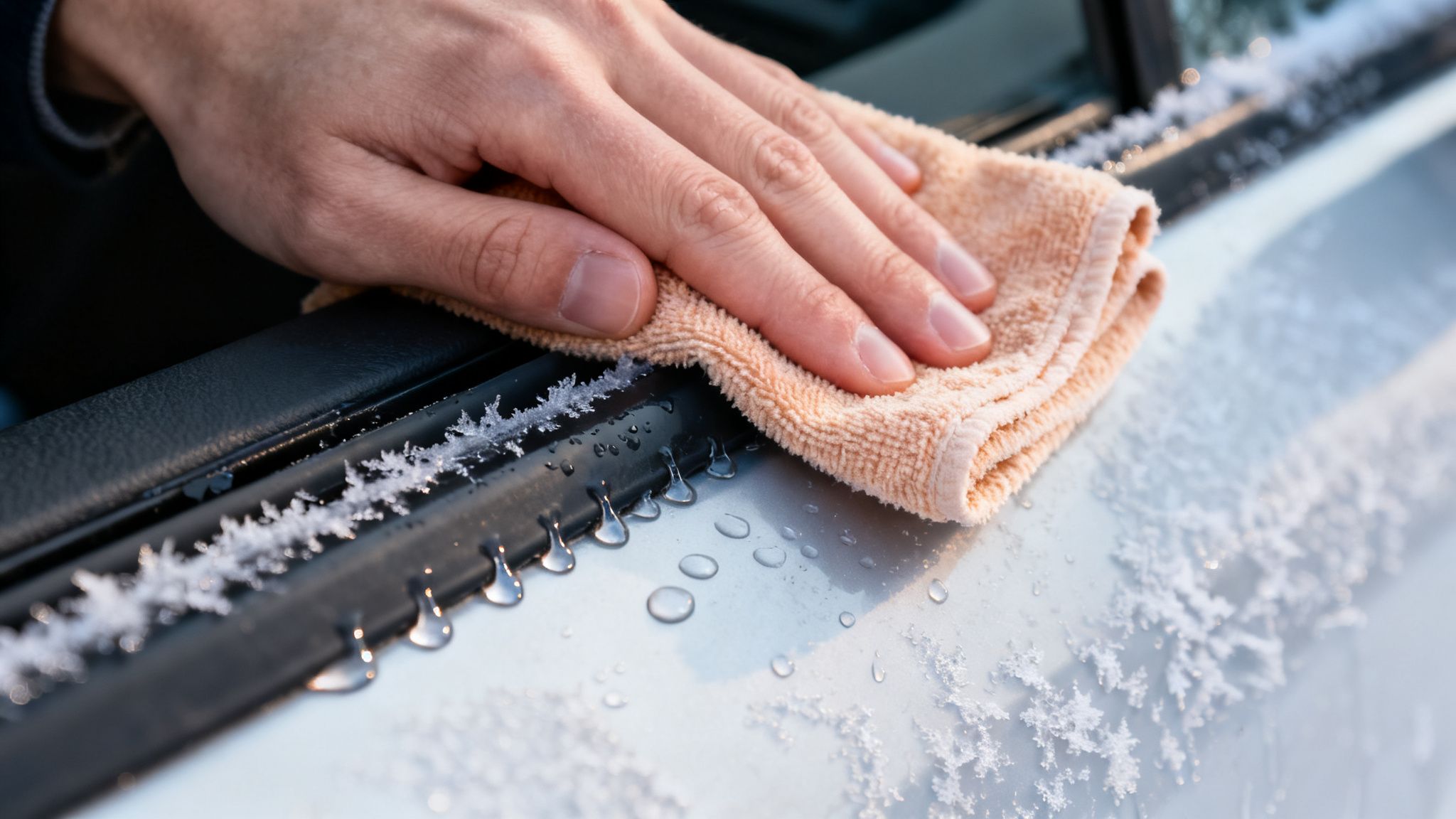
Sometimes the lock turns just fine, but the door itself feels like it's been welded to the frame. When this happens, you’re not dealing with a frozen lock anymore—you're up against a frozen rubber door seal. This is a common headache, especially after a damp, humid day in Stuart is followed by a sudden cold snap. The moisture on the weather stripping freezes solid, acting like a powerful glue.
The natural reaction is to just pull harder on the handle. Don't do it. Yanking on a frozen door is the quickest way to rip the rubber weather stripping or, even worse, snap the plastic handle right off. A torn seal isn't just a cosmetic problem; it can lead to annoying wind noise and water leaks down the line, turning a minor inconvenience into a costly repair.
How to Break the Ice Seal Safely
The trick is to use pressure, not brute force. Place the palm of your hand flat on the door, right next to the frame, and give it a few solid thumps. Work your way around the entire edge of the door, pushing inward firmly. This flexing action is usually enough to crack the thin layer of ice bonding the seal to the frame, letting you open the door.
If a good push doesn't do the trick, try to carefully chip away at any visible ice along the door seam. A plastic ice scraper is perfect for this, but even a sturdy credit card can work in a pinch. Just be gentle and focus on breaking the ice bond without scraping your paint or gouging the rubber seal.
What if the Handle Itself Is Frozen?
It’s also possible for the door handle mechanism to freeze up, either encased in ice or just stuck stiff. This is usually a much simpler fix.
- Your Own Body Heat: Cup your hands over and around the handle. Hold them there for a minute or two. Often, this is all it takes to transfer enough warmth to get things moving again.
- A Warm Cloth: If you can get some warm (not boiling!) water, soak a small towel or rag and press it against the handle. The ice will melt away in seconds.
The name of the game is patience, not power. Applying gentle warmth and steady pressure will almost always solve the problem. Trying to force a frozen door or handle is a gamble that usually ends with a broken part and an unnecessary repair bill.
If you’ve tried these tips and the door still won’t budge, or if you’ve accidentally damaged the handle or seal, it’s time to call in a professional. A door that remains stuck might point to a deeper issue with the internal latch mechanism. For fast help with any car lockout situation in the Jensen Beach area, give us a call.
Call (772) 710-8169 for immediate help.
How To Prevent Future Lock Freeze-Ups
While it's great to know how to fix a frozen car door, preventing it from happening in the first place is the real win. A few minutes of prep before a cold front hits the Treasure Coast can save you a ton of frustration later. The whole idea is to stop moisture from getting into your locks and seals and turning into ice.
This is a big deal in our humid climate. All that damp air from Port St. Lucie to Vero Beach is just waiting for the temperature to drop. Trust me, taking a few minutes to prepare is much better than shivering in a parking lot, fighting with a frozen lock when you're already running late.
Create a Moisture-Proof Barrier
The single best thing you can do is lubricate your locks and rubber door seals before the cold weather sets in. This isn't just a random tip—it’s a proven way to keep everything moving smoothly and push away the water that causes ice to form.
Think of it as winterizing your car's most important entry points. The right product creates a slick surface that water just can't stick to.
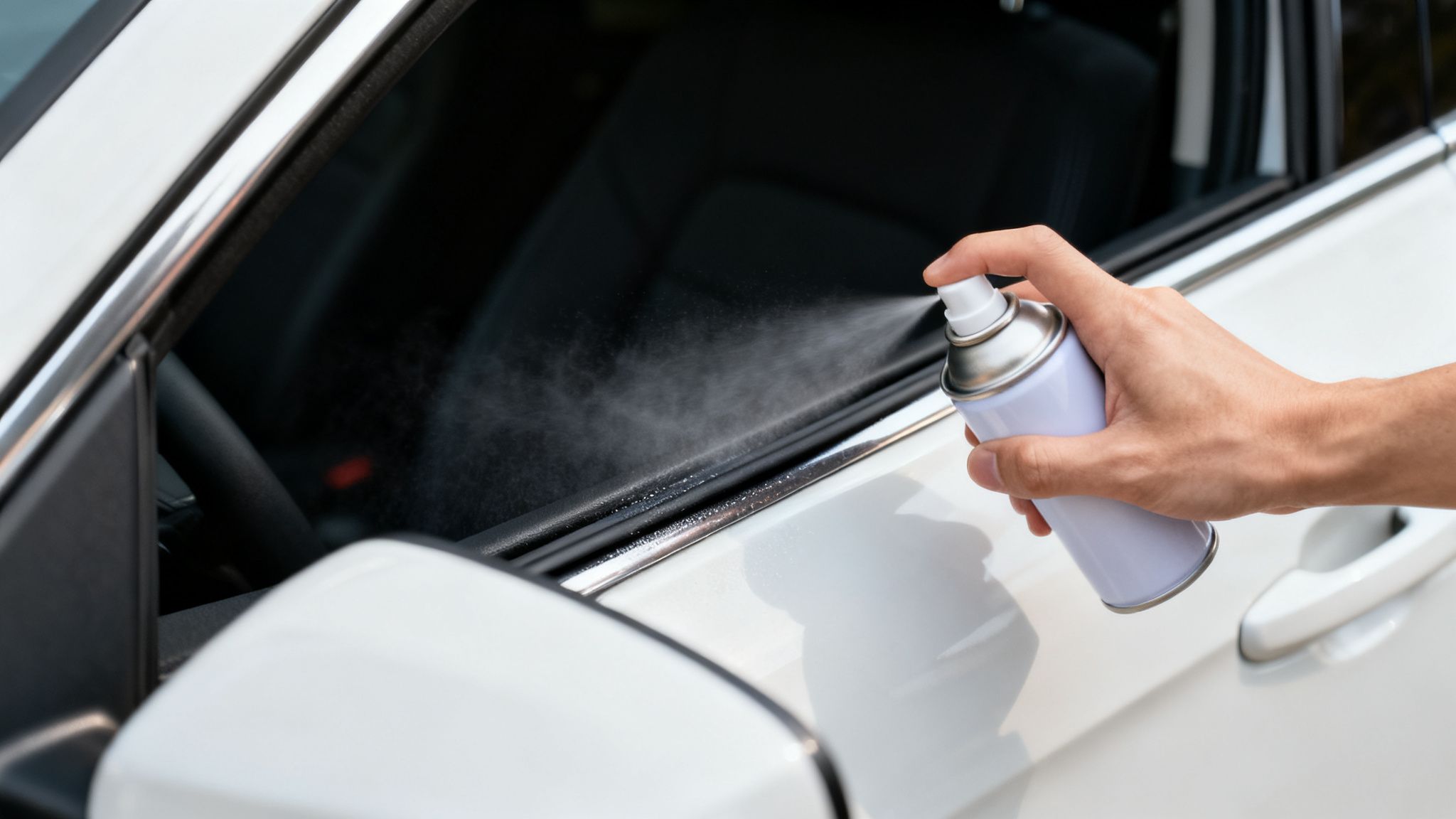
- For the Locks: Grab a graphite-based lock lubricant. A quick squirt directly into the keyhole is all you need. Unlike oily sprays, graphite won't get gummy over time or attract a bunch of dust and dirt.
- For the Rubber Seals: A silicone spray works wonders here. Just spray a bit on a clean rag and wipe down all the rubber weather stripping around your doors and trunk. This keeps the rubber soft and stops it from freezing solid to the car's frame.
A quick application of lubricant is surprisingly effective. It only takes a few minutes, but that simple step can prevent the vast majority of freeze-ups and keep you from getting stranded. If you're wondering what products are best for your car, check out some more tips in our Frequently Asked Questions section.
Local Tips for Treasure Coast Drivers
Beyond using lubricants, a couple of smart habits can make a huge difference during a Florida cold snap. Winter lockouts are a multi-billion-dollar headache for drivers across the country, so prevention is everything. For instance, sheltered parking can slash your risk of a freeze-up by a whopping 70%.
And that annual lubrication? Using a good silicone spray, which often works in temps as low as -50°F, prevents 90% of freezes. Remember, even the newest electric cars still have a mechanical key lock as a backup, so this advice is critical if your electronics ever fail. In places like Fort Pierce or Stuart, where the humidity can really spike condensation, these steps are non-negotiable. If you're interested in the tech behind this, you can learn more about trends in automotive door closures from Market Report Analytics.
If you’ve done everything right and still get locked out, or if you're dealing with something else like a dead key fob, give us a call. We can handle anything from a simple car lockout to a full key fob replacement right where you are.
For immediate help, call us at (772) 710-8169.
Knowing When to Call a Professional Locksmith
You’ve tried a little heat, sprayed some de-icer, and even given the door a firm, strategic nudge. Nothing. You're still locked out in the cold. While do-it-yourself fixes are often the first line of defense for a simple frozen lock, there’s a point where you can do more harm than good. Recognizing that moment is key to avoiding a small annoyance turning into a costly repair.
Let's be honest, sometimes the problem is bigger than a bit of ice. If you get a little too frustrated and hear that dreaded snap of the key breaking off in the lock, it's time to stop. Immediately. Trying to fish out the broken piece yourself usually just pushes it in deeper, complicating the extraction and risking serious damage to the lock cylinder. That’s a job for a pro, no question about it.
When the Problem Is More Than Just Ice
Winter's chill has a knack for exposing underlying issues with our vehicles. What seems like a frozen lock could actually be a symptom of a more complex mechanical or electrical failure that the cold weather just pushed over the edge.
Here are some tell-tale signs that you need to call in a professional:
- A Broken Key in the Lock: This is a classic "stop what you're doing" moment. A locksmith has specialized tools to extract the fragment without destroying your lock.
- Unresponsive Electronics: You've warmed the key fob, but the doors still won't unlock. The manual key won't turn, either. This points to a frozen actuator or a more significant electrical problem.
- The Lock Spins Freely: If your key turns 360 degrees without engaging the lock, a component inside the mechanism has likely failed. No amount of de-icer will fix a broken part.
- You've Tried Everything Safely: You’ve patiently worked through all the safe, recommended methods, and you’re still stuck. It’s time to let an expert take a look.
Forcing the issue can lead to bigger headaches, like needing a full ignition repair or replacing a damaged door latch. A certified locksmith uses non-destructive techniques to get you back in your car without causing harm.
The Benefits of a Mobile Locksmith
Being stranded in a parking lot in Port St. Lucie or stuck on the side of the road in Jensen Beach is stressful enough without having to figure out a tow. This is where a mobile locksmith is a lifesaver. We come right to you, fully equipped to figure out what's wrong on the spot. We can diagnose if it’s just ice, a broken key, or a dead key fob. If you've encountered an unexpected car lockout, you can explore our guide on handling these https://problocksmith.com/emergency-lockout/.
While considering the cost of a locksmith, it can be useful to compare it to the wider spectrum of modern vehicle expenses, such as electric vehicle maintenance costs, which highlight how complex today's cars have become.
If your key has snapped or your fob has given up, we can perform a key extraction, cut a new key, or handle a key fob replacement right from our van. It’s a solution that saves you a ton of time, money, and the frustration of a dealership visit.
When a situation feels like it's getting out of hand, making the call is always the safest bet. For immediate, damage-free assistance anywhere on the Treasure Coast, Call (772) 710-8169 for immediate help.
Your Top Questions About Frozen Car Locks
When you're stuck in a cold Port St. Lucie parking lot, staring at a frozen car door, a lot of questions pop into your head. It’s a frustrating situation, and you don’t want to make things worse. As locksmiths on the Treasure Coast, we’ve heard just about every question there is, so let's clear up some of the most common ones.
A little bit of expert knowledge can be the difference between getting back on the road in minutes and causing damage that costs a fortune to fix. A simple house lockout or car lockout can become a bigger problem if not handled correctly.
Can I Just Spray Some WD-40 in There?
It’s tempting, right? Everyone seems to have a can of WD-40 in their garage. While it might seem like a quick fix, it's not a good long-term solution. WD-40 is designed to displace water, so in a pinch, it can push some moisture out of the lock.
But here’s the problem: it’s not a true lubricant. Over time, it actually attracts dust and gunk, which gums up the delicate tumblers inside the lock. For a proper fix, you really want a graphite-based lock lubricant or a dedicated de-icer spray. If WD-40 is absolutely all you have, go for it, but be sure to clean the lock and apply a real lubricant later to avoid bigger headaches down the line.
My Key Fob Isn't Working. Is it the Fob or the Lock?
This is a classic winter dilemma. Cold weather is brutal on batteries, and the tiny one in your key fob is no exception. A sudden temperature drop can zap its power, making the signal too weak to reach your car.
Before you panic about the lock, try this: warm the key fob up in your hands or pocket for a few minutes. If it still doesn't work, grab your manual key. If the manual key turns, the lock is fine—you just need a new fob battery. But if the manual key won't budge, then the lock mechanism itself is frozen solid.
A dead key fob battery is one of the most common reasons for lockout calls on a cold morning. Always test the manual key first to diagnose the real problem before assuming the worst.
At Pro-B Locksmith, we can handle a quick key fob replacement right on the spot, testing and swapping the battery for almost any car model in the Fort Pierce area.
I've Heard You Can Pour Hot Water on the Lock. Is That Safe?
Please, don't do this. We see the messy aftermath of this "trick" all the time, from Fort Pierce to Jensen Beach. Pouring hot water onto a freezing cold car is a recipe for thermal shock—that rapid temperature change can crack your windows or ruin your paint in an instant.
And even if you avoid immediate damage, all that water is going to seep into the lock and door seals. Once the temperature drops again, it will refreeze, leaving you with an even worse ice problem than you started with. Stick to much safer methods like a commercial de-icer or gentle heat from a hairdryer.
Oh No, My Key Broke Off in the Lock! Now What?
First thing: stop. Don't try to dig the broken piece out with another key, a bobby pin, or anything else. You'll almost certainly push the fragment deeper into the lock cylinder, turning a simple extraction into a much more difficult and expensive job.
This is a situation that calls for specialized tools and a steady hand. A trained locksmith can extract the broken piece without damaging the lock. If you find yourself in this incredibly stressful spot, a DIY attempt just isn't worth the risk. For damage-free help with a broken key or any lock change needs, Call (772) 710-8169 for immediate help. We can get the key out and, if needed, cut a new one for you right there.
Whether you're facing a stubborn lock, a broken key, or a finicky fob, don't let a small annoyance turn into a major headache. The experts at Pro-B Locksmith are ready to help you anywhere on the Treasure Coast with fast, reliable, and professional service. Learn more about our full range of automotive, residential, and commercial services by visiting https://problocksmith.com.

