Tag: car key fob

  • Replacement Key Fob Battery: A Practical Guide for Port St. Lucie Drivers

    Replacement Key Fob Battery: A Practical Guide for Port St. Lucie Drivers

    It’s a familiar scenario for many drivers on the Treasure Coast. You press the button on your car remote and… nothing. Whether you're in a busy Port St. Lucie parking lot or your own driveway in Stuart, a non-responsive key fob is a major inconvenience. Before assuming a costly repair is needed, the most common culprit is also the simplest fix: a replacement key fob battery. This quick swap can often resolve issues like a weak signal or the need for multiple button presses.

    What To Do When Your Key Fob Stops Working
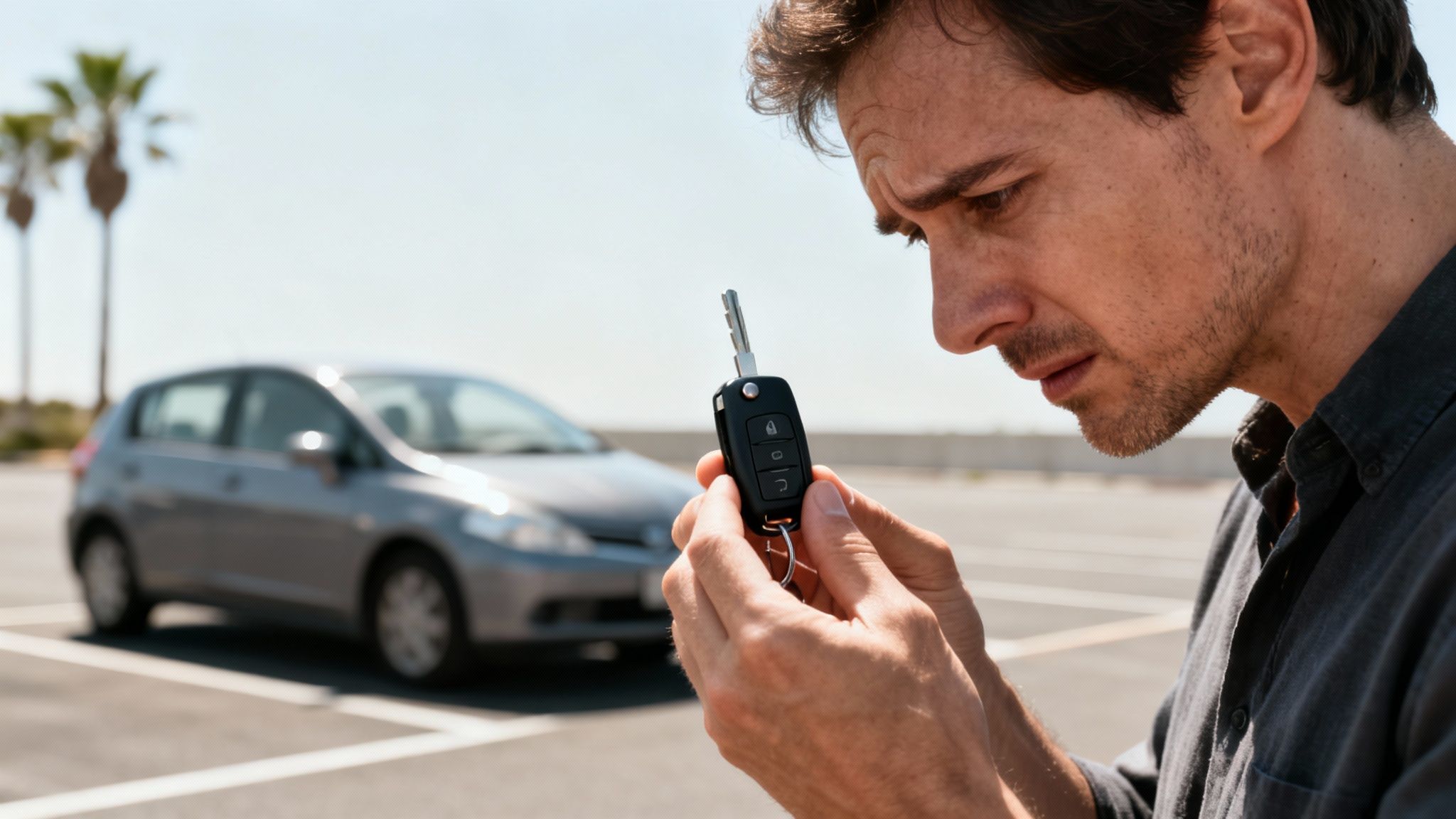
    Close-up of a man holding a car key fob, looking confused in a parking lot.

    It always seems to happen at the worst time—leaving the grocery store in Vero Beach with a full cart or rushing to an appointment in Fort Pierce. The key is not to panic. The first step is to identify the classic signs of a dying key fob battery.

    Recognizing the Telltale Signs

    A fob battery rarely fails without warning. It typically provides clues that it's losing power. If you notice any of the following, it’s likely time for a new battery:

    • Reduced Signal Range: You used to unlock your car from across the parking lot, but now you need to be standing right next to the door for it to work.
    • Multiple Button Presses: A single click once did the job. Now you find yourself pressing the unlock button two, three, or even more times.
    • Inconsistent Performance: It works perfectly one moment and seems completely dead the next. This erratic behavior is a clear indicator that the power source is failing.
    • No Response at All: This is the final, most obvious sign, usually occurring after the other symptoms have been present for some time.

    A malfunctioning key fob is more than just an annoyance; it can be a security risk. It's always wise to know how to keep your car secure and safe. If you find yourself in a car lockout situation because a new battery didn't solve the problem, our mobile team is ready to help. Call (772) 710-8169 for immediate help in Port St. Lucie, Jensen Beach, and the surrounding areas.

    Pro Tip: Your key fob is a vital part of your daily routine. Recognizing these early warning signs can save you from the stress of a lockout and the high cost of an emergency dealership visit. A battery change is always the easiest first step.

    The small, non-rechargeable coin batteries in your key fob are part of a massive global industry, with the smart key fob market constantly evolving. For drivers here on the Treasure Coast, this means swapping out that little CR2032 or similar battery is a regular maintenance task, typically needed every 1-2 years, depending on usage.

    A Practical Guide to Replacing Your Fob Battery
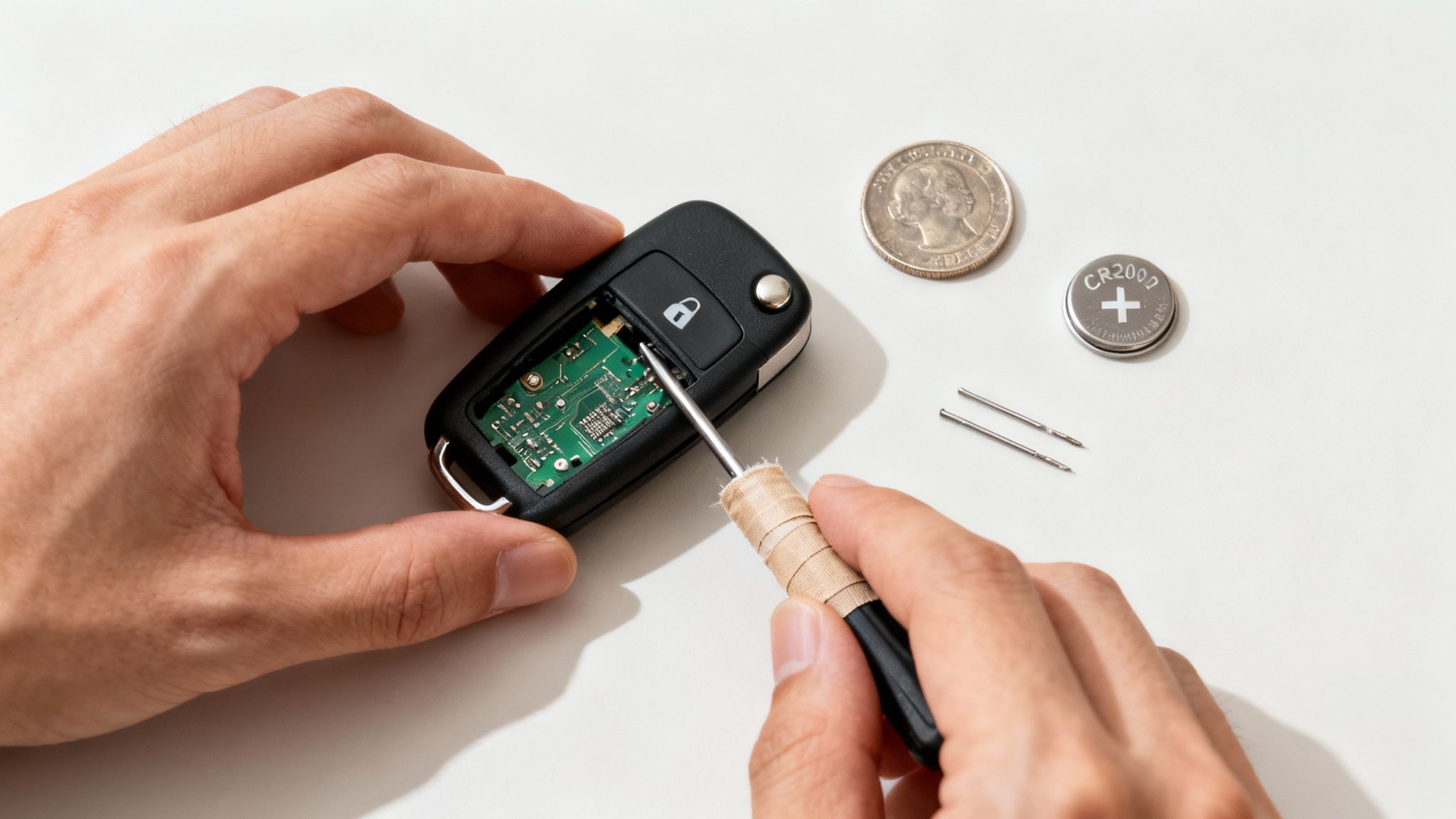
    Close-up of hands opening a car key fob with a screwdriver to replace its battery.

    Ready to replace that key fob battery yourself? For most drivers in Jensen Beach and Stuart, this is a straightforward DIY project that saves a trip to the dealer. With a few minutes and some patience, you can have it done.

    Most key fobs consist of two plastic halves snapped together. The challenge is separating them without causing damage. Start by finding the seam where the two pieces meet. Run your fingernail along the edge until you find a small slot or indentation—this is your entry point.

    Step 1: Find the Right Spot and the Right Tool

    Once you’ve located the slot, you'll need a tool to gently pry the case open. A small flathead screwdriver is the most common choice. However, be cautious, as metal can easily scratch or gouge the plastic.

    Here’s a simple trick we use: Wrap a small piece of painter's tape or electrical tape around the screwdriver's tip. This creates a protective cushion that prevents scratches while still providing enough leverage to open the seam.

    Some fobs are designed differently. Many Honda and Toyota fobs, for instance, have a slot perfectly sized for a coin. If you see one, a quarter is the intended tool. If you see a tiny screw, you'll need a jeweler’s screwdriver to remove it first.

    Step 2: Open the Case Without Causing Damage

    With your tool ready, gently insert the tip into the slot. The key is to apply steady, even pressure—don't jam it in or try to force it apart.

    Give the screwdriver a slight, gentle twist. You should hear a faint click or pop as the internal clips release. If it doesn’t separate immediately, slide the tool further down the seam and try again. It can be nerve-wracking if you've never done it before. If you're concerned about breaking the case or damaging the fragile circuit board, it's better to be safe than sorry. For a quick, professional replacement, Call (772) 710-8169 for immediate help and we'll handle it for you.

    Step 3: Swap the Battery Correctly

    Once the two halves are apart, you will see the circuit board and the battery.

    Before you touch anything, take a quick photo with your phone.

    This is a critical step. Note which way the battery is facing—the positive (+) side is almost always facing up. Having that photo for reference can prevent a lot of frustration.

    Now, gently pop the old battery out using your fingernail or a small plastic tool, not the metal screwdriver, to avoid scratching the delicate circuit board.

    With the old battery out, take your replacement key fob battery. Double-check that the number matches the old one (e.g., CR2032). Place the new battery into the holder in the exact same orientation as the old one (refer to your photo!). Finally, snap the two halves of the fob back together, ensuring the seam is tight and flush all around.

    That's it! Test the lock, unlock, and panic buttons to ensure everything is working correctly.

    What to Do When the New Battery Doesn't Work
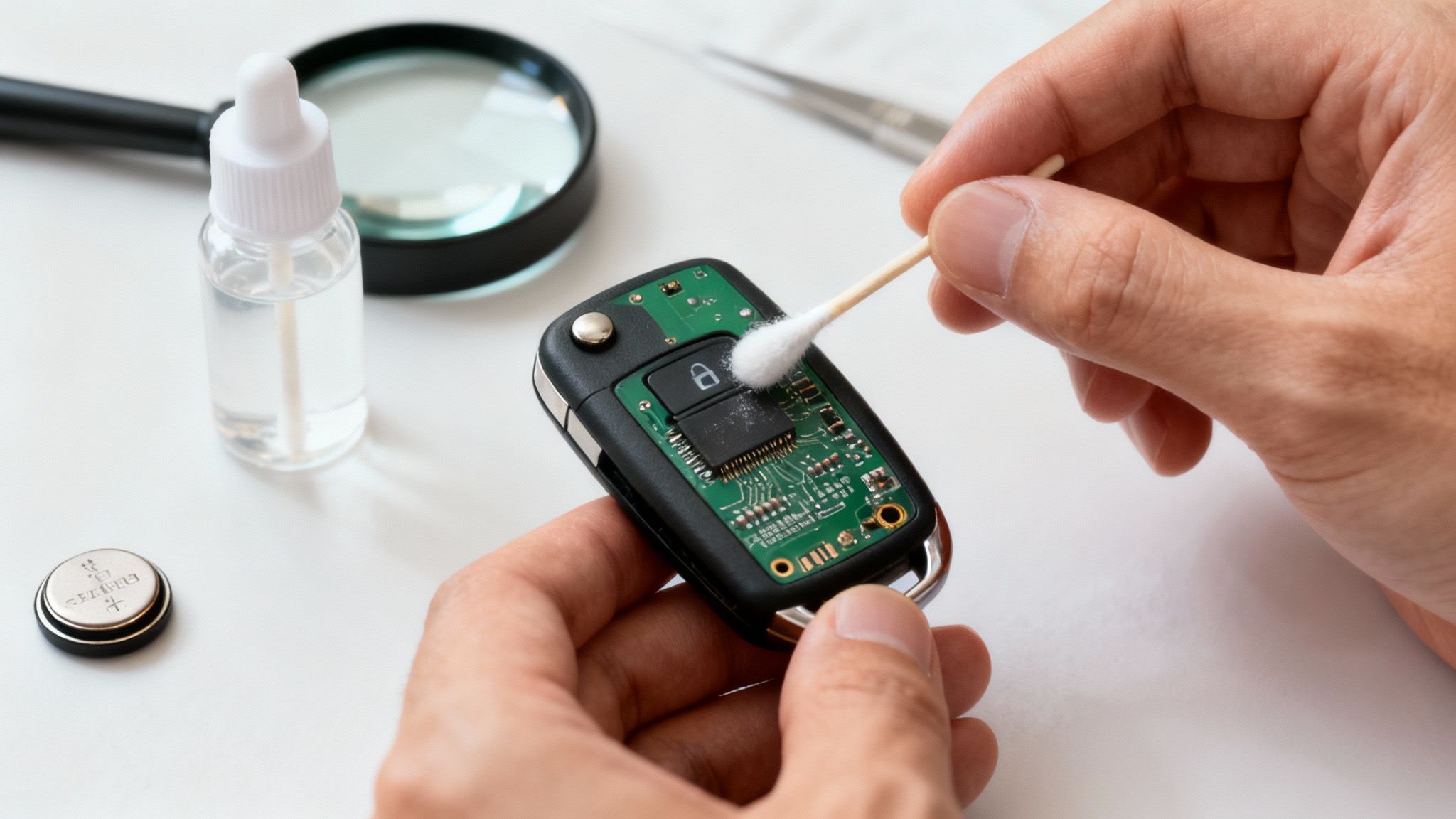
    A person cleaning the exposed circuit board of a car key fob with a cotton swab.

    It’s a frustrating moment: you've installed a new replacement key fob battery, snapped the case shut, and… nothing. The car still won't respond. Before you get discouraged, take a breath. The issue is often something simple.

    Nine times out of ten, the problem isn't the battery but a poor electrical connection. Over years of use, dust, lint, and grime can accumulate on the battery contacts inside the fob. This buildup acts as a barrier, preventing the new battery from powering the circuit board.

    Open the fob again and inspect the small metal tabs that touch the battery. If they appear dull or have residue, they need cleaning. A cotton swab lightly dampened with rubbing alcohol works perfectly. Gently wipe the contacts, let them air dry for a moment, and reassemble the fob. This simple step often restores a dead fob to life.

    Double-Check the Small Stuff

    If cleaning doesn't work, check these other common issues:

    • Bad Battery: It's rare, but new batteries can occasionally be duds. Trying a second new battery is a quick troubleshooting step.
    • Misaligned Parts: When you opened the fob, did a rubber gasket or button membrane shift? If the case doesn't close perfectly, the buttons may not make proper contact with the circuit board.

    The Reprogramming Puzzle

    If you've cleaned the contacts, confirmed all parts are seated correctly, and the fob still doesn't work, the problem may be that it has lost its programming and is no longer synced with your vehicle. This is common after power is interrupted during a battery change, especially with certain European makes like BMW, Audi, and Volkswagen, but it can happen with any brand.

    We see this frequently. A client in Fort Pierce recently changed the battery in his BMW fob. He did everything correctly, but the car wouldn't recognize the key. His specific model required the fob to be reprogrammed after any battery removal.

    This is where a simple DIY job can become a major headache. A dealership can reprogram it for a significant fee. Instead of that expense and hassle, our mobile locksmiths come directly to you anywhere in Port St. Lucie, Vero Beach, or the surrounding Treasure Coast. We have the diagnostic tools to re-sync your fob on the spot, often for less than the dealership. If your fob is still unresponsive, Call (772) 710-8169 for immediate help before considering a tow.

    If the fob is truly broken, we provide expert key fob replacement and programming services. We can also assist with other issues like ignition repair or a lock change if needed.

    When to Call a Professional Locksmith
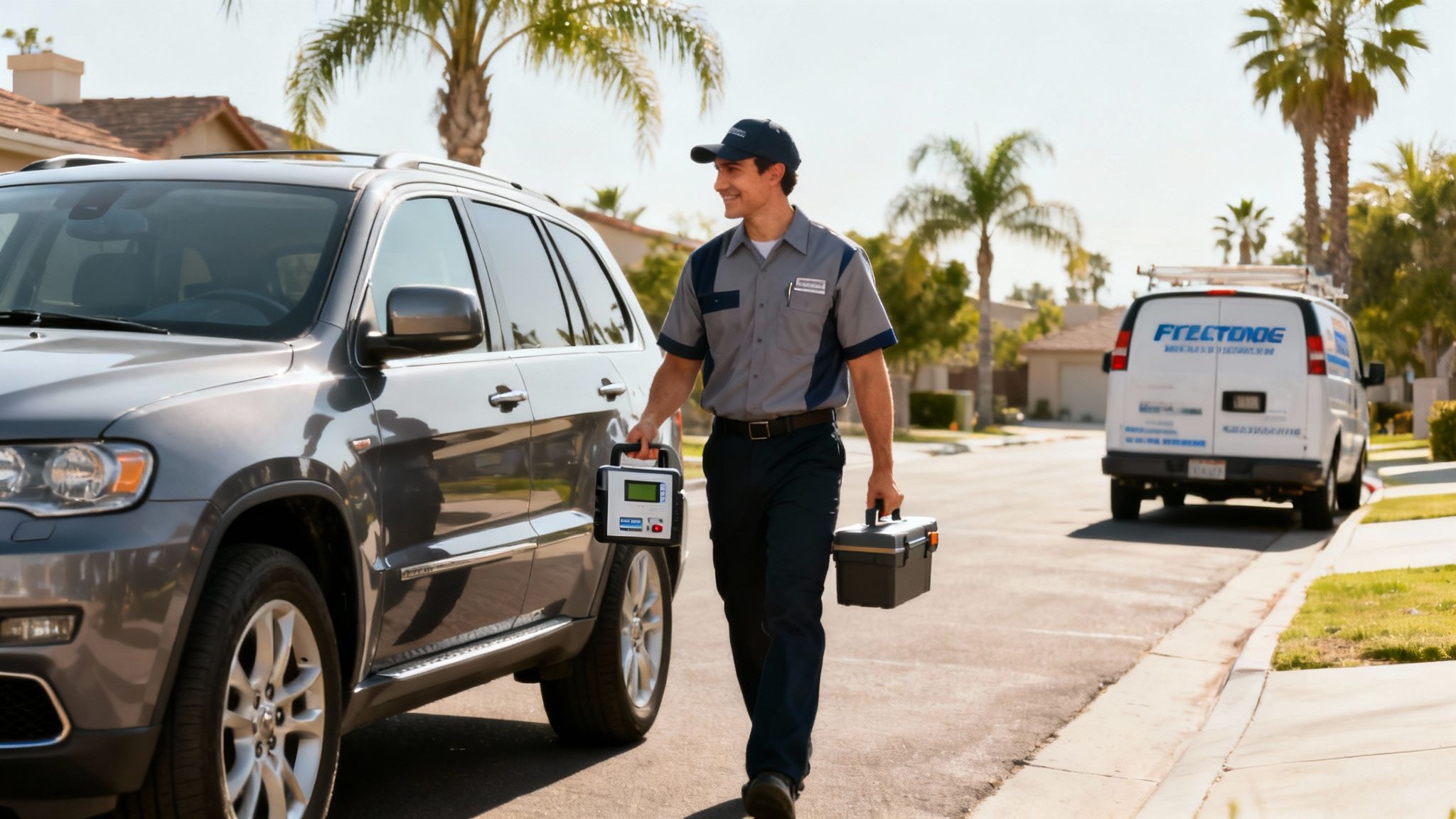
    A smiling service technician walks with diagnostic tools, ready to assist a customer in a residential area.

    Sometimes, the problem is more complex than a dead battery. If you’ve swapped in a fresh one and your remote still doesn’t work, it’s a clear sign to call an expert. Attempting to force a fix can often lead to more damage and higher costs.

    While a DIY battery change is an excellent first step, it’s not a universal solution. There are situations where professional service is the only way to get back on the road without a major headache.

    Scenarios That Require Expert Help

    Knowing when to call for help can save you time and frustration. If you encounter any of these issues, your best bet is to contact us.

    • Physical Damage to the Fob: Dropped your keys at the beach? Even a small amount of sand or water can destroy the delicate circuitry. A cracked casing is equally problematic, as it allows moisture and dirt to cause internal failure.
    • A Damaged Transponder Chip: Inside your fob is a transponder chip that communicates with your car’s immobilizer. If this chip is damaged by a hard fall or static electricity, a new replacement key fob battery won't help. The car won't start because it doesn't recognize the key.
    • Lost Programming: As mentioned, some cars require their fobs to be reprogrammed after a battery change. If your push-to-start remote suddenly stops working after you put in a new battery, it has almost certainly lost its sync with the vehicle's computer.

    Forget wasting time and money on a tow to the dealership. Our mobile locksmiths come directly to you, whether you're at home in Jensen Beach or stuck in a parking lot. We bring the right equipment to solve the problem on-site.

    The Pro-B Locksmith Advantage

    This is where we excel. Instead of long waits and inflated dealership prices, you get a faster, more affordable solution. Our mobile service is designed for the convenience of drivers throughout the area. For a complete list of services, visit our expert locksmith in Port St. Lucie page.

    We understand a non-working key fob is a significant disruption. That’s why we pride ourselves on our 15-20 minute average response time across the Treasure Coast, from Fort Pierce down to Stuart.

    Our certified technicians arrive in fully equipped vans to handle any situation:

    • On-Site Key Fob Replacement: We carry a large inventory of fobs for most major car brands.
    • Advanced Programming: We use state-of-the-art diagnostic tools to program new fobs and transponder keys.
    • Ignition Repair: If the problem isn't the key but the ignition, we can diagnose and repair that as well.

    When you're stuck, you need a fast, reliable solution. Call (772) 710-8169 for immediate help. We provide clear, upfront pricing so you know the cost before we begin any work.

    We're Much More Than Just Key Fob Batteries

    Knowing how to change a dead key fob battery is a valuable skill, but it's just one aspect of vehicle security. At Pro-B Locksmith, we are the go-to team for any automotive lock or key issue on the Treasure Coast. Think of us as your comprehensive, on-the-road solution.

    For example, imagine you’re locked out of your car in a Port St. Lucie shopping center. A car lockout is stressful, but trying to force the door open can cause expensive damage. One call to us, and a technician will arrive promptly to get you back inside, damage-free. We also provide emergency house lockout services for your home.

    Handling Every Car Key Calamity

    Our expertise extends far beyond simple lockouts. We specialize in solving the complex, frustrating problems that can ruin your day.

    • Ignition Repair and Replacement: Is your key stuck or broken off in the ignition in Fort Pierce? We can come to you, diagnose the issue, and perform a full ignition repair or replacement on the spot. No tow truck needed.
    • Lost Car Key Replacement: Losing your only set of keys feels like a disaster. We have the high-tech equipment to cut and program a brand-new transponder key or smart fob from scratch, right from our mobile van.

    Whether you're a homeowner who misplaced your car keys or a business owner dealing with a fleet vehicle issue, having a trusted 24/7 mobile locksmith is a game-changer. We deliver dealership-quality service without the high prices or long waits.

    This all-in-one approach has made us the trusted locksmith for drivers from Vero Beach to Stuart. We aren’t just a quick fix; we are your long-term partner for any vehicle key emergency.

    To learn more about our capabilities, from traditional metal keys to the latest push-to-start fobs, check out our full list of automotive locksmith services.

    When you're in a jam—locked out, key broken, or a fob that's completely dead—don't panic. Call (772) 710-8169 for immediate help, and a certified technician will be on their way to get you back on the road.

    Answering Your Key Fob Battery Questions

    Even a simple DIY project can bring up questions. When it involves your car's key fob, it's smart to be certain. Here are answers to some of the most common questions we hear from drivers across Port St. Lucie and the Treasure Coast.

    What’s the Typical Cost for a Fob Battery Replacement?

    Doing it yourself is the most budget-friendly option. A single coin battery, like a CR2032 or CR2025, typically costs $2 to $5 at a local store in Stuart or Vero Beach.

    However, if you're worried about cracking the plastic case or damaging the internal electronics, our professional service is a convenient and affordable alternative. We ensure it's done right, saving you potential trouble. For a quick, upfront price, give us a call at (772) 710-8169.

    Will I Have to Reprogram My Fob After Changing the Battery?

    The answer is: possibly. Many modern fobs, especially on newer or European vehicles, are designed to retain their programming for a short period without power. However, if you take too long or the fob’s memory fails, it can lose synchronization with your vehicle.

    If a fresh battery doesn't work, the fob almost certainly needs reprogramming. This doesn’t require an expensive trip to the dealership. Our mobile locksmiths have the necessary equipment to re-sync your key to your car wherever you are.

    Can You Replace a Battery for Any Make or Model?

    Yes. We work on all types of vehicles. From Ford trucks in Fort Pierce to Honda sedans in Jensen Beach and high-end European smart keys, we have the correct batteries and the expertise to handle them all.

    We have compiled a wealth of information based on years of field experience. For more answers, please visit our frequently asked questions page.

    How Should I Get Rid of the Old Fob Battery?

    Please don't simply toss it in the trash. These small coin batteries contain chemicals that can be harmful to the environment.

    Proper disposal is easy. Most stores that sell batteries—such as home improvement or electronics stores here in Port St. Lucie—have battery recycling bins near the entrance. Simply drop it in during your next visit.


    Whether you're dealing with a dead battery or a more complex key or lock issue, Pro-B Locksmith is the local, professional team you can rely on. For fast, honest, and expert service, visit us at https://problocksmith.com.

  • Resetting Your Anti-Theft System: A Port St. Lucie Driver’s Guide

    Resetting Your Anti-Theft System: A Port St. Lucie Driver’s Guide

    It's a moment every driver in Port St. Lucie dreads. You get in your car, turn the key, and… nothing. The engine won't turn over, but a little red security light is blinking accusingly from the dashboard. This isn't just a dead battery; your car's own anti-theft system has mistaken you for a thief and locked the whole thing down.

    Don't panic. This usually means the system just needs a reset. It's often a simple fix, involving a specific sequence with your key or sometimes a quick battery disconnect to clear the electronic confusion. Whether you're in Fort Pierce or Stuart, these practical steps can get you moving again.

    Why Your Anti-Theft System Is Preventing Your Car from Starting

    Your vehicle’s anti-theft system is a sophisticated piece of tech. Think of it as an electronic bouncer for your engine. Its main job is to act as an immobilizer, making sure that only a key with the correct, pre-programmed transponder chip can get the engine going.

    When the system doesn't recognize the chip in your key, it goes into lockdown mode. It assumes someone is trying to steal your car and cuts power to crucial components like the ignition, starter, or fuel pump. It’s a great security feature until it gets confused and leaves you stranded somewhere in Port St. Lucie. A simple electronic hiccup can turn your daily driver into a very heavy, temporary lawn ornament.

    Common Reasons Your Car's Security System Is Active

    So, what causes this protective system to suddenly turn on you? From our experience serving drivers across the Treasure Coast, it's usually one of a few common culprits. Knowing what to look for is the first step in getting back on the road.

    • A Dead Key Fob Battery: This is the most frequent issue. The tiny transponder chip in your key fob needs a little bit of power to send its unique code to the car. If the battery is dead or dying, your car simply can't "hear" it.

    • Damaged or Worn-Out Key: Keys get dropped, tossed around, and worn down. Over time, physical damage can break the delicate transponder chip inside or corrupt the signal it sends, causing a communication breakdown.

    • Recent Jump-Start or Battery Change: A sudden power surge from a jump-start or a complete power loss when changing the battery can scramble your car's brain. The immobilizer often defaults to a locked state as a safety precaution.

    • Random System Glitch: Let's be honest, electronics can be finicky. Sometimes, the anti-theft system just has a momentary software bug that triggers the alarm for no apparent reason. A simple reset is usually all it needs to clear its head.

    As a locksmith serving Stuart and Jensen Beach, a car that won't start because of that blinking security light is one of the most common calls we get. Before you assume a major mechanical failure, remember that a simple reset procedure often fixes these temporary glitches between your key and your car.

    If this happens to you, you're not alone. Electronic immobilizers are now standard in over 90% of new passenger vehicles sold in major markets. This means millions of drivers face this exact problem every year. You can learn more about the prevalence of vehicle anti-theft systems and how they've shaped the auto industry.

    Let's break down the common triggers in a quick-reference table.

    Quick Guide to Anti-Theft System Triggers

    Use this table to quickly identify why your car's security system might be active and what you should try first.

    Potential CauseWhat You Will NoticeYour First Step
    Dead Key Fob BatteryThe car might not unlock with the remote. No response when turning the key.Replace the battery in your key fob.
    Damaged or Worn KeyThe key feels loose in the ignition or has visible cracks.Try your spare key. If it works, the first key is the problem.
    Recent Jump-StartThe car won't start immediately after a jump or battery replacement.Attempt a simple key-in-ignition reset procedure (covered next).
    System GlitchThe security light is flashing for no obvious reason.Try locking/unlocking the doors with the key, then try starting again.

    This table covers the most common scenarios we see in the field. Often, the solution is much simpler than you think.

    If you're stuck in a car lockout or that security light just won't go off, don't waste your day trying to guess the problem. For immediate, on-site help, Call (772) 710-8169 for immediate help. A Pro-B Locksmith technician can diagnose the issue right where you are, whether you just need a new key fob programmed or it's a more involved ignition repair.

    Tried-and-True DIY Methods to Reset Your Car's Anti-Theft System

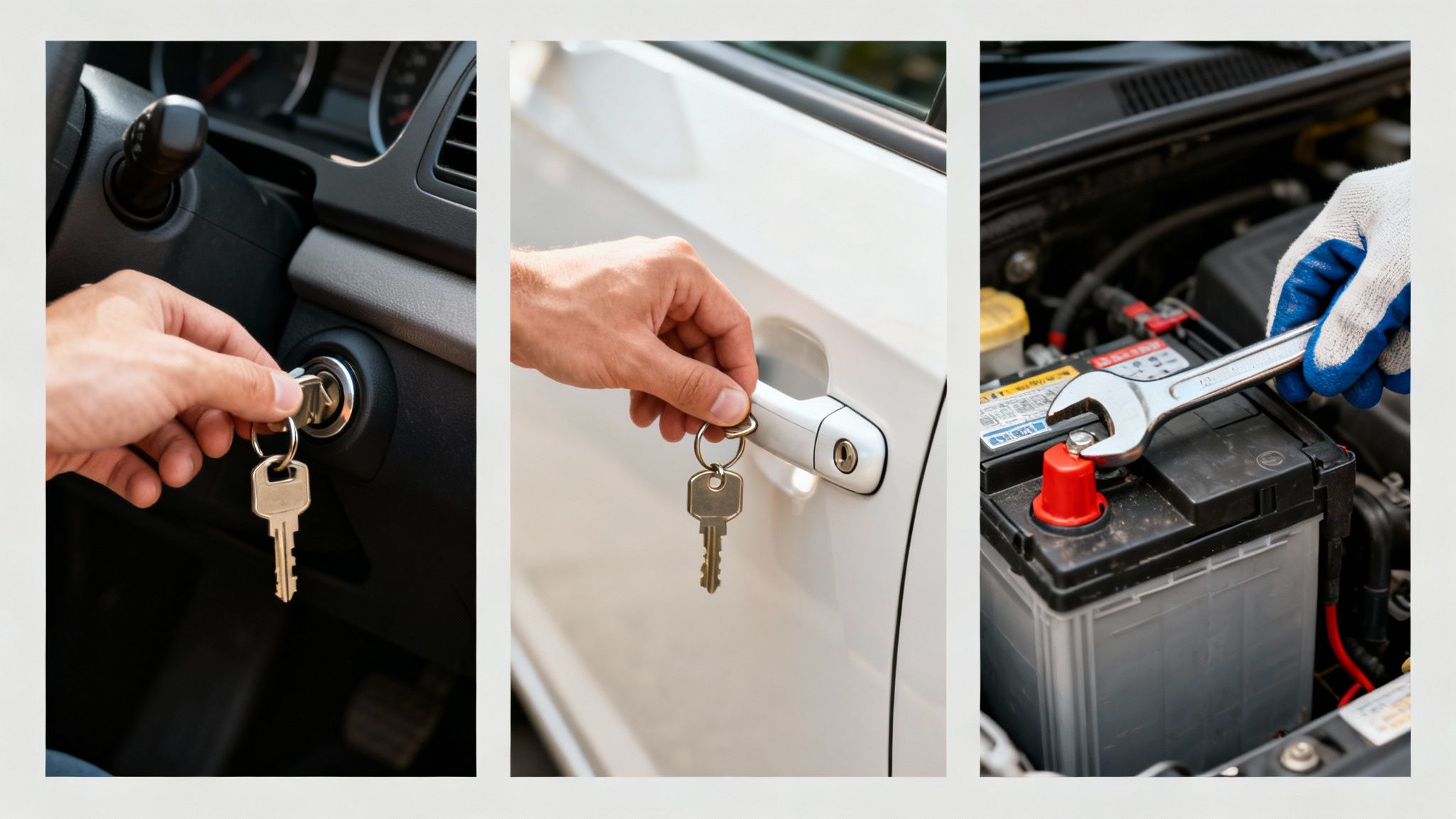
    Three panels showing a person interacting with a car: inserting key in ignition, unlocking door, and working on battery.

    When your car's security light is flashing and the engine won't turn over, it's easy to assume the worst. But before you call for a tow or book a costly dealership appointment, take a deep breath. There are a handful of reliable, field-tested resets you can try right where you're parked.

    These fixes often work because they force a digital handshake between your key and the car's computer, clearing the electronic glitch that's causing the problem. Think of it like rebooting a stubborn laptop. After years of working on vehicles across Fort Pierce and the Treasure Coast, these are the three methods we've seen succeed time and time again.

    The Key in Ignition Method

    This is the classic trick, especially for many General Motors vehicles, but the core principle works on plenty of other makes too. The idea is to trigger the car's security "relearn" mode, giving it a chance to recognize and re-sync with the transponder chip in your key.

    Here’s a real example of how you do it:

    • Stick your key in the ignition and turn it to the "On" position. This is where the dashboard lights up, but you don't actually crank the engine.
    • Now, just wait. Leave the key in this position for about 10 to 15 minutes. Keep an eye on the security light on your dash; it should eventually stop flashing or turn off completely.
    • Turn the ignition fully "Off" for about 10 seconds, then try to start the car.

    That waiting period is everything. It feels like a long time, but it’s crucial for letting the car's computer do its thing. If you rush it, you'll likely have to start all over.

    The Door Lock Trick

    Sometimes, the system just needs a simple, physical signal to know you're the rightful owner. This method uses the old-school door lock to communicate directly with the Body Control Module (BCM), the component that often manages the anti-theft system.

    We often suggest this quick trick to drivers in Jensen Beach whose key fobs are acting flaky. Using the physical key can bypass a weak fob signal and give the car's security system the "all-clear" it needs.

    Get inside, press the power lock button to lock all the doors, and then get out, making sure every door is closed. Now, use your physical key in the driver's side door to unlock it. Hop back in and try starting the engine. That simple mechanical action is often enough to break the security loop.

    The Battery Disconnect Reset

    If the other tricks don't work, it's time for a more direct approach. A recent jump-start or a failing battery can send voltage spikes through the system, scrambling the anti-theft electronics. Cutting the power forces a hard reset of all the car's modules.

    Here's the safe, step-by-step way to do it:

    1. Always disconnect the negative terminal first (it’s usually black).
    2. Let it sit for at least 15-20 minutes. This gives the capacitors in the system time to fully drain any lingering charge.
    3. Securely reconnect the negative terminal.

    Try starting the car again. This power-cycle reset is great at clearing out stubborn electronic gremlins that the other methods can't touch. But if your engine still won't start after trying all three of these fixes, you're probably dealing with a more serious issue, like a dead transponder chip in your key or a problem with the ignition itself.

    Don't let a finicky security system derail your day. If you're stuck in Port St. Lucie or Stuart and these resets haven't worked, Call (772) 710-8169 for immediate help. Our mobile locksmiths can come to you, figure out the real problem, and get you back on the road with a professional solution.

    What to Check When Your Key Fob or Ignition Acts Up

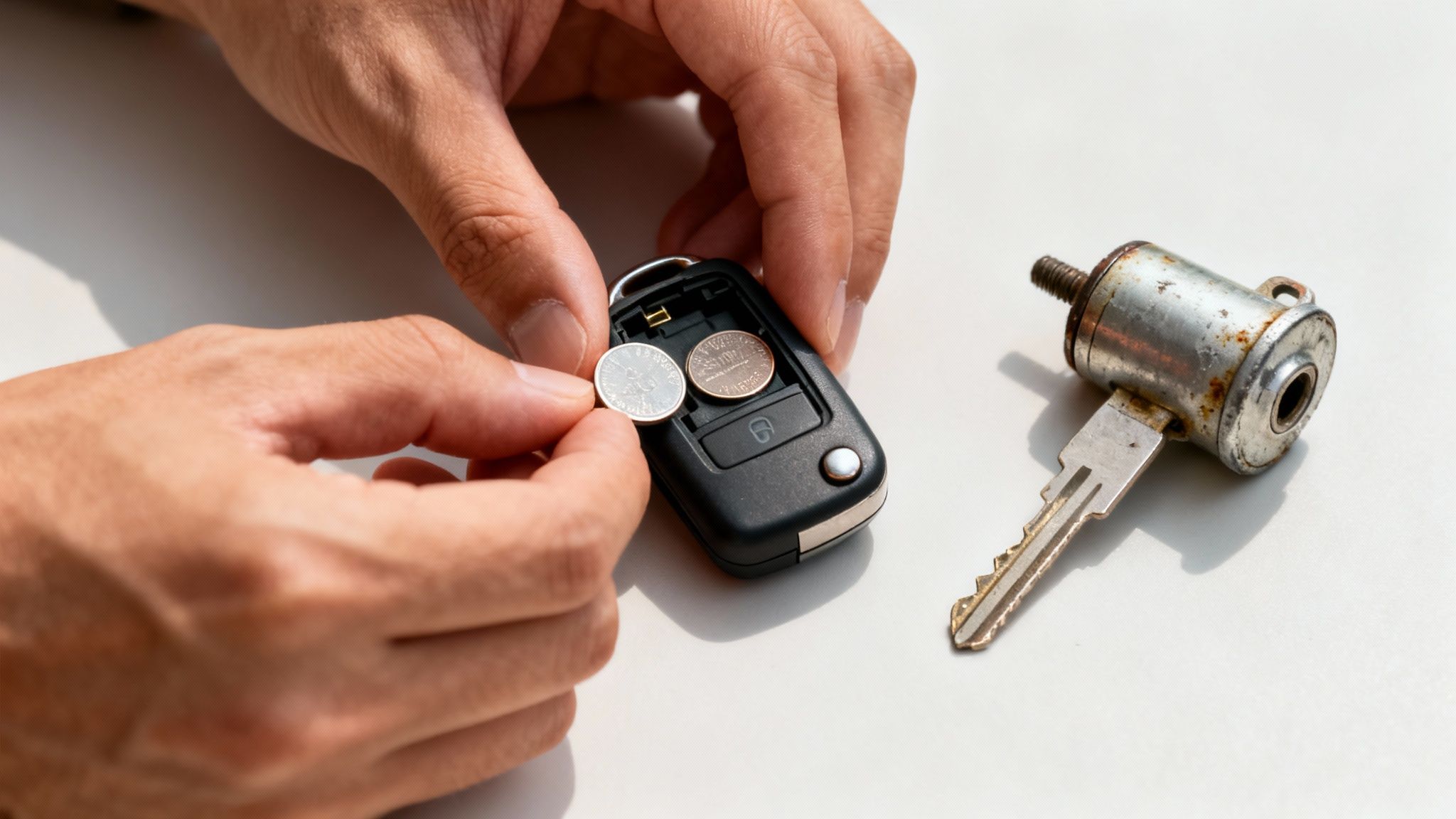
    Close-up of hands replacing coin cell batteries in a car remote key, with a rusty lock cylinder nearby.

    When your car's anti-theft system starts giving you grief, it's easy to assume the worst—a major electronic failure. But in our experience, the problem is often much simpler. More often than not, the culprit is something you hold in your hand every day: the key fob.

    Before you start worrying about the car’s main computer, let’s look at the most common and easily fixed issues. We can’t tell you how many calls we get in Port St. Lucie and Fort Pierce that turn out to be a dead key fob battery. It’s a simple fix that can save you a world of frustration. If your fob’s range is getting shorter or it only works sporadically, that battery should be the very first thing you check.

    Is Your Key Fob on Its Last Legs?

    Of course, it's not always the battery. The transmitter inside the fob can also begin to fail over time, sending a weak or jumbled signal that your car’s security system simply won’t accept. When that happens, the immobilizer kicks in, and you're not going anywhere.

    Here are a few tell-tale signs that your fob itself is the problem:

    • It’s Unreliable: Works perfectly one minute and not at all the next, even after you’ve swapped in a fresh battery.
    • There’s a Lag: You find yourself mashing the buttons a few times before the doors finally lock or unlock.
    • You Need to Get Close: You practically have to press the fob against the window for it to register.

    If any of this sounds familiar, it's probably time for a professional diagnosis. Don't struggle with it—just Call (772) 710-8169 for immediate help. Our mobile locksmiths can come to you, test the fob's signal strength, and provide a key fob replacement on the spot if necessary.

    It’s easy to think of a key fob as just a convenience, but it's a vital piece of your car's security puzzle. Modern immobilizers have been a game-changer, slashing certain types of theft claims by over 50%. A working key fob is your first line of defense.

    When the Problem Is in the Ignition

    So, you’ve put a new battery in your fob, and it seems to be working, but the car still refuses to start. What now? The next place to look is the ignition switch. This is a mechanical part that sees a lot of use, and it can definitely wear out.

    A worn-out ignition cylinder might struggle to read the transponder chip in your key, even if the key is flawless. The internal components just don't line up correctly anymore.

    Keep an eye out for these red flags:

    • Your key feels wobbly or loose when it’s in the ignition.
    • It's getting harder to turn the key, or worse, it gets stuck.
    • You turn the key to the "On" position, but the dashboard lights don't illuminate.

    These are classic signs that you need ignition repair, a common service we provide for drivers all around Vero Beach and Stuart. Ignoring a finicky ignition is a bad idea; it will eventually fail completely, and it won't wait for a convenient time. If you do find yourself stuck, our guide on what to do during a car lockout emergency has some helpful advice.

    When It's Time to Call in a Professional Locksmith

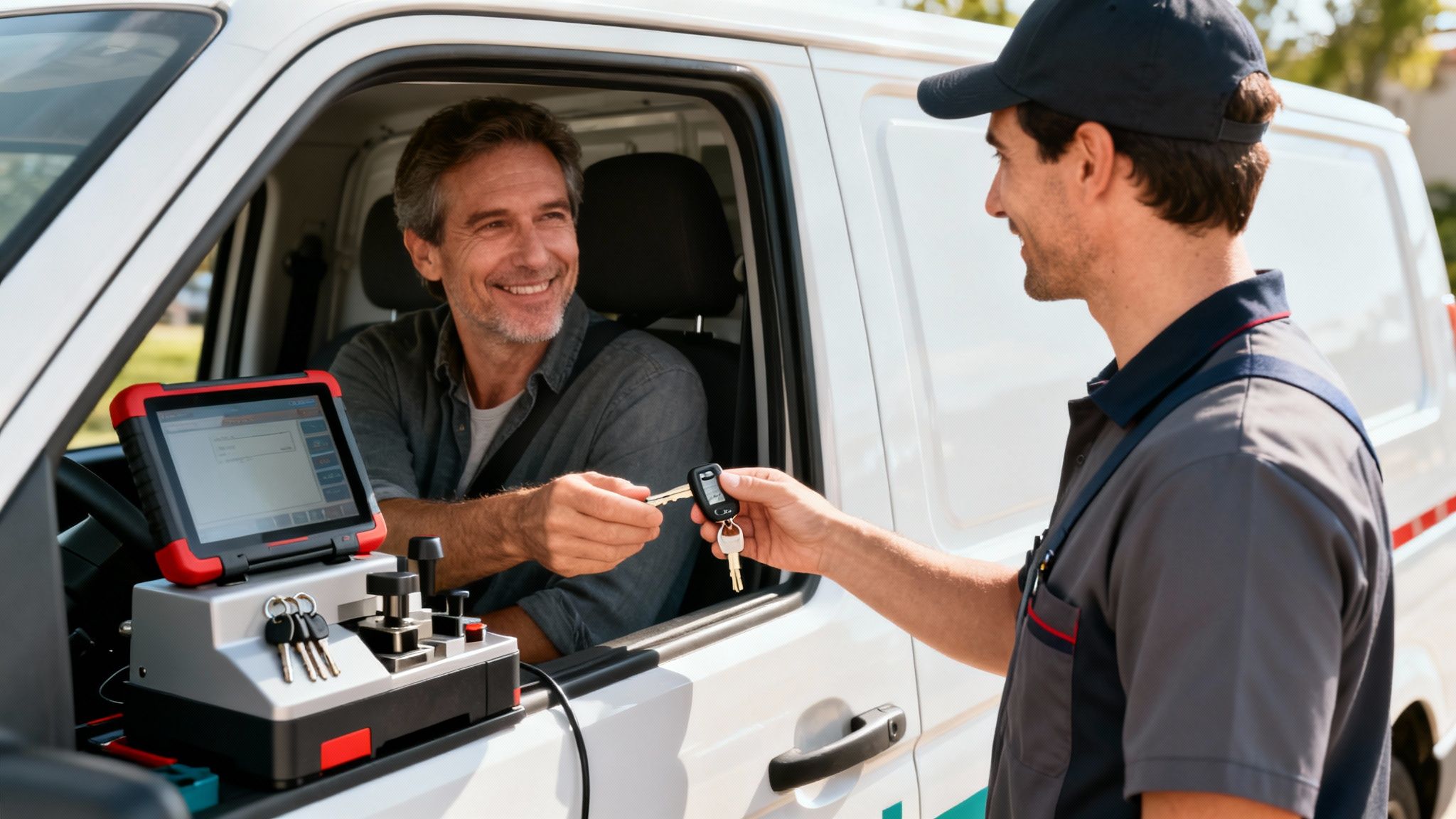
    A smiling locksmith in a van hands newly programmed car keys to a happy customer.

    While the DIY tricks for resetting anti theft system glitches can definitely get you out of a jam, they have their limits. If you’ve tried the basic steps and your engine still refuses to turn over, you’re likely facing a deeper electronic or mechanical problem. Pushing further on your own at this point often does more harm than good, potentially leading to a much more expensive repair.

    This is exactly when a mobile locksmith becomes your best friend. Instead of dealing with the hassle and cost of towing your car to a dealership, we come right to you—whether you're stranded in your driveway in Port St. Lucie or stuck in a grocery store parking lot in Stuart. Our services are a solution-focused alternative to expensive dealership appointments.

    Knowing When You're Out of Your Depth

    Some problems simply can't be fixed with a key turn and a bit of patience. They demand specialized diagnostic equipment and the kind of know-how that comes from years of experience. Trying to force a solution without the right tools isn't just frustrating; it can permanently damage your car's computer systems.

    Here are a few dead giveaways that you need to pick up the phone:

    • You've Lost Every Single Key: If you have no keys left, there's nothing for the car’s computer to "re-learn." A locksmith needs to generate a completely new key, which means precisely cutting the blade and programming a new transponder chip from scratch so it talks to your car’s immobilizer.
    • The Transponder Chip Is Dead: That tiny chip inside your key fob can go bad over time or from being dropped. When it fails, your car will never recognize the key, no matter how many reset procedures you attempt. We can test the chip's signal right there and provide a key fob replacement on the spot.
    • The Car's Computer (ECU) Is Scrambled: Sometimes, the Engine Control Unit (ECU) itself gets corrupted and "forgets" your keys, especially after a battery jump or other electrical surge. This requires a professional re-flash with advanced diagnostic tools to re-establish the link between your key and the engine.

    Trying to bypass a modern anti-theft system is a recipe for disaster. These things are intentionally designed to be tamper-proof. One wrong move can trigger a complete system lockout, turning a frustrating problem into a very expensive one.

    The Right Tools for a High-Tech Job

    Vehicle security technology is evolving at an incredible pace. The global market for these systems is expected to balloon to over $22 billion by the early 2030s, thanks to increasingly sophisticated immobilizers and biometric security. This level of technology requires an equally advanced set of tools to service.

    For drivers in Fort Pierce and Vero Beach staring down a blinking security light that just won't quit, don't get frustrated—get an expert. If you've lost your keys or suspect an ECU issue, Call (772) 710-8169 for immediate help. Our team provides a full range of automotive locksmith services to get the job done right the first time, right where you are.

    Keeping Your Vehicle's Security System in Good Shape

    Let’s be honest, nobody thinks about their car’s anti-theft system until it stops them from starting their own car. As locksmiths who’ve seen it all across the Treasure Coast, from Vero Beach down to Stuart, we can tell you that a little preventative care goes a long, long way.

    Instead of waiting for that dreaded blinking security light, a few smart habits can keep your system humming and save you the stress of being stranded. It's really about getting ahead of the problem before it becomes one.

    Stay Ahead with Simple Checks

    Most of the time, security system failures don't just happen out of the blue. They're usually the result of small, fixable issues that were ignored for too long. A bit of attention now can save you a world of hurt later.

    For starters, change your key fob battery before it dies. We see this all the time. Just because it’s still working doesn’t mean it’s working well. We recommend swapping it out every 12 to 18 months. This simple step ensures a strong, reliable signal reaches your car’s security module every single time.

    Another absolute must is having a spare key. This isn't just for a car lockout; it's a vital diagnostic tool. If your car suddenly won't start, trying the spare is the fastest way to figure out if you have a key problem or a car problem. Just do yourself a favor and store that spare somewhere safe outside the vehicle—with a family member or tucked away at home.

    Listen for the Telltale Signs

    Your car has a way of telling you when something’s not quite right with its security components. If you learn to listen for these subtle hints, you can often sidestep a full-blown system lockout.

    From our experience, a lot of anti-theft lockouts start with something you can feel right in your hand. That key feeling a little sticky or loose in the ignition? That’s not something to ignore. It’s a classic sign the internal mechanics are wearing out, and getting it looked at early is the key to avoiding a no-start scenario.

    Keep an eye—or an ear—out for these red flags:

    • A "Sticky" Ignition: If you have to jiggle the key or it feels like it’s catching, your ignition cylinder is likely on its way out. This can easily lead to the car failing to read your transponder key.
    • Fading Fob Range: Are you having to walk closer and closer to your car for the remote to work? That's a textbook symptom of a dying battery or a weakening transmitter.
    • Hesitant Starts: Does your car sometimes take a second or third try to fire up? This could be the first sign that the transponder chip in your key is having trouble communicating with the vehicle.

    If you’re running into any of these issues around Fort Pierce or Jensen Beach, don't just cross your fingers and hope it goes away. An ignition repair or a key fob replacement is a whole lot easier to handle on your own terms. Need a quick inspection or find yourself in a bind? Call (772) 710-8169 for immediate help.

    Common Questions About Resetting Anti Theft Systems

    When your car refuses to start because of a security issue, it’s easy to feel stranded and confused. We get calls all the time from drivers across the Treasure Coast, from Jensen Beach to Vero Beach, who are wrestling with their car’s anti-theft system. Let's clear up some of the most common questions we hear every day.

    Will Disconnecting the Battery Disable My Anti Theft System for Good?

    This is a huge misconception. The short answer is no—disconnecting the battery won't permanently kill your car's security system. Modern anti-theft systems are hardwired into the vehicle's computer and use non-volatile memory. That just means the security data stays put even when there's no power.

    Now, unplugging the battery can be a useful troubleshooting step. It forces a hard reboot of all the onboard computers, which can sometimes clear up a temporary glitch. But as soon as you reconnect it, the immobilizer system will power right back up, looking for a correctly programmed transponder key before it allows the engine to start.

    Can I Buy a Cheap Key Fob Online and Program It Myself?

    It's tempting to try and save some money with a cheap online fob, but this route often leads to more headaches. We've seen it countless times—a driver in Stuart calls us, completely stuck with an aftermarket fob that simply won't sync with their car.

    The problem is twofold. First, many of these knock-off fobs use shoddy electronics that aren't fully compatible, even if they look identical to the original. More importantly, programming a new fob isn't a DIY job. It requires professional diagnostic tools that can communicate directly with your car's immobilizer system. Without that equipment, it’s just a useless piece of plastic.

    For a reliable key fob replacement, you need a professional to source a quality key and program it correctly. If you're in a jam, Call (772) 710-8169 for immediate help, and we'll get it done right.

    Is the Problem with My Key or My Car's Ignition?

    This is the million-dollar question, but thankfully, there’s a simple way to start troubleshooting. The very first thing you should do is grab your spare key.

    • If the spare key starts the car right up, then the problem is isolated to your primary key. It could be as simple as a dead battery, but it's also possible the transponder chip inside has gone bad.
    • If neither key works, the issue is almost certainly with the vehicle itself. The culprit is often the ignition switch or the antenna ring around it that's responsible for reading the key's signal.

    Pro Tip: Pay attention to how the key feels in the ignition. If it's loose, wobbly, or gets stuck, that's a major red flag. Physical wear and tear can prevent the car from reading the transponder chip correctly, which in turn triggers the anti-theft system.

    Pinpointing the exact cause takes a bit of experience. A professional locksmith has the tools to test your key's signal strength and diagnose the ignition components, saving you the time and expense of just guessing. For more answers, feel free to check out our comprehensive locksmith FAQ page.


    When you're staring down a stubborn security light and need a solution that works, Pro-B Locksmith is ready to help. We offer 24/7 mobile service across the Treasure Coast, handling everything from emergency car lockout and house lockout situations to complex ignition repair, key fob replacement, and lock change services. For upfront pricing and expert service that comes to you, visit us at https://problocksmith.com.