It's a sound every property owner dreads—that sickening snap as you turn the key. Suddenly, you're holding half a key, and the other half is stuck where it shouldn't be. From Port St. Lucie to Vero Beach, this is a call we get all the time, and a fast, local response is crucial.
Whatever you do, don't try to force the broken piece out. Jamming things in there or trying to turn the lock with the broken stub is the fastest way to turn a simple key extraction into a much bigger problem. A simple house key that's fractured outside the lock is one thing, but a modern car key with a transponder chip that breaks in a Stuart parking lot is a whole different ballgame. If you're in a jam, it's always safest to call (772) 710-8169 for immediate help.
What to Do When Your Key Snaps in Half
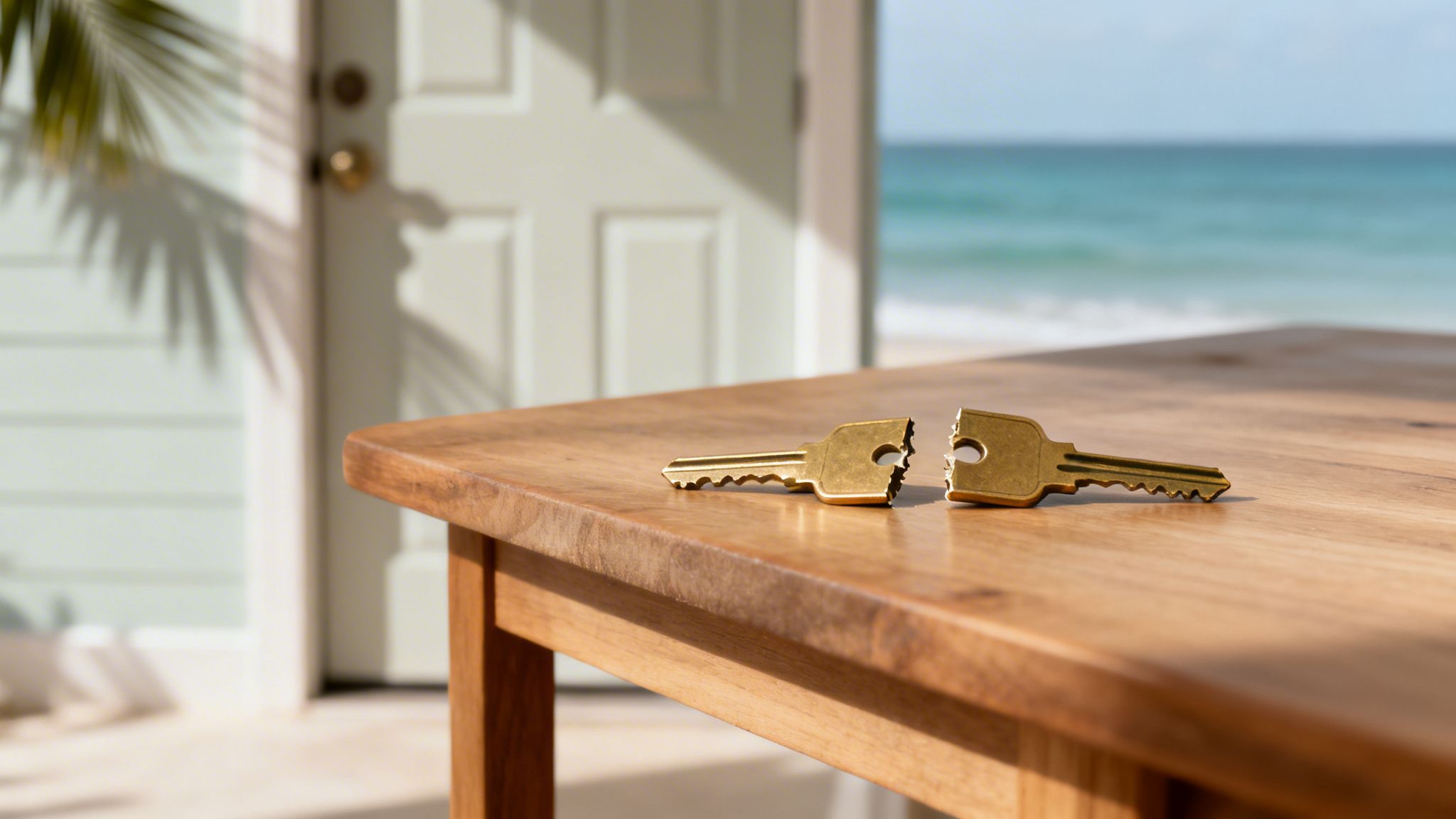
The moment your key breaks, take a deep breath. Panicking and making a rash move is what causes the real damage. Whether you're locked out of your car in Stuart or staring at a key fragment in your front door lock in Jensen Beach, what you do next is critical.
It might surprise you, but lost or broken keys are a massive issue nationwide. They account for a whopping 28% of all locksmith service calls, making it the number one reason people call for professional help. Here on the Treasure Coast, we see another contributing factor: industry data shows that 56% of new homeowners don't rekey their locks after moving in. This often means they’re using old, worn-out keys that are just waiting to break under a little stress. You can dive deeper into these lock industry statistics to see just how common these problems are.
Common Broken Key Scenarios
The right fix always depends on where and how the key broke. In our experience helping residents from Fort Pierce to Jensen Beach, we see three situations far more than any others, and each one requires a unique approach.
A Piece of the Key is Stuck in the Lock: This is easily the most urgent problem, since you're either locked out or your property isn't secure. This often leads to a house lockout and requires immediate attention. Sometimes the piece is sitting right at the opening; other times, it's pushed deep inside the cylinder.
A Car Key Snapped at the Blade: Many modern car keys break right where the metal blade meets the plastic fob. A client in Port St. Lucie recently had this happen; even with both pieces in hand, his car wouldn’t start because the transponder chip in the fob wasn't close enough to the ignition to be read.
A House Key Broke in Your Hand: If the key snapped outside the lock, you’re not locked out—which is great news! But you still need to get a new, reliable key cut from the two broken halves, a common service we provide in Vero Beach and surrounding areas.
The humidity and salt air we get along coastal areas like Hutchinson Island can really speed up metal fatigue. We see it all the time—keys just get weaker and more brittle over the years. A little lock lubrication and inspecting your keys for cracks can go a long way.
If you’re dealing with a key that's snapped off in the lock and it won't come out with a gentle wiggle, just stop. You're risking serious damage to the internal lock mechanism. For a clean, non-destructive extraction and help right away, your best bet is to call Pro-B Locksmith at (772) 710-8169.
Safely Extracting a Broken Key from a Lock
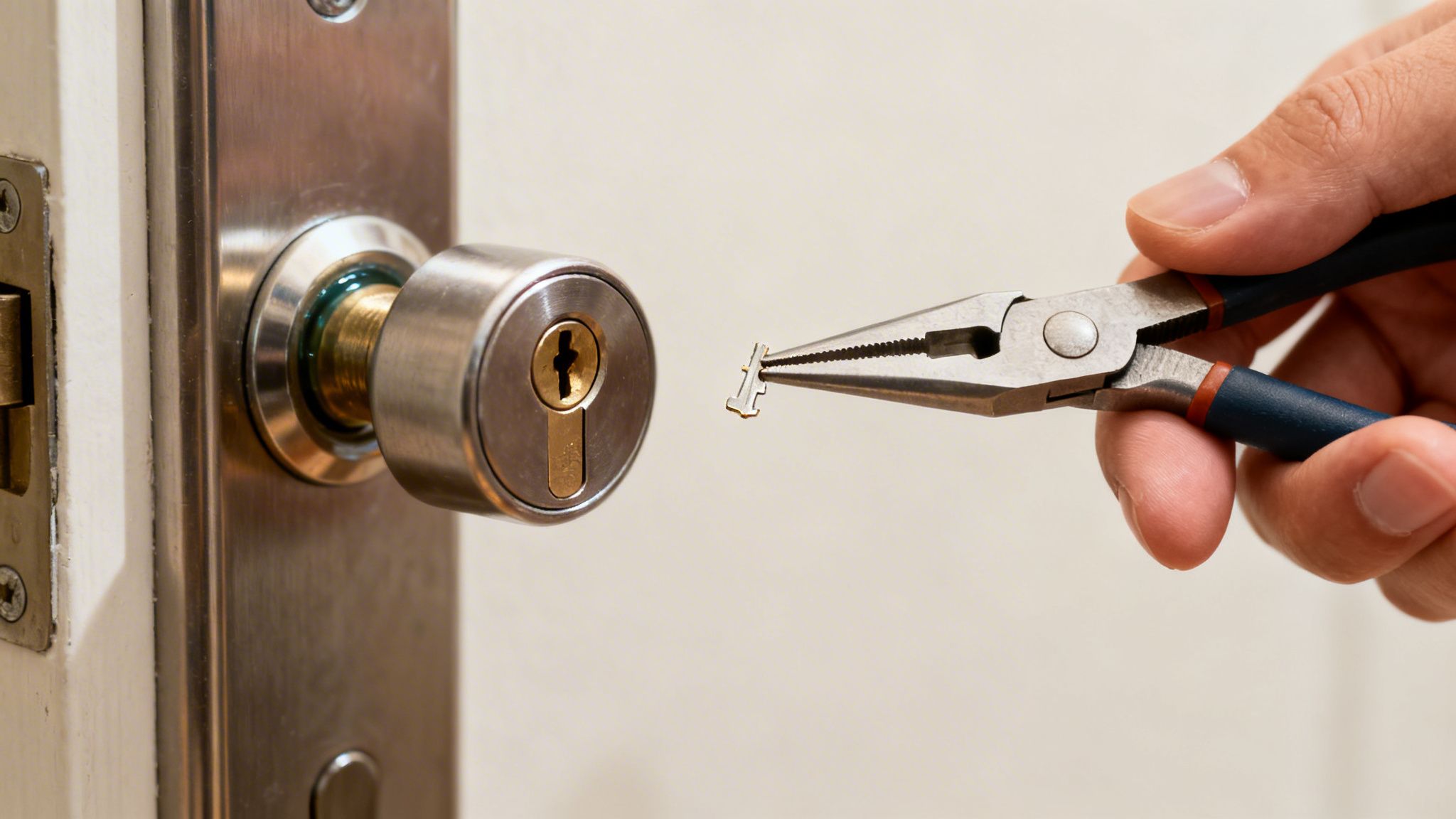
It’s a heart-stopping moment: you turn the key, hear a snap, and are left holding only half of it. Whether it's your Fort Pierce front door or the office deadbolt in Stuart, a broken key in the lock is a frustrating problem that can quickly become a security issue.
Before you do anything else, take a breath. The first and most important rule is to stay calm and don't force anything. Pushing another object in after the key or, even worse, trying super glue, will almost certainly escalate a simple extraction into a full, costly lock change.
Your mission is to carefully coax the broken piece out without damaging the delicate pins inside the lock cylinder. A light spray of a graphite-based lubricant or a silicone spray directly into the keyway can make a world of difference. This reduces friction and gives the fragment a much better chance of sliding out smoothly.
DIY Extraction Methods
If you're lucky, a piece of the key will be sticking out of the lock. In this case, you might be able to handle it yourself. Try grabbing the very edge with a pair of needle-nose pliers and pulling it straight out. The key is to use firm, steady pressure—don't wiggle it, as that can easily damage the lock’s internal mechanism.
When the fragment is flush with the lock or just inside, you'll need a more creative approach. We've seen people have some success by bending a small hook on the end of a sturdy paperclip or using a very thin jigsaw blade. Carefully slide your improvised tool along the side of the key, trying to hook a cut edge and gently pull it toward you.
Remember, this is an operation that requires finesse, not force. If you've been gently trying for a minute or two and the piece won't budge, stop immediately. Pushing your luck can shove the fragment deeper or misalign the internal pins, creating a much bigger headache.
If you hit a wall, don't risk turning a simple fix into an expensive disaster. A professional locksmith has the specialized extraction tools to get the job done right. If you have any doubt, call (772) 710-8169 for immediate help from a trained expert in the Port St. Lucie area.
The Risks of Common DIY Mistakes
Over the years, we've seen it all on jobs from Vero Beach to Jensen Beach: homeowners trying to fix a broken key with scissors, tweezers, and even super glue. These attempts rarely, if ever, end well. Glue is a particularly bad idea, as it can permanently fuse the key fragment to the pins, destroying the entire lock. For a deeper dive on what to do—and what to avoid—you can learn how to extract a broken key from a lock with guidance from other experts.
While a simple household lock might be tempting to try yourself, knowing when to call a pro is crucial. High-security locks or a key broken in a car ignition are entirely different animals. A botched DIY job on your car's ignition could damage the cylinder, a repair that is far more complex and expensive than a simple extraction.
Likewise, a house lockout due to a broken key is a pressing security concern that needs a fast, professional solution. You can learn more about how we handle these urgent calls in our guide to emergency lockout services.
Before grabbing the nearest thin object, it's wise to consider the tools you have on hand and the potential for causing more harm than good.
DIY Extraction Tool and Risk Assessment
| Tool | How to Use | Success Probability | Risk of Lock Damage |
|---|---|---|---|
| Needle-Nose Pliers | Grip the protruding fragment and pull straight out. | High (if key is exposed) | Low |
| Jigsaw Blade | Slide the thin, serrated edge alongside the key to hook and pull. | Medium | Medium |
| Paperclip/Pin | Bend a small hook on the end to latch onto the key's edge. | Low | High |
| Super Glue | Apply to another object to stick to the key (NOT recommended). | Very Low | Very High (often catastrophic) |
Ultimately, while the temptation to save a few dollars is strong, the risk of damaging your lock often outweighs the potential reward. A professional extraction is fast, safe, and ensures your lock remains fully functional.
Repairing Modern Car Keys and Key Fobs
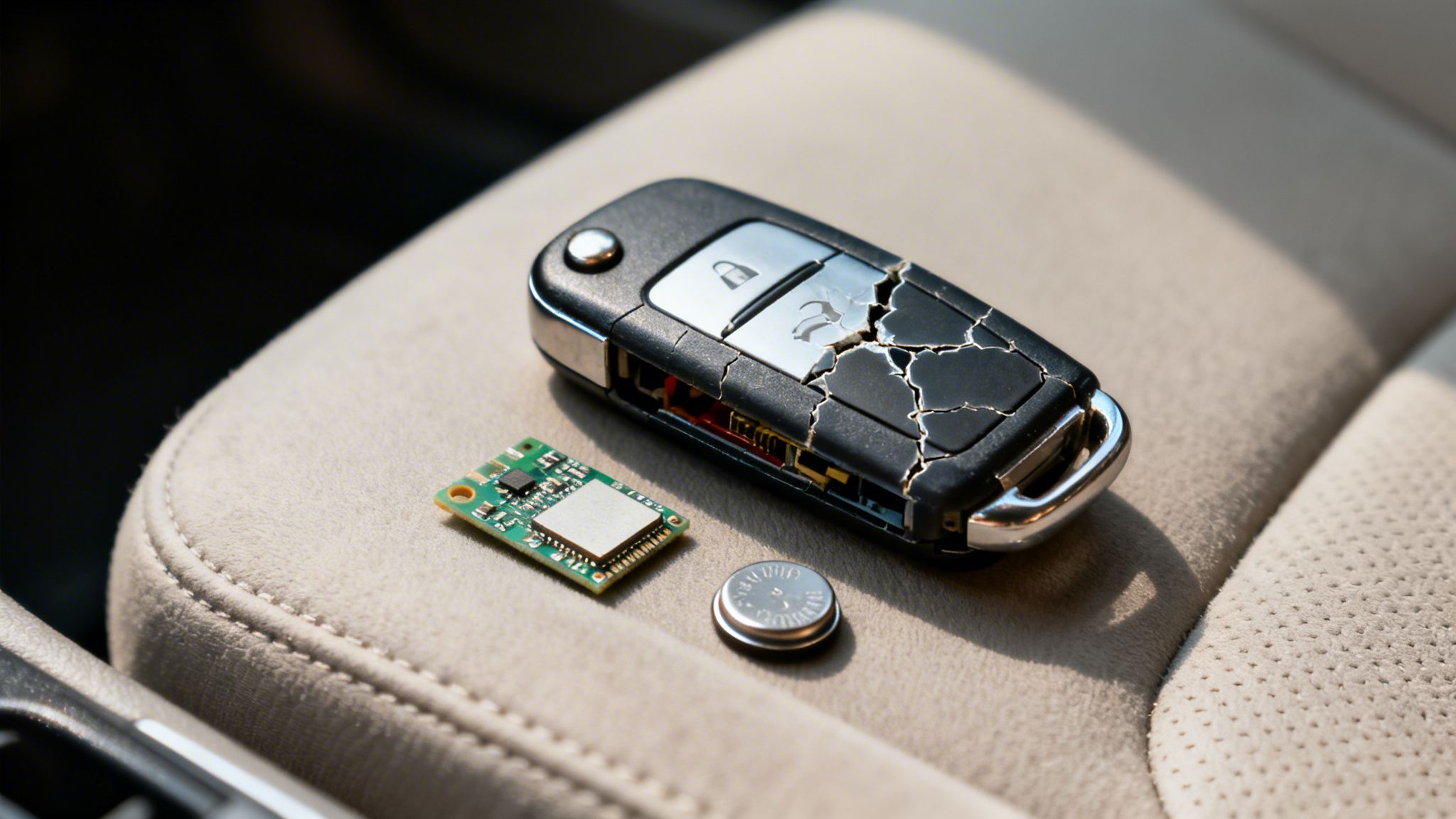
When a modern car key or fob snaps, it’s a whole different ballgame compared to a simple house key. For drivers all over the Treasure Coast, from Jensen Beach to Port St. Lucie, a broken car key is a surprisingly common headache that can bring your day to a grinding halt. This isn't just a piece of metal anymore; it's a sophisticated piece of tech that talks to your car’s anti-theft system.
Don't be tempted to just glue the metal blade back onto the plastic housing. It won't work. The key to starting your car is a tiny transponder chip tucked inside that fob. That chip sends a unique security code to your ignition. If the chip is damaged, missing, or just too far from the ignition coil after a botched repair, your car's immobilizer won't get the signal it needs. You're left stranded, facing a car lockout situation.
Diagnosing the Fob Failure
So, what exactly went wrong? Before we can talk about a fix, we have to figure out the point of failure. In our experience helping drivers in Stuart and Fort Pierce, it usually comes down to one of a few things.
- Cracked Plastic Case: The plastic shell takes a lot of abuse. Dropping it on the asphalt one too many times can cause it to crack or fall apart, exposing the delicate electronics inside to moisture and dirt.
- Broken Key Blade: The metal blade itself can snap clean off, usually right at the weak point where it meets the plastic fob.
- Dead Battery: Sometimes, it's a simple fix. If your remote functions like lock and unlock suddenly stop working, the first suspect is always a dead battery.
- Damaged Transponder Chip: This is the most serious problem. A hard fall can easily crack the circuit board or knock the tiny transponder chip loose, making the key completely useless for starting the car.
Trying to solder a broken circuit board or transfer a delicate transponder chip yourself is incredibly risky. These components are fragile, and a slip of the hand can turn a repairable key into a permanently dead one, forcing a much more expensive replacement and a potential ignition repair.
Simple Fixes vs. Professional Repairs
If you're dealing with just a cracked case or a dead battery, you might be able to handle it yourself. You can find replacement shells online and carefully move the circuit board, chip, and key blade over. A battery swap is even easier—just make sure you get the right size and put it in the correct way.
For anything more complex, though, you really need an expert. This is where a mobile locksmith becomes your best friend. A broken blade means a new key must be professionally cut, and the original transponder chip has to be meticulously transferred. If the chip itself is the problem, a new key will need to be programmed directly to your car. The complexity of these jobs is a huge driver of the global locksmith market, which you can explore in-depth lock industry data to see just how significant automotive work has become.
When a transponder chip is damaged or needs programming, we use specialized diagnostic tools that just aren't available to the public. A failed DIY attempt often ends up costing more than calling a professional in the first place. If your key fob is dead or the car won’t start after the key broke, it’s a clear sign you need professional help. We offer specialized automotive locksmith services to handle these exact situations, right where you are.
Don't risk making things worse. A single phone call brings an expert to your driveway, ready to solve the problem on the spot. For on-site key fob replacement, cutting, and programming, call (772) 710-8169 for immediate help. You'll save yourself the time, stress, and expense of a tow to the dealership.
When to Skip DIY and Call a Locksmith
There’s a real sense of victory when you manage to fix something yourself. But when it comes to a broken key, knowing your limits is the smartest move you can make. I’ve seen it countless times across Port St. Lucie: a simple, cheap fix gets turned into a major, costly repair because someone pushed their luck just a little too far.
Let’s be honest, the risk often isn't worth the reward. Forcing the issue can do a lot more harm than the broken key itself. It’s similar to deciding between DIY vs. Professional Fixes for a high-end smartphone; a wrong move can cause irreversible damage. The same thinking absolutely applies to your locks and keys.
Critical Scenarios to Call a Pro
Some situations are immediate red flags. If you run into any of these, it’s time to put down the tweezers and call a licensed locksmith. Trust me, you’ll be glad you did.
The Key Broke Deep Inside the Lock: If you can't see the broken piece or get a good grip on it, your odds of getting it out yourself plummet. Poking around blindly in there is the fastest way to jam the pins and wreck the cylinder.
The Lock Cylinder Already Felt Damaged: Was the lock gritty, stiff, or tough to turn before the key snapped? That’s a clear sign the lock itself needs professional attention. Forcing an extraction from a faulty lock in your Jensen Beach home will likely destroy the internal mechanism for good.
It’s a High-Security Lock: If you have a high-security lock from a brand like Medeco or Schlage Primus, don't even think about it. These are engineered to resist tampering, and trying to pull a key fragment will almost certainly mean replacing the entire (very expensive) cylinder.
It’s a Modern Car Key: A snapped transponder key isn’t just a piece of metal. You're dealing with sensitive electronics. Trying to yank a broken piece out of your car’s ignition is an incredibly expensive gamble. Call (772) 710-8169 for immediate help and avoid a repair bill that could run into hundreds of dollars.
The real value of calling a licensed, mobile locksmith is clear: You get upfront pricing, the right tools for non-destructive work, and someone who can handle complex problems like ignition repair or key fob replacement right there on the spot.
This is a world away from waiting hours for a dealership or taking a huge risk on your own. Certified professionals are held to high standards, which you can learn more about by exploring these industry standards and trends. It’s about ensuring top-tier security for your property, with 24/7 mobile service and no hidden fees, keeping your Fort Pierce home or vehicle secure.
From frustrating car lockouts to needing a full lock change, think of a trusted professional as your best insurance policy against a bad situation getting much, much worse. Take a look at the wide range of professional locksmith services we offer across the Treasure Coast.
Key Replacement and Prevention Strategies
Okay, you’ve managed to get that broken piece of key out of the lock. That’s a huge relief. But now you’re facing the next hurdle: you need a new key that you can actually trust. Your first instinct might be to zip over to the nearest big-box store in Port St. Lucie, but that quick fix might not be the best solution in the long run.
When you're replacing a broken key, the goal isn't just to get a working copy. It’s about creating a durable, reliable replacement from the ground up. A poorly cut key can be just as much of a headache as a broken one, causing friction and slowly damaging the delicate pins inside your lock.
Hardware Store vs. Professional Locksmith
For folks here on the Treasure Coast, you’ve basically got two paths for getting a new key cut. Each has its place, but they are not created equal.
Hardware Store Duplication: Those self-service kiosks are fine for a spare you'll rarely use. The problem is, they make a copy of a copy—or in this case, a copy of a worn, broken key. Each duplication introduces tiny flaws that can make the key stick or fail to turn smoothly.
Professional Locksmith Cutting: A locksmith doesn’t just duplicate your key. We use professional-grade machines to cut a key by code, which means creating a brand-new key based on the lock's original factory specifications. This is the only way to guarantee a perfect fit, especially when we're working from two broken pieces.
For a basic house key, the difference might seem small. But for the main lock on your Port St. Lucie home or your car's expensive ignition, a precision-cut key is a smart investment. It works perfectly, protects your lock from wear, and is far less likely to break on you again.
Just like a personal relationship, trust in your security is built over time but can be broken in a second. A key cut with professional precision is a promise of reliability that a machine-copied key simply can't match. You need to know it will work perfectly every time.
Smart Prevention Starts Today
Honestly, the best way to deal with a broken key is to avoid the situation altogether. A few simple habits can save you from a future house lockout or getting stranded in a Stuart parking lot. These aren't complicated chores—just small, mindful actions that make all the difference.
Get into the habit of inspecting your most-used keys every so often. Give your front door key and car key a good look. Do you see any hairline fractures or signs of metal fatigue, especially near the shoulder where the blade meets the head? If you spot a crack, don’t wait. Get a replacement made right away.
Also, please stop using your keys as all-purpose tools! We've seen it all—people using keys to pry open cans, scrape stickers, or even tighten screws. That kind of stress creates weak points and is a direct path to a snapped key.
If you just moved into a new place in Vero Beach or Fort Pierce, consider a lock change or rekeying service. This not only secures your home from anyone who might still have a key but also starts you off with a fresh set of brand-new, strong keys. If your locks already feel gritty or you have to jiggle the key to get it to work, that's a warning sign. Don't wait for it to break. Call (772) 710-8169 for immediate help with lock maintenance or rekeying.
Your Broken Key Questions Answered
We hear it all the time from folks across the Treasure Coast—that sickening snap of a key. When it happens, a flood of questions usually follows. Here are the straight answers to the most common ones we get every single day.
How Much Does It Cost to Fix a Broken Key in Port St Lucie?
This is always the first question, and the honest answer is: it depends on the key and where it’s stuck. For a standard house key broken off in a door lock in Port St. Lucie or Fort Pierce, you're typically looking at a range of $75 to $150. That covers the service call and the delicate process of extracting the fragment without harming your lock.
A modern car key with a transponder chip is a different story. The job involves not just the extraction but also cutting and programming a brand-new key. Costs for this can run from $150 to over $400, depending heavily on your car’s make, model, and year. We always give you a clear, upfront price before we touch anything. For a precise quote based on your specific situation in Stuart or Jensen Beach, just call (772) 710-8169 for immediate help.
Can a Locksmith Make a New Key from a Broken One?
Yes, absolutely. As long as you have both pieces of the key, we can work some magic. Our technicians are experts at aligning the two halves perfectly to read the original cuts. From there, we can create a brand-new key that works just as smoothly as the factory original.
It’s a common misconception that you need a whole new lock. This method works for everything from simple house keys to complex, high-security car keys. It's almost always faster and much more affordable than replacing an entire lock or, even worse, a vehicle's ignition.
Is a Locksmith Better Than the Dealer for a Broken Car Key?
When it comes to convenience, speed, and cost, calling a mobile locksmith is a no-brainer. Dealerships require you to have your car towed to their service bay, which adds a huge headache and extra expense to an already stressful day. On top of that, they're known for charging premium prices.
A mobile automotive locksmith, on the other hand, comes right to you. Whether you're stuck in your driveway in Vero Beach or stranded in a parking lot in Stuart, we handle it on-site. We can perform a key fob replacement right then and there, often for up to 50% less than what a dealer would charge you.
What Should I Do If My Key Broke in the Ignition?
First things first: stop. Don't try to turn the broken piece or dig it out with tweezers. The ignition cylinder is incredibly delicate, and one wrong move can turn a simple key extraction into a very expensive ignition repair or replacement. This is a job that absolutely requires professional tools and a steady hand.
Your best and safest option is to call a mobile locksmith immediately. At Pro-B Locksmith, we specialize in safely removing key fragments from ignitions without causing any collateral damage. We’ll come to your location anywhere in the Port St. Lucie area and get it sorted out right where you are.
Whether it's a simple house key or a complex transponder fob, a broken key is an emergency that needs a fast, professional response. Pro-B Locksmith provides 24/7 mobile service across the Treasure Coast, so you’re never left stranded for long. Visit our website to learn more about our full range of locksmith services.